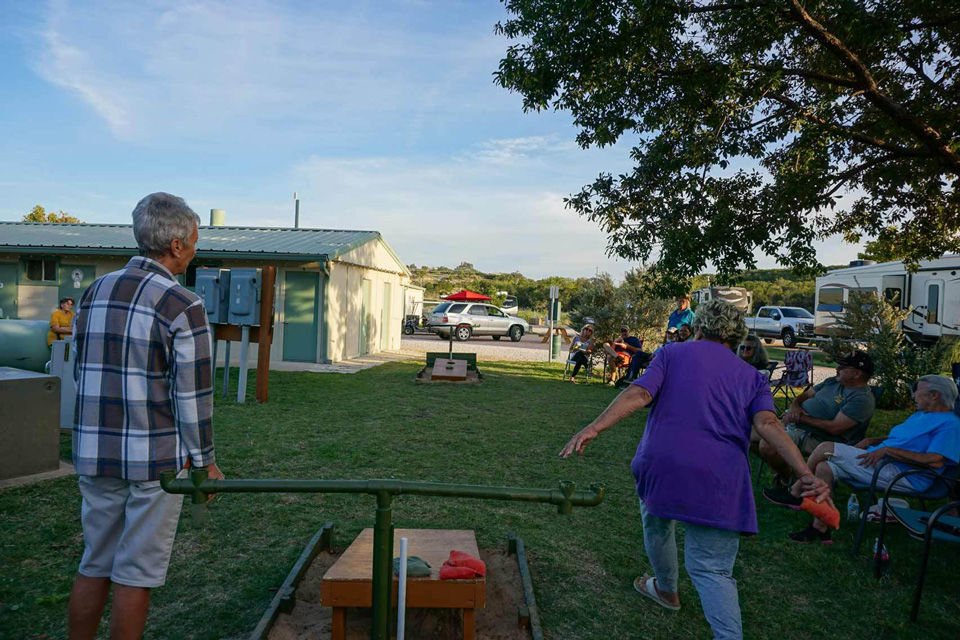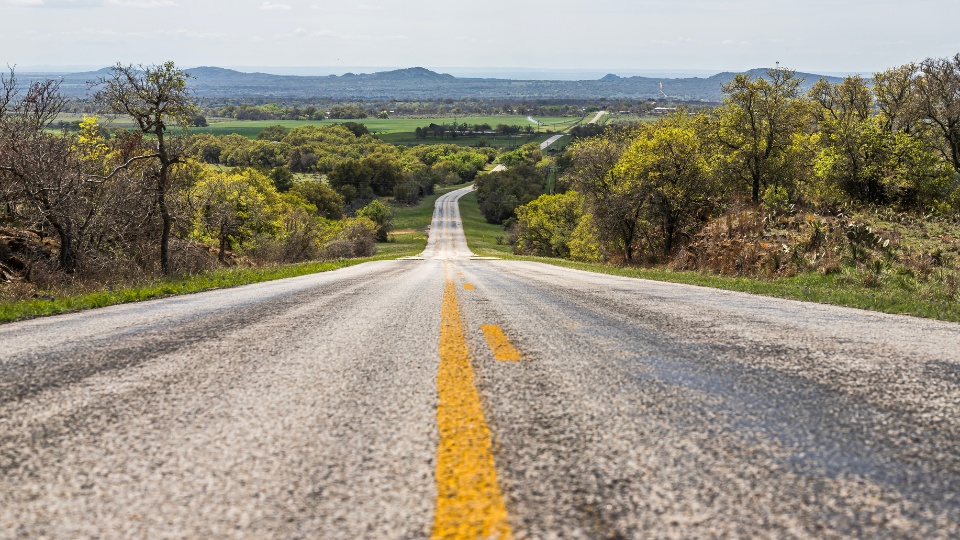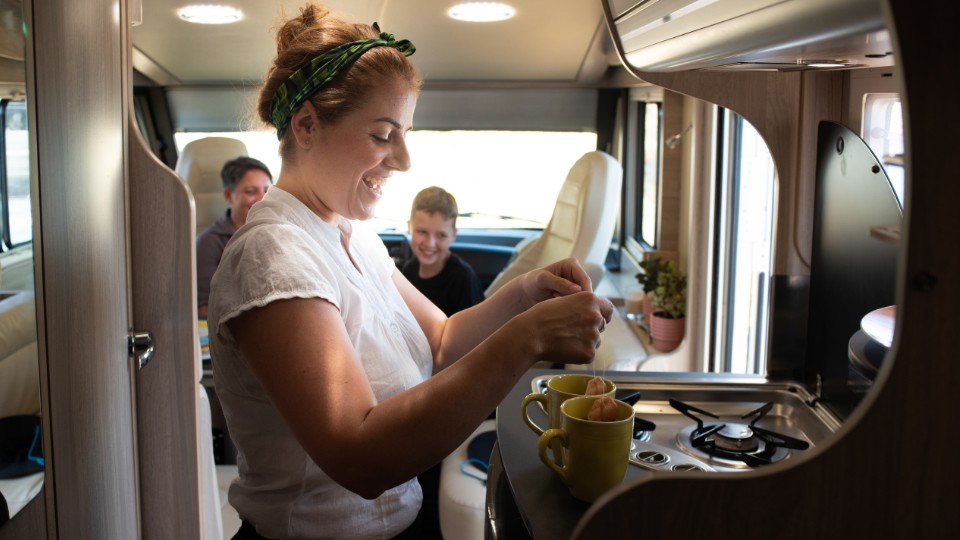
Blanco State Park has no entrance gate and no gate code. You can drive straight onto Park Road 23 without stopping at a booth. Yet the Texas Parks and Wildlife Department still asks day visitors to reserve a pass online or by phone before they arrive, which is the easiest thing to miss when you are planning a first visit. Here is the second thing worth knowing: this is a small park, about 104.6 acres, among the smallest in the Texas state park system. That size is the point, not a limitation, because roughly a mile of spring-fed Blanco River runs straight through the middle of it. This Blanco State Park guide covers what it costs, what is actually there, whether your rig will fit if you are camping, and how to fit a half-day stop into a longer Hill Country trip.
Blanco State Park Guide at a Glance
Address: 101 Park Road 23, Blanco, TX 78606
Size: 104.6 acres, roughly 1 mile of Blanco River frontage
Entrance fee: $5 daily per person, age 13 and up; 12 and under free
Day pass requirement: Reserve online or by phone before visiting, even though there is no entrance gate
Park phone: (830) 833-4333
Reservation phone: (512) 389-8900
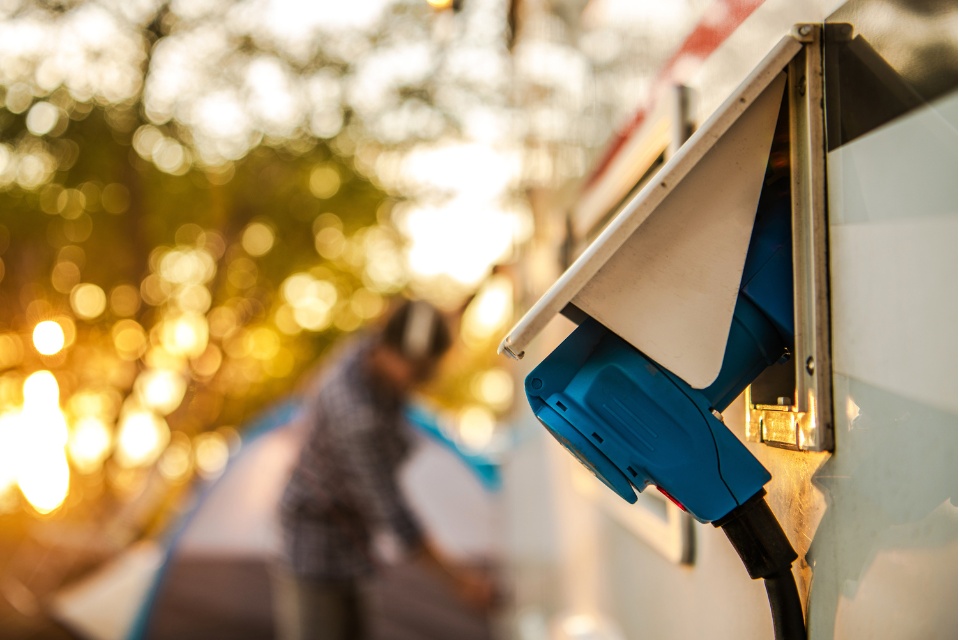
Camping types: Full hookup RV sites, electric campsites, screened shelters
Pets: Allowed on a 6-foot leash; not allowed at screened shelters or inside buildings
Gate: None. No gate code is needed to enter
Fees, Day Passes and Park Hours
The Blanco State Park entrance fee is $5 per day for anyone age 13 and up, with children 12 and under admitted free. Bring an extra vehicle or exceed the site’s occupancy limit, and you will incur a $6 nightly excess vehicle charge and a separate $6 nightly excess occupancy fee, with a maximum of eight people per campsite. All of these figures are subject to change, so treat them as a planning estimate and confirm current pricing before you go. Frequent visitors to Texas state parks sometimes offset the daily fee with a Texas State Parks Pass, which covers entrance statewide for pass holders, though pricing is worth confirming directly on the TPWD fees and facilities page since it changes.
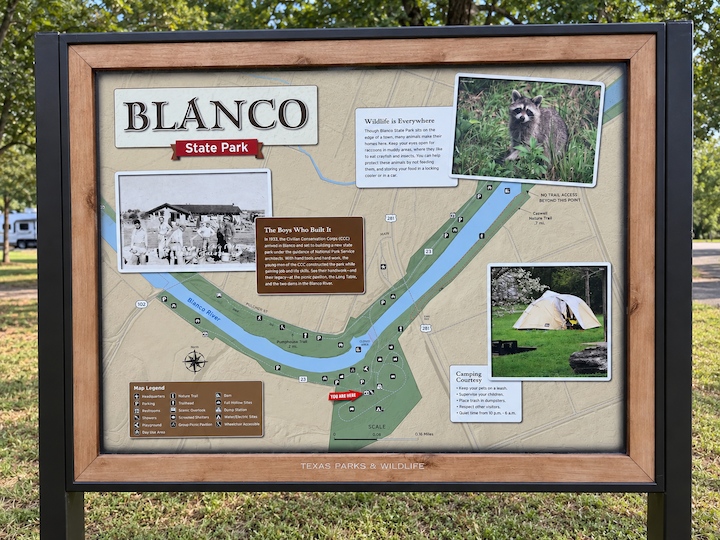
Hours are simpler to state honestly than to guess at. The park is open daily, and the official facility map lists a 10 p.m. closing time for day visitors, meaning anyone not camping overnight needs to head out by then. Quiet hours run from 10 p.m. to 6 a.m. for everyone on site, campers included. No official source publishes a morning opening time, so check the current Blanco State Park hours on the TPWD park page rather than guessing at an early start.
Why Reserve a Day Pass Even Though There Is No Gate
This resolves what looks like a contradiction. The park’s reservation system states plainly that there is no gate and no gate code is needed to get in. At the same time, the official Texas Parks and Wildlife park page instructs visitors to reserve a Blanco State Park day pass online or through the customer service center before they arrive. Both are true, and together they describe a practical instruction rather than a paradox: the reservation is how the park manages capacity at 104.6 acres with one short stretch of swimmable river, not a physical barrier at the entrance.
That instruction holds whatever the season, and a summer Saturday is exactly when arriving without a pass turns a planned swim day into a wasted drive. Call the reservation line at (512) 389-8900 or book through the official Texas State Parks reservation page, and treat the missing gate as a reason to plan ahead rather than a reason to skip the step.
Getting There and Where to Park
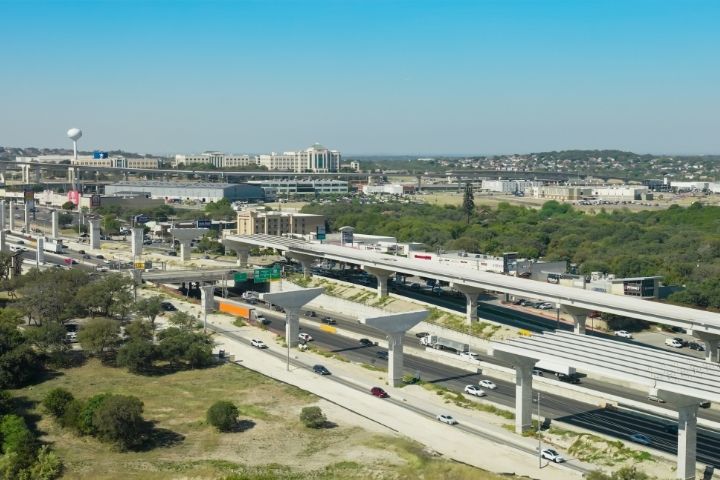
The park sits at 101 Park Road 23 on the south side of Blanco, reached off U.S. Highway 281, roughly an hour from both Austin and San Antonio, according to Texas Parks and Wildlife. Blanco itself is within walking distance of the park boundary, and Johnson City sits a short drive north on U.S. 281, making this a realistic day trip from Johnson City just as easily as from Blanco. Miller Creek’s attractions near the park page covers what else is within a short drive once you have the park itself figured out.
Parking is where the park’s small footprint shows up. The official facility map states that vehicles must be parked on asphalt only, which limits where a tow vehicle, second car, or boat trailer can sit once the main lot fills. Arrival time matters more here than at a larger state park, because asphalt-only parking means there is no overflow grass to fall back on once the lot is full. On a summer weekend, plan to arrive early rather than assuming a spot will be there.
What to Do on the Blanco River
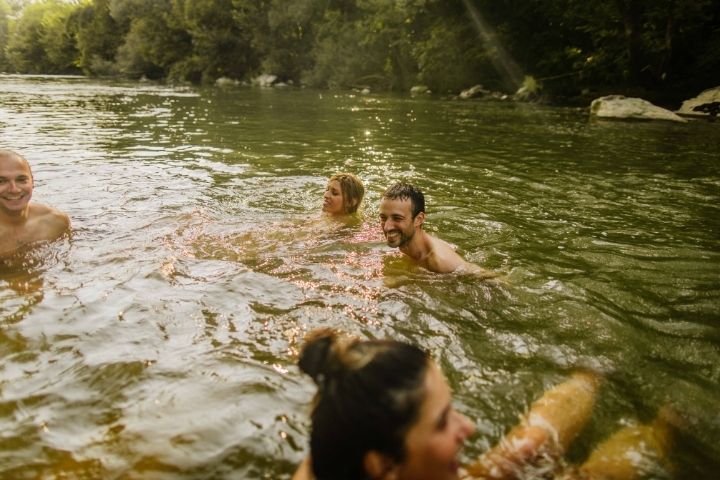
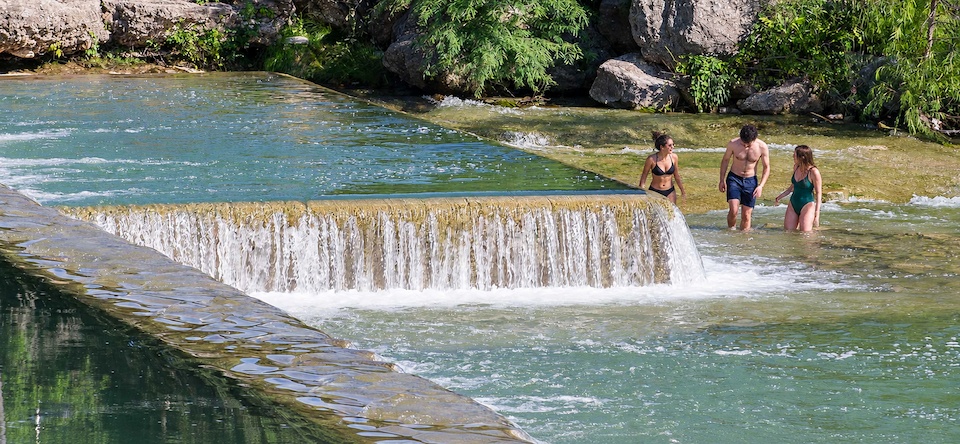
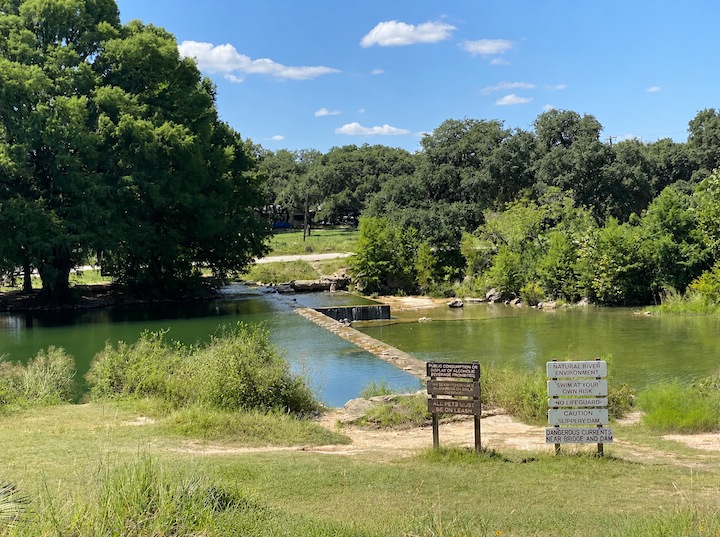
Texas Parks and Wildlife lists the full range of things to do at Blanco State Park as swimming, fishing, paddling or boating, picnicking, hiking, camping, wildlife watching, and geocaching. Most of that centers on the water: two stone dams built by the Civilian Conservation Corps back up sections of the Blanco River into pooled, slower water in an otherwise shallow, moving river. The swimming here is engineered, not a natural feature, and that distinction shapes almost everything else below.
Swimming and the Falls Dam Wading Pool
Texas Parks and Wildlife describes the shallow wading pool next to Falls Dam as one that small children will enjoy, and the reason a pool exists there at all is the dam holding water back above it. Set expectations rather than assuming a river is a river: there are no lifeguards, and depth, current, and clarity shift with rainfall and season. The calm pool in a June photo online can be running fast and cloudy a month later. Glass is prohibited in the river for a specific reason, not an arbitrary one; broken glass on a river bottom that you cannot fully see is effectively unrecoverable. Check current conditions with the park before you build a swim day around this stretch.
Fishing, Including the Winter Trout Stocking
No fishing license is required when you are fishing from shore inside the park boundary, which makes this a low-friction stop for anyone traveling without gear or paperwork. Texas Parks and Wildlife even offers loaner rods and reels. Fishing changes by season: the river gets stocked with rainbow trout during the winter months, which shifts the target species from what you would find here in July. Specific stocking dates and amounts change year to year, so check the current TPWD stocking schedule before planning a winter trip around it. Most shore fishing happens in the pooled water above the two dams, for the same reason swimmers gravitate there.
Paddling and Boating
The facility map marks a single canoe and kayak launch, and that launch is the accessible one, reached by a wide sidewalk with rails. Only electric motors are permitted. With roughly a mile of river running through the park and two dams crossing it, this is a short, flat-water paddle rather than a downstream float. Whether tubes or kayaks can be rented inside the park is not something Texas Parks and Wildlife publishes, so bring your own gear or arrange a rental before you arrive.
Hiking, Wildlife, and the Bird Blind
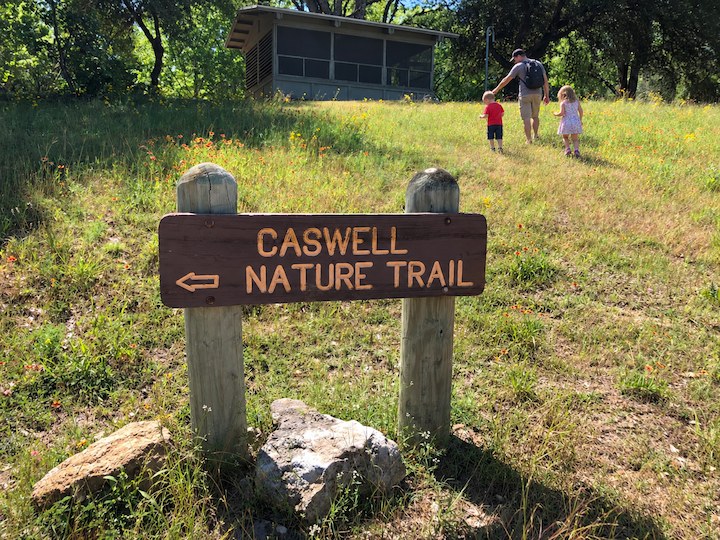
104.6 acres with two short trails is not a hiking destination on its own. The two named trails are the Pumphouse Trail and the Caswell Nature Trail. Published mileages for both vary widely across third-party sources, and Texas Parks and Wildlife does not publish a figure this guide can responsibly repeat, so check the official trails map for current distances.
What TPWD does describe in detail is the Pumphouse Trail: a caliche surface that stays smooth and level, a bird blind along the way with a caliche ramp and benches inside it, and a river-overlook deck at the end that sits level with the trail. Caliche, level, and smooth are specific descriptions rather than generic ones, and they tell you more than a trail mileage figure would if you are walking with a stroller or a mobility aid. Wildlife along both trails includes white-tailed deer, raccoons, herons, and turtles, moving through stands of bald cypress, sycamore, pecan, and juniper. Trail status can change with weather or maintenance, so confirm current conditions before you rely on either trail being open.
Blanco State Park Camping Compared
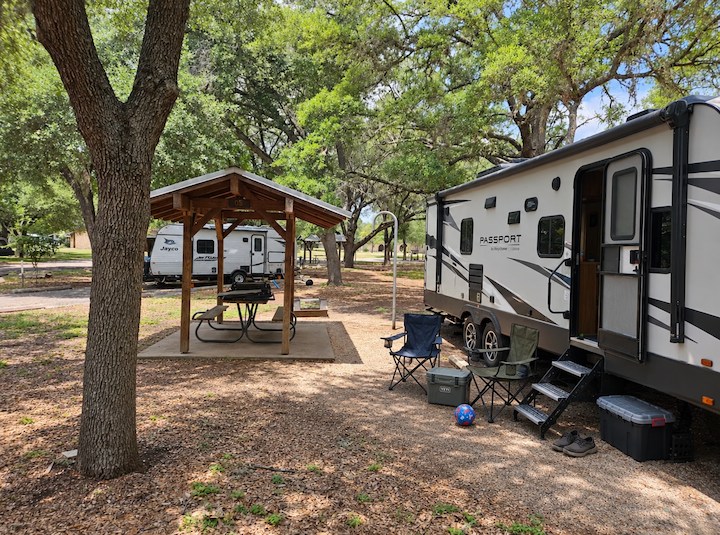
Several widely read guides publish campsite counts and rates for this park that do not match TPWD’s own figures. Blanco State Park RV sites are split into two full hookup tiers plus a basic electric tier, and the table below reflects the actual per-tier counts and rates Texas Parks and Wildlife publishes, current as of September 2026 and subject to change, so confirm current pricing on the TPWD site before booking.
Rates are per night, exclude the daily entrance fee, and are subject to change.
Every tier, shelters included, comes with a picnic table, a lantern post, and a fire ring with a grill, and restrooms are nearby rather than attached. The 30-amp full hookup sites and the electric sites add a shade shelter (we run 20/30/50-amp on every site, which is the part that changes what you can run in August). The weekly non-peak rates above apply from November through February, the same window covered later in this guide for winter trout fishing and lighter crowds. The $6 excess vehicle and excess occupancy charges from the fees section apply here too, and they change the real cost of a family booking that brings a second car or runs past the eight-person limit.
Will Your Rig Actually Fit
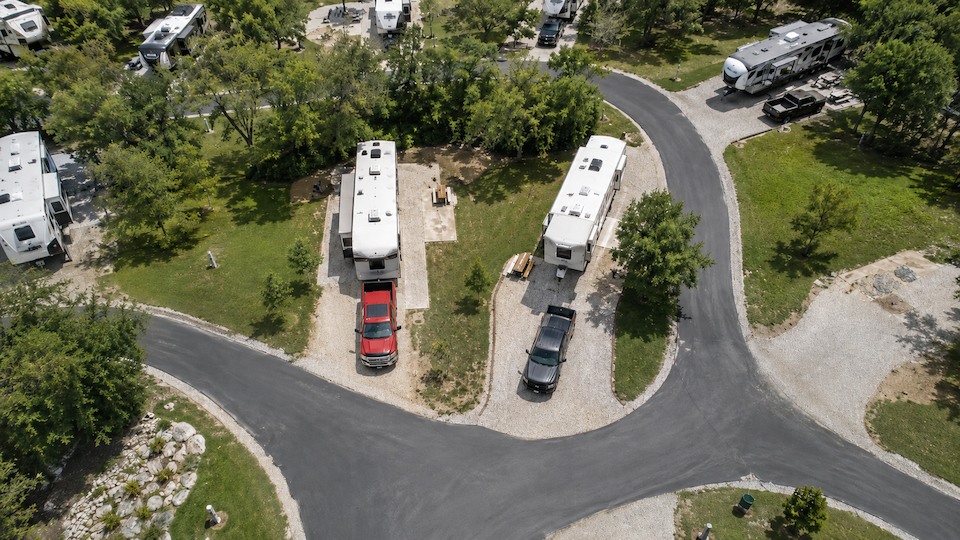
The reservation system lists exactly one pull-through site, numbered 016, and every other site is a back-in. Published driveway lengths run roughly 45 to 63 feet on the full hookup back-in sites and roughly 29 to 68 feet on the electric-only sites. Which number you measure against depends on the site type, and that is where most guides go wrong. On site 016, the only pull-through, you stay hitched, so combined length is what matters: a 32-foot travel trailer behind a 19-foot truck, as an illustrative example, runs about 51 feet and sits well inside that driveway. On a back-in you unhitch, so the trailer alone has to fit the driveway, and the real question becomes where the truck ends up, because vehicles have to stay on asphalt. Read both off the specific site listing rather than assuming there is room beside the pad.
Here is where the confusion started: site 016, the single pull-through, is listed at 120 feet. That figure appears to be the source of the 120-foot maximum RV length repeated across several other Blanco State Park guides, applied incorrectly to the whole park instead of one specific site. Read the driveway length on the exact Blanco State Park RV site you are booking rather than trusting a park-wide number (our standard sites run roughly 15 by 45 feet and the large yard about 22 by 40, which is the same read on a different set of numbers). A dump station is available on site.
Screened Shelters and Who They Suit
The seven screened shelters serve a different traveler than either the RV sites or a tent site. Each includes a picnic table, a ceiling fan, water, electricity, a lantern post, and a fire ring with a grill, with restrooms nearby. Shelters 43 and 47 are the accessible units.
Three constraints decide whether this tier fits your trip: RVs are not permitted in the shelter area, pets are not allowed at the shelters at all, and there is no plumbing inside. That suits a tent camper who wants a hard roof and a fan without hauling a tent, or a family without an RV who still wants power on site. It does not suit anyone traveling with a dog or anyone who needs an RV parked next to where they sleep. Book a standard campsite instead in either case.
How Far Ahead to Book
A park with three campsite tiers and seven shelters, none of them large, sells out on a different rhythm than a big regional park. The predictable pressure points are summer weekends, spring break, and major holidays. Check the official Texas State Parks reservation page for the current booking horizon rather than trusting a fixed number of months, since it shifts with demand. If Fredericksburg is also on your route, the booking window for private parks there works on the same logic and is worth checking at the same time.
Arrive after hours with a confirmed reservation, and the reservation system posts late-arrival instructions at park headquarters, with check-in required by 9 a.m. the following morning. Check-out is at noon, with the option to renew your permit by 9 a.m. if you want to extend an unbooked site.
Accessibility at Blanco State Park
Screened shelters 43 and 47 are ADA accessible. The group pavilion has two ADA parking spaces and a sidewalk connecting to the building. The kayak launch is ADA accessible, with a wide sidewalk and rails leading to the water.
A wheelchair-accessible restroom sits in the campground loop next to the main restroom, though reaching it requires a door code from park headquarters or the park host, since campground restrooms are reserved for overnight guests rather than day visitors. The Pumphouse Trail is accessible along its length, with a caliche ramp into the bird blind and a river-overlook deck that sits level with the trail rather than a step down. Texas Parks and Wildlife notes that conditions and accessible features can change, so a call to the park is worth it before a visit that depends on any one of them.
Best Time to Visit and What Changes by Season
Summer is when the dammed pools matter most, and it is also when Central Texas heat becomes a genuine planning factor rather than a footnote. A small park with an asphalt-only lot rewards an early arrival in July more than it would in November. November through February is the non-peak season, when the lower weekly camping rates above apply and when winter trout stocking changes what is worth fishing for.
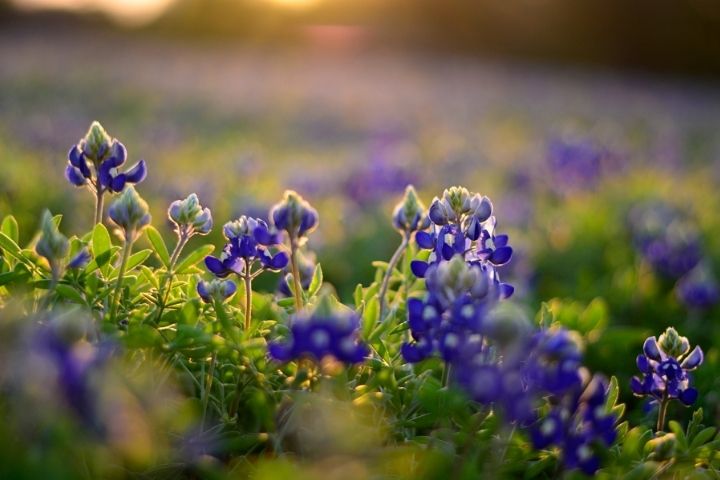
Spring brings wildflowers along the river corridor, with bluebonnets and Indian paintbrush documented in the surrounding area, though no guide can promise a bloom on any specific date. Autumn is generally the mildest window for walking the Pumphouse Trail or getting on the water, and Miller Creek’s fall in the Texas Hill Country itinerary has more on pairing that season with other stops (autumn is when our creek-side sites earn their premium, though the creek level varies by season). Whatever the calendar says, river level and flow after heavy rain affect swimming more than the season does, so check conditions close to your trip regardless of month.
Park Rules Worth Reading Before You Arrive
These come from the official facility map, and most make more sense once you know the reasoning behind them.
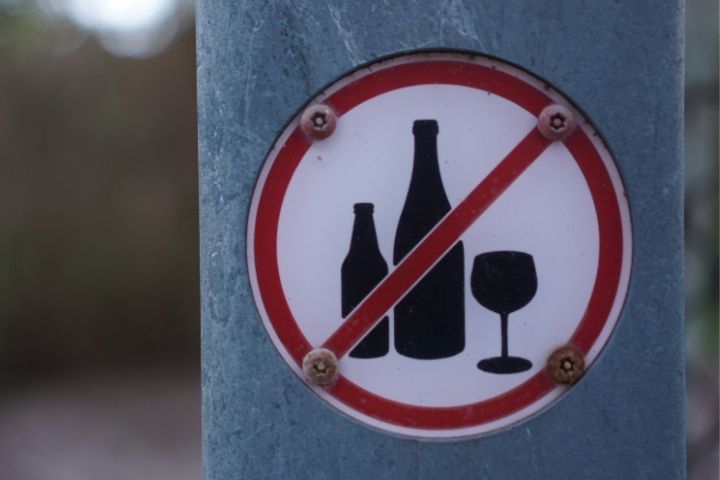
- Alcohol is prohibited throughout the park, with no exceptions tied to campsite or shelter type.
- Pets must stay on a leash; six feet is the stated maximum, and pets are not allowed inside any park building.
- No glass is allowed in the river, since broken glass on the river bottom cannot be fully seen and is nearly impossible to recover safely.
- Firewood gathering is not permitted, and campfires are restricted to the fire rings already provided, protecting what little understory a small riparian park has left.
- Vehicles stay on asphalt only, which is the rule behind the parking constraint covered above.
- Quiet hours run from 10 p.m. to 6 a.m. (ours at Miller Creek run from 10 p.m. to 8 a.m.), and day use closes at 10 p.m. for anyone not staying overnight. Miller Creek’s own RV park rules and etiquette guide covers the same quiet-hours and leash conventions that hold across most Hill Country campgrounds, not just this one.
- Checkout is at noon, with same-day permit renewal available by 9 a.m. if you want to extend an unbooked site.
The CCC History You Are Actually Walking On
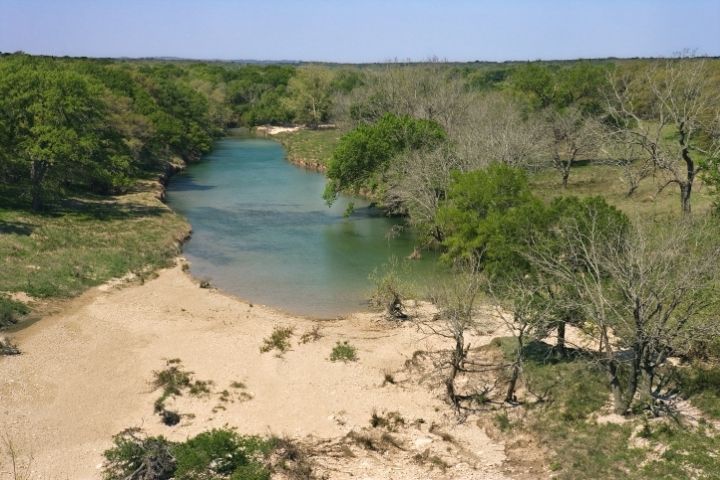
The landscape here is not naturally occurring the way it looks. The state received the land in 1933, and Civilian Conservation Corps Company 854 arrived on June 16, 1933, with 177 workers, staying for roughly eleven months. In that time, they built the two seven-foot stone dams that create the pooled swimming water covered above, plus roads, concrete bridges, a concession building, a bathhouse, stone picnic tables and benches, and a pump house that now stands in ruins near the river. The park opened in 1934. A later renovation brought it back on July 30, 1983, and a Texas Historical Marker followed in 2009.
The Blanco River rose roughly thirty feet during the May 2015 flood, and the park did not reopen fully until October 24, 2015. Every time you stand in the calm water above one of the two dams, you are standing in a pool that the Civilian Conservation Corps stonework created on purpose, not a feature the river carved on its own. For the wider regional story this fits into, Miller Creek’s journey through the history of the Texas Hill Country picks up where this section leaves off.
Fitting Blanco State Park Into a Bigger Hill Country Trip
A 104.6-acre park with a short trail system and a mile of river is a half-day stop for most visitors, which makes the real planning question what to pair it with. Miller Creek RV Park’s own attractions page lists Pedernales Falls State Park at 18.1 miles, Lyndon B. Johnson National Historical Park at 18.9 miles, LBJ State Park at 20 miles, Guadalupe River State Park at 39.3 miles, and Enchanted Rock at 53.5 miles, sourced from Miller Creek’s own published distances rather than estimates. Closer in, the town of Blanco sits within a few minutes of the park, whether you are stopping for a meal or topping off gas before the drive home. Miller Creek’s 3-day explorer’s itinerary is a useful starting point for stringing several of those stops together.
Because the park is small enough that most visitors pair it with something else the same day, where you sleep the night before or after matters more here than it would for a destination that fills an entire day on its own, whether you are camping in the park itself or driving in for the day from a base further down the highway.
Camping in the Park or Basing at a Nearby RV Park
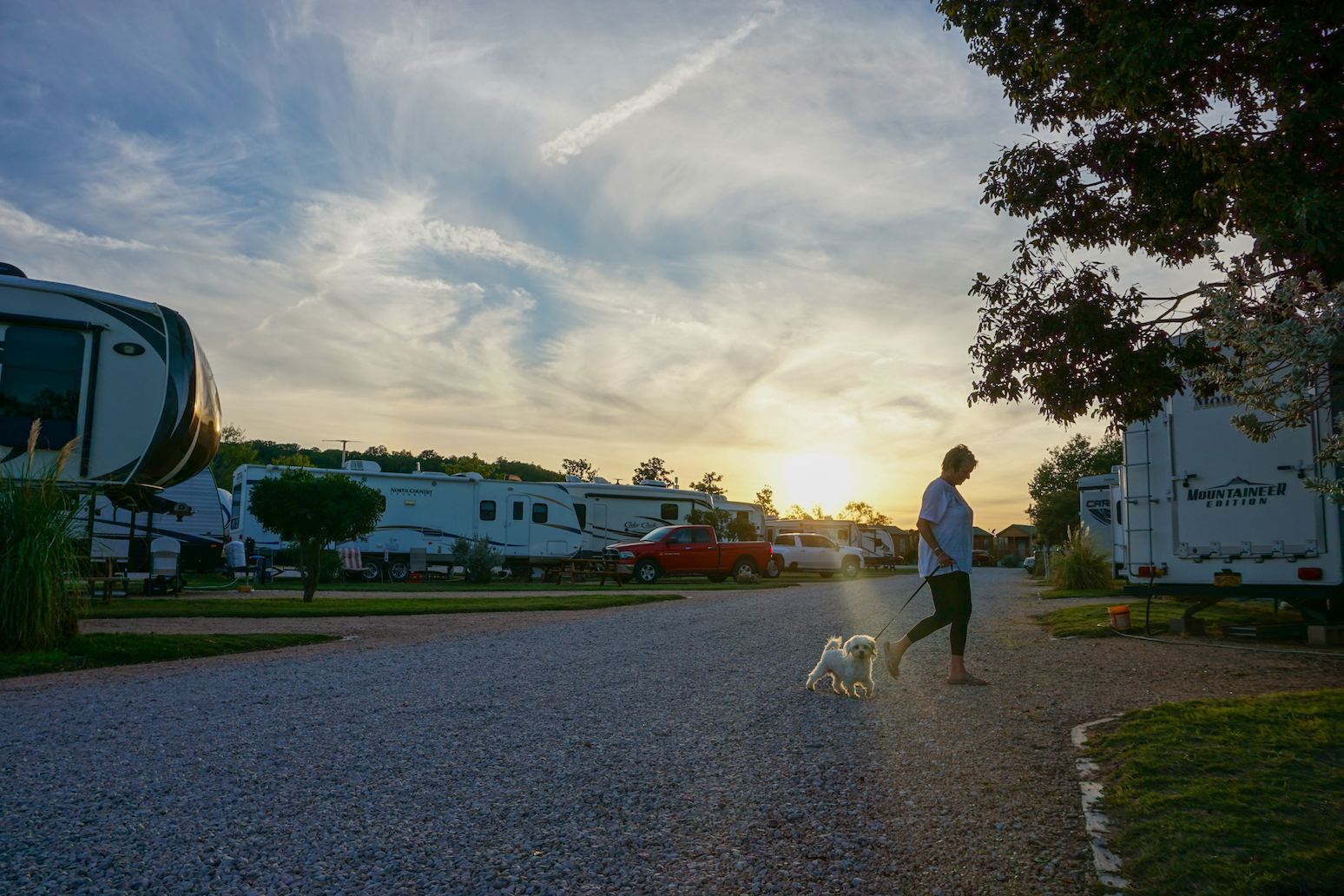
This is a genuine tradeoff, not a sales pitch. Camping inside Blanco State Park puts the water a few steps from your site at a lower nightly rate than most private RV parks charge, but it comes with back-in sites, shorter driveways, 50-amp service only on the eight Premium full hookup sites, and a small number of sites competing for the same summer weekends covered above.
Basing at a private RV park nearby trades river frontage for 50-amp service on every site rather than on eight, a real choice of pull-throughs, monthly rates, laundry, and a recreation hall. We publish Blanco State Park at 8.5 miles from us, and our RV site types run to standard pull-through and back-in sites, a large-yard back-in with room for two vehicles, and creek-side sites, all on 20/30/50-amp service with water and sewer. For travelers without a rig, log cabins along Miller Creek are the other option, each with air conditioning, kitchenware, and bunk sleeping for four.
If your rig fits the state park’s driveway lengths and you want to wake up next to the water, book inside the park. If you need 50-amp, want a pull-through without competing for the park’s only one, prefer a monthly rate, or would rather have laundry on site, basing a short drive up U.S. 281 is the more practical call.
Quick Answers
Do you need a reservation to visit Blanco State Park for the day?
Yes. Even though there is no gate and no gate code, Texas Parks and Wildlife instructs day visitors to reserve a pass online or by phone before arriving.
How much does it cost to get into Blanco State Park?
The entrance fee is $5 per day for anyone aged 13 and older. Children 12 and under are admitted free.
Can you swim in the Blanco River at Blanco State Park?
Yes, mainly in the pooled water behind the two CCC-built dams and the shallow wading pool at Falls Dam. There are no lifeguards, and conditions change with rainfall and season.
Do you need a fishing license at Blanco State Park?
No, not when fishing from shore inside the park boundary. Loaner rods and reels are available.
Does Blanco State Park have full hookup RV sites?
Yes. Full hookup sites are split into a Premium 30/50-amp tier with 8 sites and a 30-amp tier with 9 sites, both with water and sewer.
Will a big rig fit at Blanco State Park?
It depends on the site. Only one, number 016, is a pull-through, and back-in driveways run roughly 45 to 63 feet on the full hookup sites and 29 to 68 feet on the electric-only ones, so check the exact site rather than a park-wide figure.
Are dogs allowed at Blanco State Park?
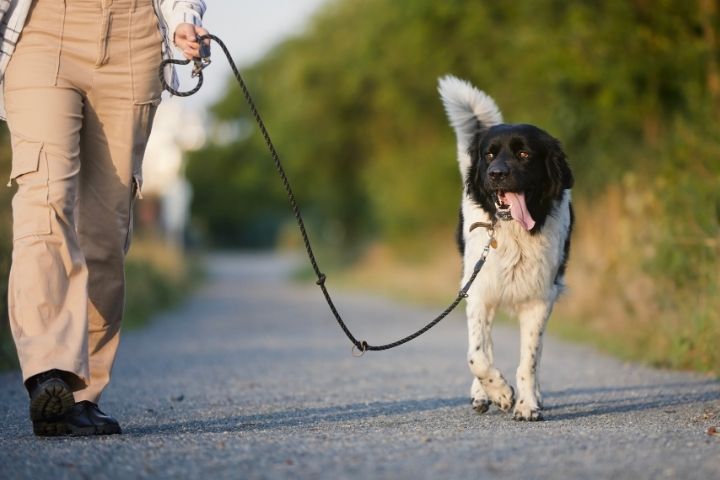
Yes, on a leash no longer than six feet, except at the screened shelters, where pets are not permitted.
How long do you need to see Blanco State Park?
Most visitors treat it as a half-day stop, given the park’s 104.6 acres and two short trails, though campers naturally stay longer.
What is there to do near Blanco State Park?
The town of Blanco sits within a few minutes of the park, and Pedernales Falls State Park, Lyndon B. Johnson National Historical Park, and LBJ State Park are all a short drive north up U.S. 281.
A Small Park That Rewards a Slow Visit
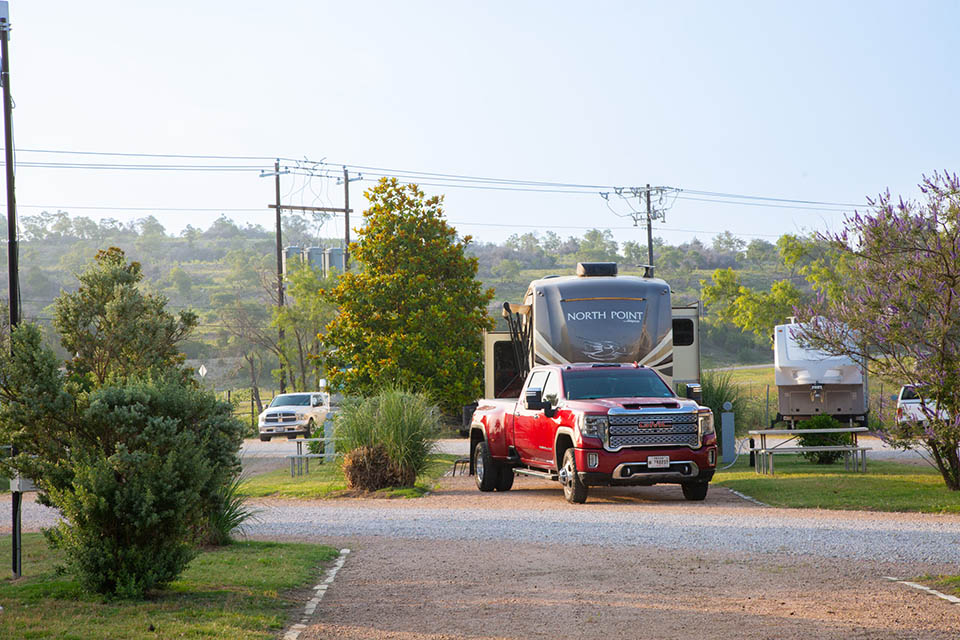
Blanco State Park is 104.6 acres built around a dammed, spring-fed stretch of the Blanco River, and it rewards a slow half-day more than an itinerary built to conquer it. Whether you are camping in the park itself or basing nearby, knowing the fee, the day pass, the real driveway lengths, and the two dams that make the swimming possible gets you further than any packing list will.
Miller Creek RV Park sits along U.S. 281 between Johnson City and Blanco, 8.5 miles from the state park, with full-hookup RV sites and log cabins for travelers who would rather sleep at a home base than inside the park itself. Call (830) 868-2655 or check current availability to plan your stay.