RV park etiquette isn’t really about rules. It’s about the fact that dozens of strangers are sharing gravel roads, a laundry room, and a fence line for a night, a week, or a whole season, and everyone’s stay depends on everyone else acting like a decent neighbor. We’ve hosted RVers at Miller Creek RV Park in the Texas Hill Country long enough to know which habits actually keep a campground calm and which ones cause the most friction, whether you’re staying with us or pulling into a park three states away.
Here’s what experienced RVers already know, and what’s worth learning before your first stay anywhere.
Quiet Hours and Noise Etiquette
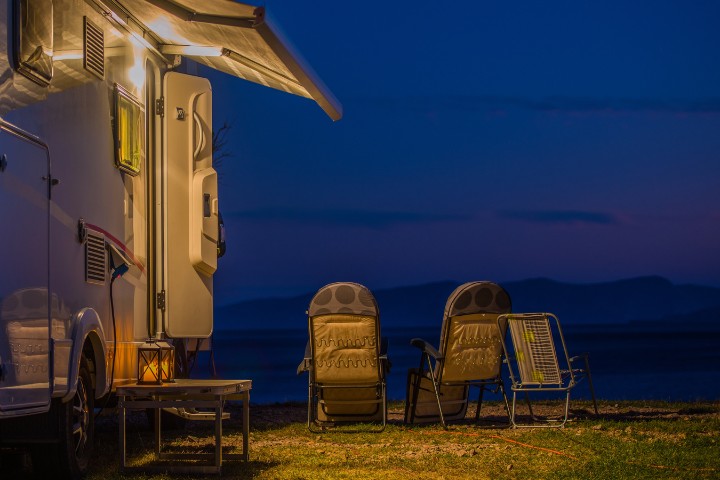
Almost every RV park sets quiet hours, typically somewhere between 9 or 10 p.m. and 7 or 8 a.m. (ours at Miller Creek run 10 p.m. to 8 a.m.). But the real rule of etiquette isn’t the clock. It’s that sound travels a lot farther across an open campground than it does at home. A normal conversation, a TV left on, or a dog barking at 11 p.m. can reach five or six sites over.
A few habits keep noise in check no matter where you’re parked:
- Keep music and TV volume low enough that it doesn’t carry past your own site.
- Save loud conversations and group hangouts for daytime hours.
- If you’re running a generator, check your park’s specific policy. Most allow them during set daytime hours and restrict them overnight, though some full-hookup parks, Miller Creek included, don’t allow them at all, since every site already has 20/30/50-amp power.
RV Park Rules and Regulations Checklist
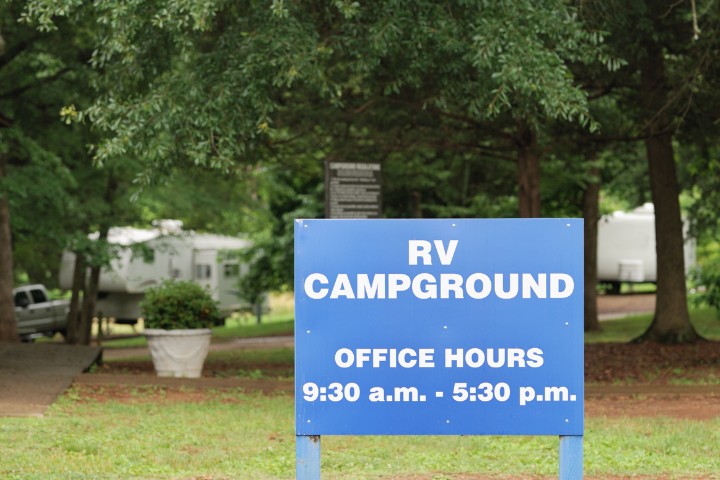
Every park has its own version of these, but the categories are consistent enough that you can expect to find most of them somewhere in your welcome packet or posted at the office:
- Check-in and check-out windows. Usually a set afternoon check-in and late-morning check-out, so staff can turn the site over between guests.
- Campfires. Allowed in a fire ring or pit almost everywhere; loose fires on bare ground or grass are not.
- Quiet hours. See above, posted at the office or in your welcome materials.
- Speed limit. Most parks post somewhere between 5 and 10 mph inside the property, mainly because of kids, pets, and golf carts around blind corners.
- Pets. Leash requirements, cleanup expectations, sometimes a limit on the number of animals per site.
- Vehicles and parking. A cap on vehicles per site, and rules against parking on grass, roadways, or other guests’ sites.
- Trash. Most parks run scheduled pickup days rather than 24/7 curb service, so trash needs to stay bagged and contained between pickups.
- Site appearance. Patio furniture and grills are typically fine; sheds, clotheslines, and permanent additions usually aren’t.
- Visitors. Many parks require day or overnight guests to register at the office, sometimes for a small fee.
At Miller Creek, for example, campfires go in a fire ring or pit on gravel only, quiet hours run 10 p.m. to 8 a.m., and overnight guests register at the front office. Your park’s version of these rules will look close to this, even if the specifics differ slightly. Check your welcome packet rather than assume.
Dog and Pet Etiquette
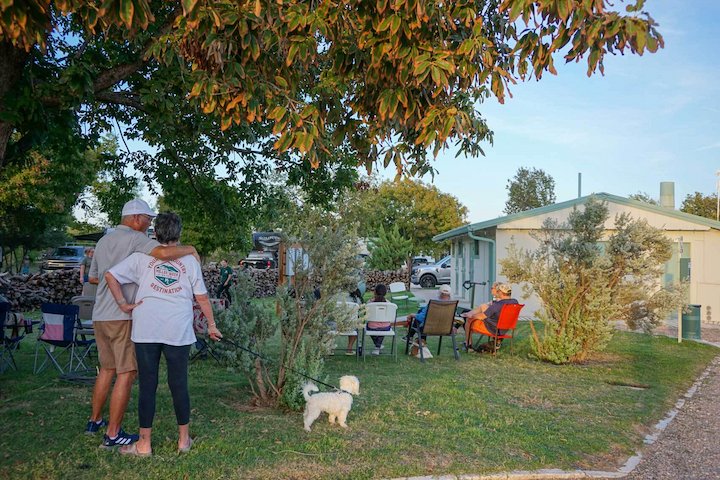
Most RV parks are pet-friendly these days, and most run on a similar honor system:
- Leash your dog. Six feet is the most common maximum length, whether you’re at a state park or a private RV resort.
- Clean up immediately, every time, even if no one’s watching.
- Watch the barking. Occasional barking is normal; constant or aggressive barking is the fastest way to become “that site” to your neighbors.
- Aggressive behavior isn’t welcome anywhere. Most parks reserve the right to ask an aggressive dog (and its owner) to leave.
- Use off-leash areas when they’re available. At Miller Creek, we have two fenced dog runs for exactly this. It’s worth checking whether your park has something similar before assuming your dog can roam free.
Registered service animals are the exception to leash and building-access rules almost everywhere, though most parks still ask that they be visibly identified in shared spaces.
Hookup and Sewer Etiquette
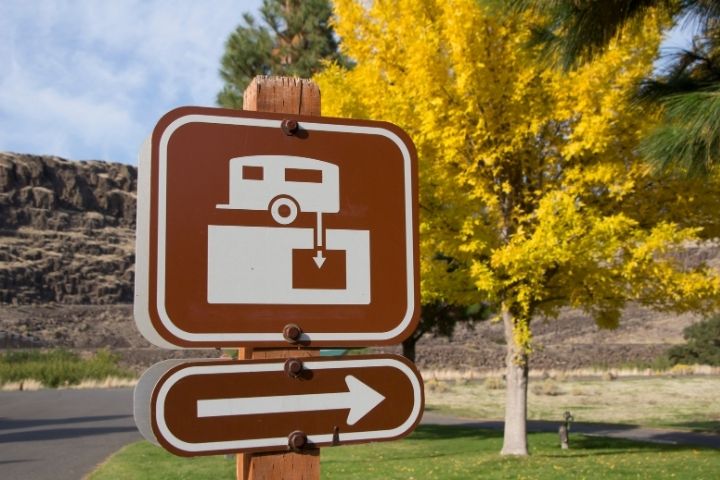
Full hookups are one of the biggest conveniences at a park like Miller Creek, but the sewer connection is also where etiquette mistakes get noticed fastest, usually by smell before anything else.
A few habits keep things clean for you and everyone downstream:
- Keep your water and sewer connections leak-free. It’s a basic courtesy, and a basic rule almost everywhere, including at Miller Creek.
- Support the sewer hose so it slopes downward toward the connection instead of lying flat. Gravity does the work; a sagging hose just collects waste.
- Keep the black tank valve closed between uses. Only open it to dump once the tank is at least two thirds full, then close it again. Leaving it open constantly lets solids build up in the tank, which causes clogs and worse odors, not less.
- Dump the black tank first, then the gray tank last, so the soapy gray water helps rinse out the hose.
- Never dump waste directly on the ground or gravel. Use your site’s sewer connection or the park’s designated dump station.
Campfires and Fire Safety in the Texas Hill Country

Fire safety etiquette is close to universal: use a designated fire ring or pit, never build directly on grass, and never leave a fire unattended, even for a few minutes. It’s also one of the etiquette rules that matters most. A careless fire is the fastest way to turn a small mistake into a real emergency for the whole park.
Local burn bans are the other piece people forget to check. In dry, drought-prone regions like the Texas Hill Country, counties will restrict or ban open fires entirely during hot stretches of the year. At Miller Creek, that means switching to supervised charcoal only for cooking until the ban lifts.
Wherever you’re staying, it’s worth a quick check with the office or a look at the county’s website before assuming campfires are fair game. Fireworks are off-limits at almost every RV park, ban or no ban.
Respecting Your Neighbors and Shared Spaces
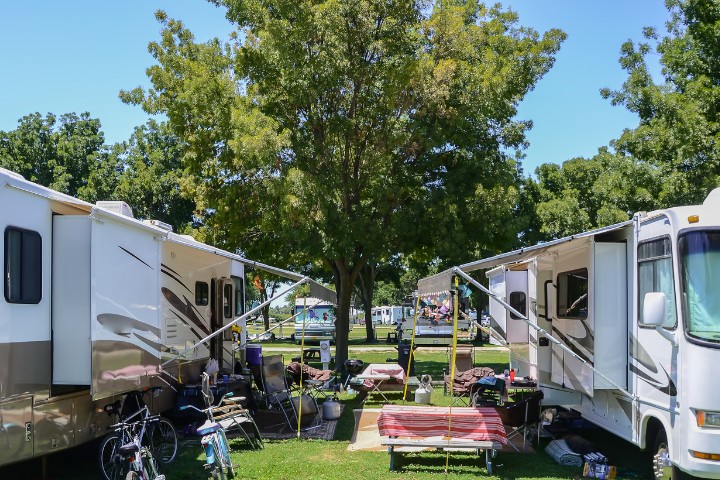
This is the part of RV park etiquette that has almost nothing to do with written rules and everything to do with how you treat the people around you:
- Don’t cut through occupied sites. Someone’s site is their space for as long as they’re paying for it, so treat it like their yard, not a shortcut.
- Give new arrivals room to get settled. Let them back in, level out, and hook up before you wander over to introduce yourself.
- Watch for kids and pets, not just other rigs. RV parks tend to have more children playing between sites than you’d expect, so drive and walk with that in mind, especially near the road.
- Don’t monopolize shared laundry machines. Move your clothes promptly once a cycle finishes so the next guest isn’t stuck waiting.
- Share common spaces fairly. Rec rooms, laundry areas, and community fire pits (ours is called the Watering Hole) only work if guests use them and then make room for the next person.
- Offer help when it’s obviously needed, especially with backing in. A lot of experienced RVers remember someone doing the same for them early on.
If another guest’s behavior is a real problem, not just an annoyance, most parks would rather you flag it to the office than confront it yourself.
Trash, Site Upkeep, and Smoking

- Bag your trash and stick to pickup windows. Most parks collect a few days a week rather than daily, so trash needs to stay contained, and out of sight, in between.
- Skip the extras. Storage sheds, clotheslines, and permanent-feeling additions to your site are against the rules almost everywhere, even when they seem harmless.
- If you smoke, keep it outdoors and off the ground. Cigarette butts left on gravel or grass are one of the more common complaints campground staff deal with. A portable ashtray takes care of it.
New to RV Parks? A Few Extra Pointers
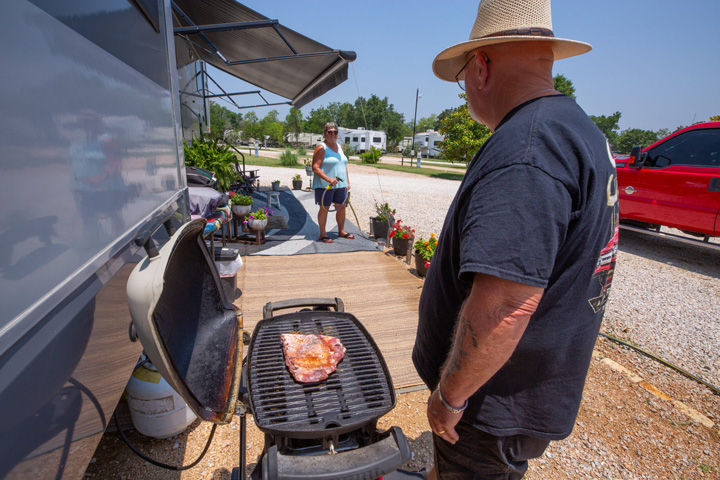
If you’re newer to RVing, most of what counts as “etiquette” isn’t written down anywhere. It’s just what experienced RVers have picked up over time:
- Read whatever welcome materials your park sends you. Most “did I do something wrong?” moments come from skipping the one email or packet that actually had the answer.
- Ask instead of guessing. If you’re not sure whether something’s allowed, a quick call to the office is a lot easier than fixing it after the fact.
- Needing help backing in is completely normal. Don’t be surprised if a neighbor walks over to guide you in. Accepting the help isn’t a sign you’re doing it wrong.
- The unwritten rules are just the written ones, softened. Quiet hours, leash rules, and fire safety aren’t suggestions. They’re what every guest at the park agreed to by booking a site.
Quick Answers
What are typical quiet hours at an RV Park?
Usually 9 or 10 p.m. to 7 or 8 a.m. Miller Creek’s are 10 p.m. to 8 a.m.
Are dogs allowed at RV Parks?
Yes, the large majority are pet-friendly, typically with a six-foot leash rule and a cleanup requirement.
Can I run a generator at an RV Park?
It depends on the park. Most restrict them to daytime hours; Miller Creek doesn’t allow them at all.
Can I have a campfire at my site?
Usually, yes, in a fire ring or pit, as long as there’s no active burn ban.
What’s a typical speed limit inside an RV Park?
Most parks post 5 to 10 mph, mainly to protect kids and pets near the road.
Should I leave my black tank valve open at a full-hookup site?
No. Keep it closed between uses, and only open it to dump.
A Good Stay Is a Shared One
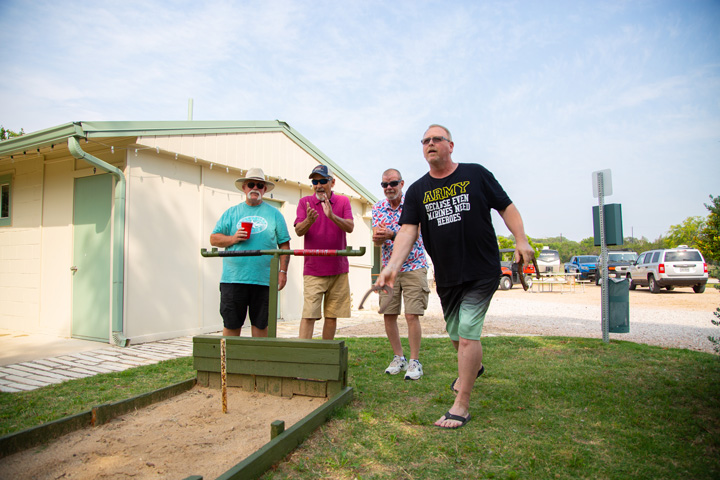
Most of RV park etiquette comes down to one idea: treat the site next to yours the way you’d want yours treated. Respect quiet hours, keep your dog leashed, take fire risk seriously, and remember that the common areas belong to everyone, not just whoever got there first.
If you’re looking for a place to put all of this into practice, Miller Creek RV Park sits in the Texas Hill Country between Johnson City and Blanco, with full-hookup sites and a guest community that takes good etiquette seriously. Give us a call at (830) 868-2655 or check availability whenever you’re ready.