
Are you considering RV park living but not sure what to expect once the hitches are connected and the slide-outs are open? Social media makes the full-time RV lifestyle look like a nonstop adventure, but the day-to-day reality is quieter, more routine, and in many ways more grounded than the highlight reels suggest. This guide walks you through what RV park living actually looks like on a typical day, what surprises newcomers most, and how to set realistic expectations before you commit.
A Typical Day for RV Park Residents
Most RV park residents will tell you their days have more structure than they expected. You wake up, make coffee, and manage a small space that needs a little more intention than a traditional kitchen. Cooking in your RV is totally doable, but grocery runs require more planning. Storage is limited, so most residents shop more frequently and in smaller quantities.
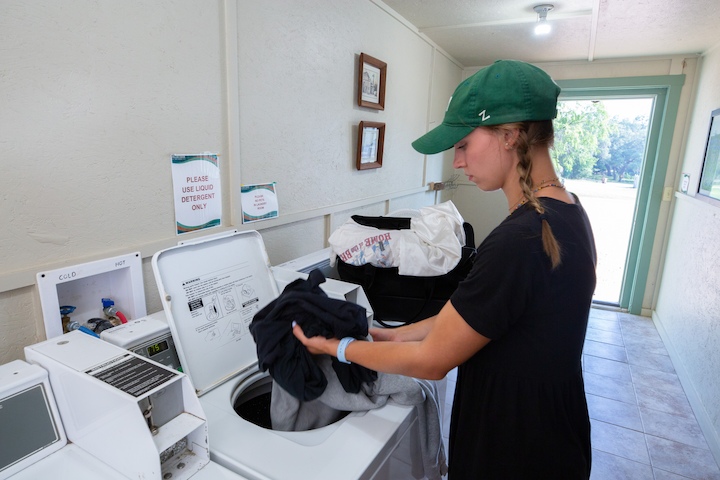
Laundry in the RV park setting is often done at on-site laundry facilities. This is one of those small routine shifts that catches newcomers off-guard. Instead of throwing in a load whenever you feel like it, you plan around when the laundry room is available. For most people, it becomes a weekly ritual rather than an annoyance.
Trash handling is similarly different. Most RV parks have central dumpster stations rather than curbside pickup. It is a small trek several times a week, which most residents find a non-issue once they settle in.
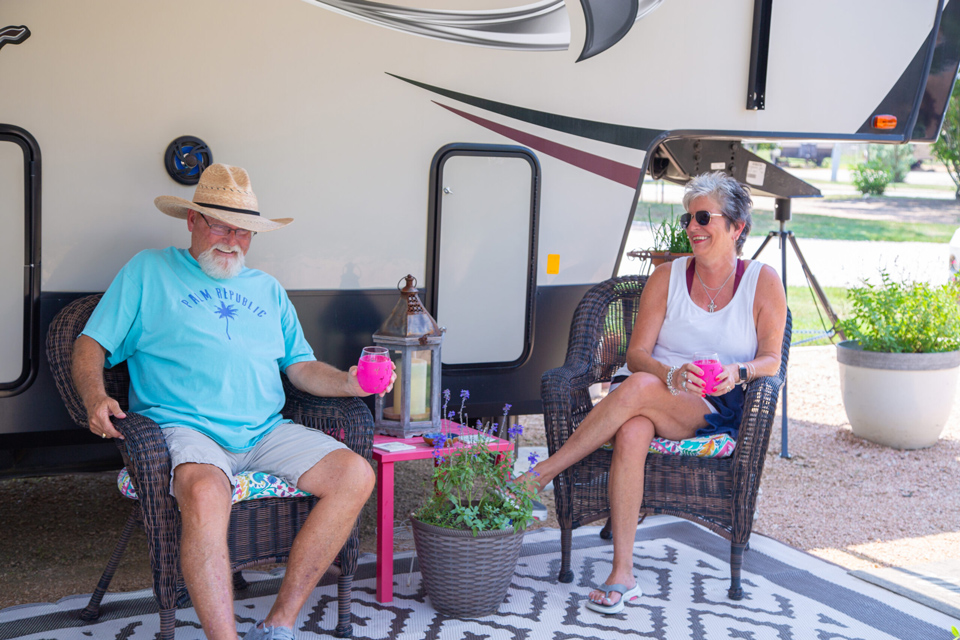
For those who work remotely, a typical weekday includes carving out a workspace at the dinette or a small desk setup. Leisure looks like sitting under the awning system with a book, chatting with neighbors in the evening, or exploring nearby towns on slower days.
Mail, Wi-Fi, Cell Coverage, and Healthcare: The Practical Realities

One of the most common things long-term RV residents wish they had researched is mail delivery. UPS and FedEx do not always deliver to RV park sites, and USPS delivery can be inconsistent depending on the park. Most full-time RV residents set up a PO box at a nearby post office or use a mail forwarding service for packages.
Wi-Fi and cell coverage vary widely from park to park. Some RV parks offer decent shared Wi-Fi, but in a park with dozens of residents streaming and working online, the network can get congested. Many long-term residents rely on their own mobile data plan or a dedicated mobile hotspot as their primary internet source. If you work remotely, bandwidth is something to ask about explicitly before committing to a monthly rate.
Cell coverage is typically strong in parks located near towns or highways but can drop in more remote or rural areas. If you are considering an RV park in a rural region, do a quick carrier coverage check for that zip code before you arrive.
Healthcare access is another practical consideration for long-term RV residents, particularly retirees and snowbirds. Identify the nearest urgent care clinic, pharmacy, and full-service hospital when you arrive at a new park. Most well-located RV parks, including parks near the Texas Hill Country corridor, are within a reasonable drive of basic medical services.
RV Maintenance and Site Upkeep: What Nobody Tells You

This is the part of the full-time RV lifestyle that promotional content rarely covers. Your RV is both your home and your vehicle, which means it requires attention on both fronts. Here are some of the maintenance tasks that regularly demand your time:
- Slide-out maintenance: Slide-outs add valuable living space but require regular lubrication and inspection. Slide-out leaks are a well-known issue for RV owners, especially after heavy rain.
- Roof maintenance: The RV rooftop air conditioner and any roof sealants need to be inspected seasonally. Roof leaks can cause significant damage if caught late.
- Tire maintenance: RV tires degrade from UV exposure even when parked. Check pressure regularly and replace tires on a recommended schedule.
- Awning system: Awning sag and awning system issues are common. Retract your awning before any storm to avoid damage.
- RV leveling systems: Keeping your RV level is important for appliance function and daily comfort. Automatic leveling systems need occasional calibration.
- Water systems: Your grey water tank, black water tank, and holding tank need regular monitoring and dumping if you are not on a direct sewer hookup. On a full hookup site with a direct sewer connection, this becomes much simpler.
- Power management: Understanding your inverter system, battery bank, and circuit breaker is important. If you run a generator, be aware of park rules around generator use and quiet hours.
Seasonal tasks like winterization and de-winterization, plumbing leak checks, HVAC maintenance, and keeping your exhaust fan and ventilation system clean are part of the annual rhythm. The good news is most tasks are manageable with a little consistency and the right tools on hand.
How Weather and Seasons Affect RV Park Living

Weather hits differently in an RV. Insulation and noise insulation in most RVs are lighter than a traditional home, which means heat, cold, and sound travel more easily. A hot Texas summer afternoon inside a coach without adequate electrical service to run your rooftop air conditioner is uncomfortable. A cold front in winter can make heating a real concern if you are not plugged into a reliable hookup.
The flip side is that mild seasons in a well-located RV park are genuinely wonderful. Sitting outside in the Texas Hill Country on a cool spring evening is hard to beat. Most long-term RV residents learn to lean into the good seasons and plan ahead for the challenging ones.
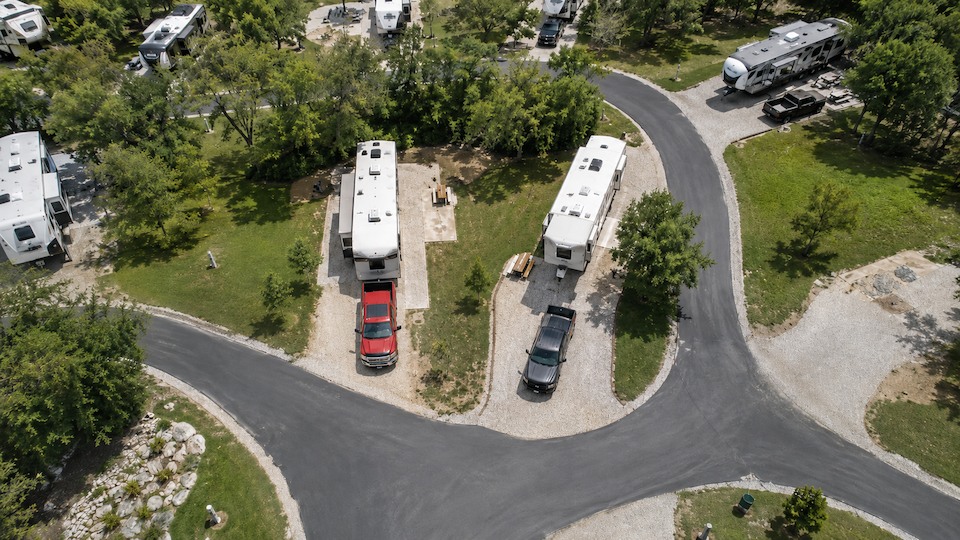
Park noise levels are also worth setting expectations around. RV park spacing varies. Some parks offer generous site layouts with real privacy; others pack rigs in close together. Campground noise from generators, early risers, dogs, or arriving guests is part of the texture of the lifestyle. Most people adjust, but it is an honest consideration if you are used to quiet suburban living.
The Social Side of RV Park Community Life
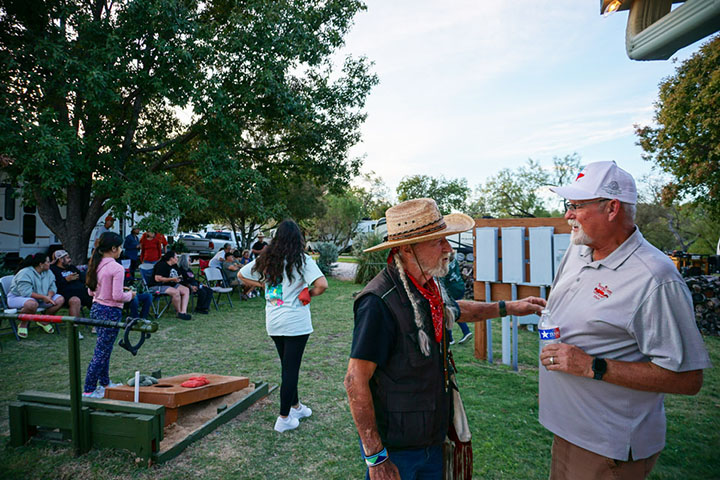
One of the most genuinely appealing aspects of RV park living is the community that develops, especially during longer stays. RV park residents tend to look out for each other. You will find that neighbors share tips, tools, and recommendations in a way that feels different from apartment or subdivision living.
Socializing typically happens organically. Evening conversations around a fire pit, morning coffee at a picnic table, and shared use of RV park amenities like pools or laundry facilities all contribute to a sense of connection. For retirees and snowbirds especially, this camaraderie is often cited as one of the biggest unexpected benefits.
That said, shared spaces come with shared responsibilities. Most well-run parks have clear RV park rules around noise, pets, speed limits, and common area use. A good pet policy and an engaged RV park host or RV park management team go a long way toward keeping the community comfortable for everyone.
Etiquette matters. Respecting your neighbor’s site layout, not cutting through occupied sites, and following the park’s check-in and quiet hour policies makes the community function well. Most long-term residents find these norms easy to follow once they are part of the culture.
The Financial Picture: Monthly Rates and Utility Fees

Long-term RV park living can be significantly more affordable than renting a home or apartment, but it is not free of financial complexity. Monthly rates vary by location, amenities, and site type. A full hookup site with water hookup, electrical service, and sewer hookup will typically cost more than a basic site, but it also simplifies daily life considerably.
Utility fees may or may not be included in your monthly rate. Some parks charge separately for electricity, particularly during high-use summer months. Ask about the deposit, cancellation policy, and seasonal rate changes before you sign anything. Understanding the full monthly cost upfront helps you budget accurately.
Is RV Park Living Right for You?
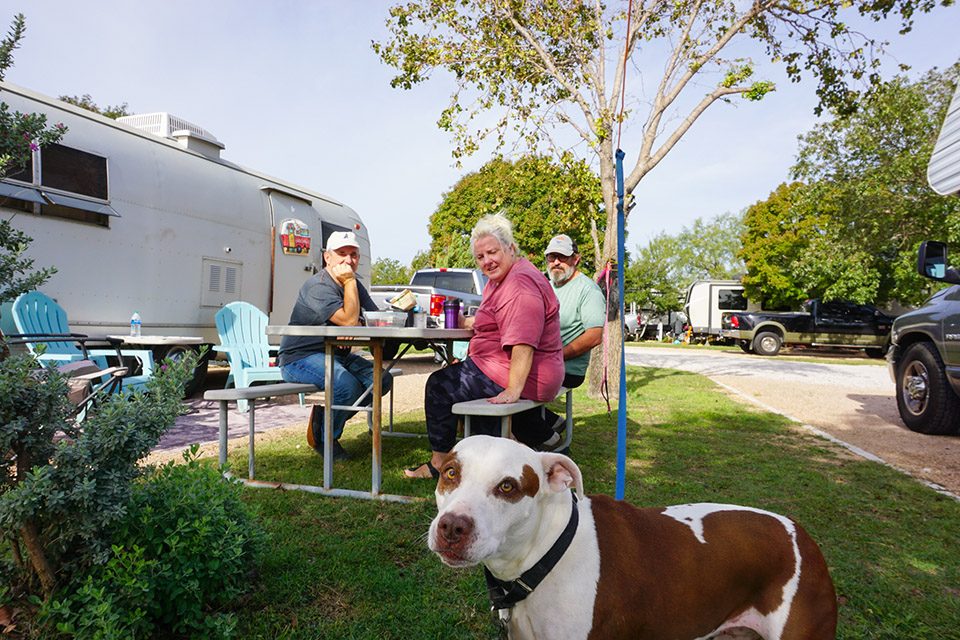
RV park living is genuinely rewarding for the right person. It trades square footage for flexibility, routine upkeep for a simpler overall lifestyle, and suburban isolation for real community connection. The frustrations are real too: maintenance demands, weather sensitivity, limited storage, and the occasional noisy neighbor are all part of the package.
The key is going in with accurate expectations. Talk to long-term RV park residents, visit parks before committing, and make sure the practical details like Wi-Fi, cell coverage, and proximity to healthcare fit your needs.

If you are exploring the Texas Hill Country as a base for long-term RV living, Miller Creek RV Park offers spacious, full hookup sites in a quiet, scenic setting within reach of major cities and everyday conveniences. Learn more, plan your stay, and take the next step toward a more comfortable RV lifestyle.