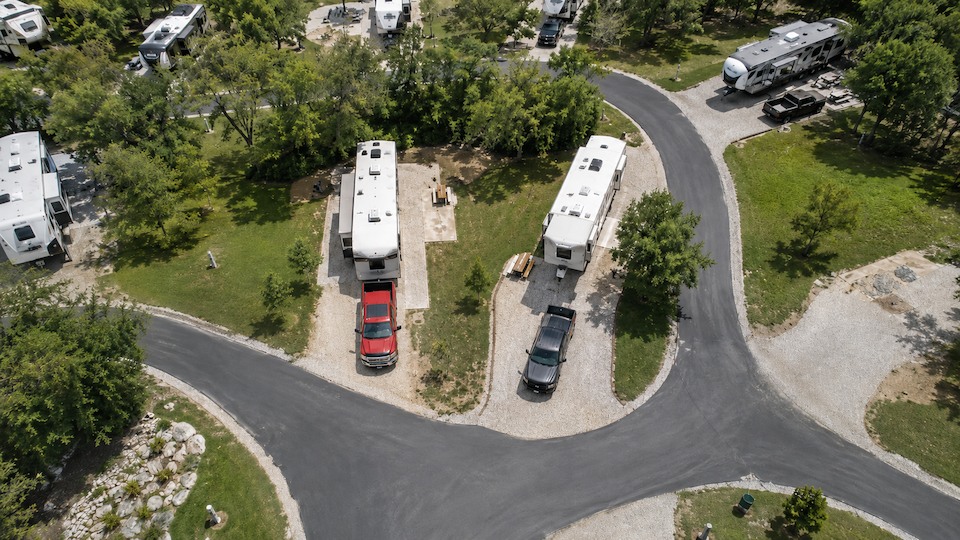
While our guests love the amenities and peaceful, quiet atmosphere, the ground beneath your tires has a fascinating story that stretches back much further than the invention of the RV.
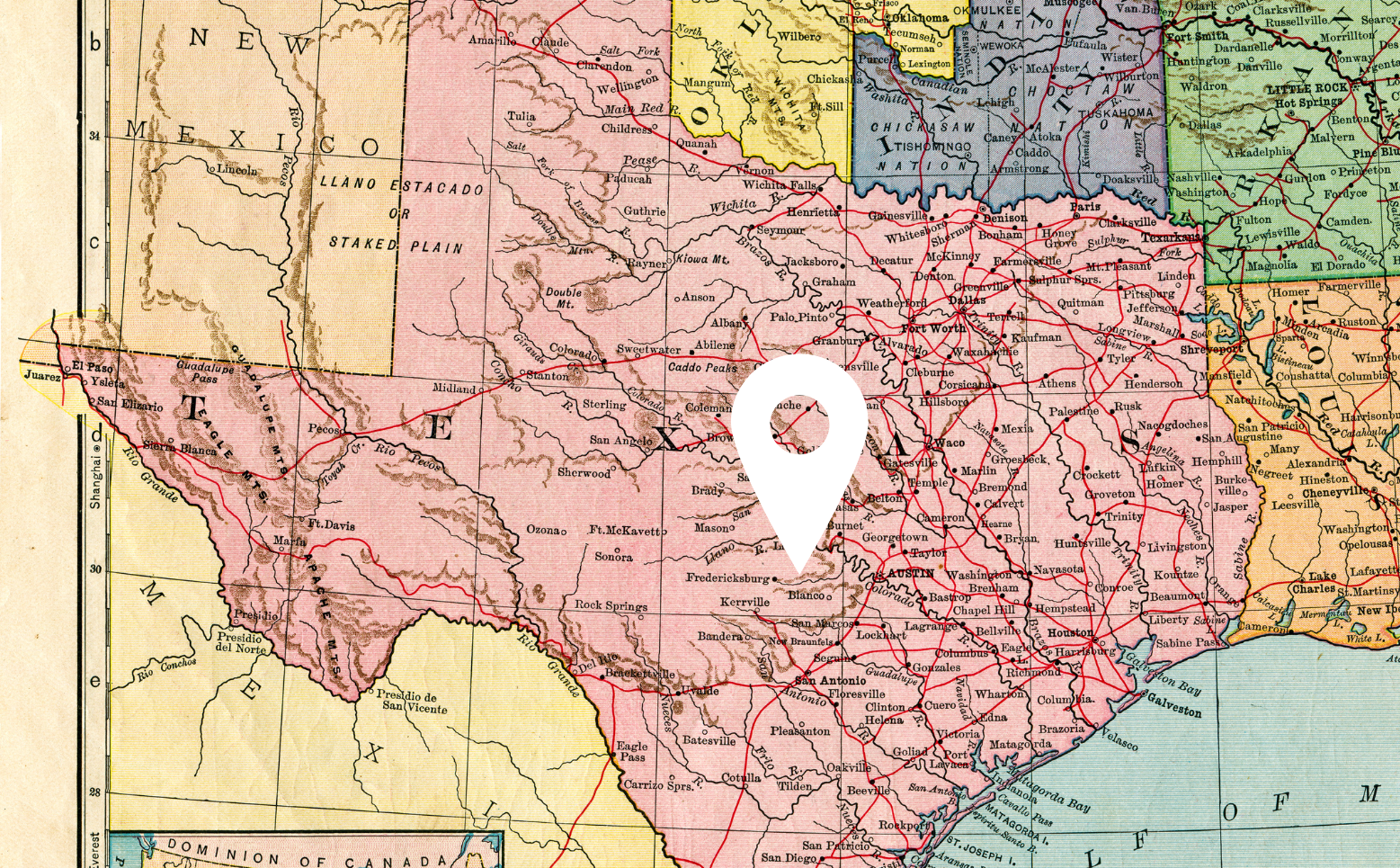
The Texas Hill Country is an incredible meeting ground of Native American, Spanish, Southern Anglo, and European history. Before you set out on your next day trip, here is a quick guide to the pioneer and presidential history right in our backyard:

Native Roots and the “Flint” River
Archaeologists have found evidence that humans have occupied parts of the Hill Country for over 10,000 years. For thousands of years, Native Americans hunted deer and turkey, gathered pecans, and fished in the clear streams. They were also drawn to the area for a special stone called Edwards Chert (flint), which they used to make long-lasting arrow points, knives, and scrapers.
When the Spanish arrived, they called this flint pedernales. This is exactly how the nearby Pedernales River, located just 10 miles away from Miller Creek at Pedernales Falls State Park, got its name! Native Americans also held certain geological sites in deep reverence; for example, Enchanted Rock near Fredericksburg was considered a sacred place.

Spanish Missions and the Lost Silver Mine
In the 1700s, Spanish soldiers and missionaries traveled from San Antonio and Mexico to build a stone fort and a wooden church near what is now the town of Menard. Their goal was to build a mission for the Apaches and to search the area for silver, hoping to open a mine.
However, they didn’t have much luck with either. The Apaches preferred their own way of life and eventually attacked the mission alongside other tribes, burning down the wooden church. As for the silver? Despite many people searching for the legendary “Lost San Saba mine” over the centuries, no silver was ever found in the Texas Hill Country.

The German Imprint and Southern Pioneers
In the 1840s and 1850s, the Hill Country saw a wave of new settlers. Southern mountaineers from states like Tennessee, Arkansas, and Missouri migrated into the region. Around the same time, a massive influx of German immigrants, introduced by the “Society of Nobles,” settled a 100-mile corridor along an old Indian route known as the Pinta Trail.
These German settlers deeply shaped the culture, architecture, and food of nearby towns like Fredericksburg, Comfort, and Boerne. If you take a 30-mile day trip to Fredericksburg, you can still see the boat-shaped Steamboat Hotel built by a German immigrant in the 1880s. The hotel once hosted famous historical figures like Robert E. Lee, Ulysses S. Grant, and the outlaw Jesse James, and today it serves as the Museum of the Pacific War, honoring Fredericksburg native and WWII Commander in Chief, Chester Nimitz.

Pioneers and Presidents in Our Backyard
You don’t even have to leave Blanco County to find incredible history. Our very own Johnson City was founded in 1879 by a pioneer named James Polk Johnson.
Just 12 miles down the road in Stonewall, you’ll find the Lyndon B. Johnson National Historical Park. The 36th President of the United States was born on a ranch right on the Pedernales River, and you can still tour his historic “Texas White House” today.

Explore History from Your “Restination”
Today, the traditions of Native Americans, Hispanics, Europeans, and pioneers have all blended together to create the unique, welcoming character of the Texas Hill Country.
History comes alive when you stay at the center of it all. Click here to book your site at Miller Creek RV Park and make us your base camp for your next historical adventure!