
Last verified: July 2026
Almost every guide to Texas RV living laws gives the same advice: check your county’s zoning rules. That sounds reasonable, and it sends a lot of people down the wrong path, because most Texas counties do not have zoning at all.
The real question is which authority actually controls the specific piece of land you want to park on. Get that wrong and you can spend thousands on a pad, a septic system, and an electrical pedestal before finding out the setup was never permitted. We run a park in the Texas Hill Country and field these questions constantly, so here is what Texas law actually says.
What Actually Changed in Texas RV Law Recently
Search for new RV laws in Texas and you will find a lot of confident, vague answers. Two things genuinely changed, one commonly cited “new law” is five years old, and the thing most people are asking about did not change at all.
Vehicle safety inspections ended for most RVs. Under House Bill 3297, non-commercial vehicles have not required a safety inspection before registration since January 1, 2025. A $7.50 inspection program replacement fee is collected at registration instead, or $16.75 covering the first two years on a qualifying new vehicle. If your RV is non-commercial, the annual safety inspection is simply gone.
Emissions testing is a separate program and still applies in 17 designated counties, including Travis and Williamson. Blanco, Hays, Gillespie, and Burnet counties are not among them, so an RV registered at an address in any of the four needs no emissions test. Bexar County becomes the eighteenth on November 1, 2026.
Prohibited camping became a criminal offense in 2021. Texas Penal Code Section 48.05, added by House Bill 1925, makes it a Class C misdemeanor to knowingly camp in a public place without consent of the agency managing it. This gets cited constantly as “the new Texas RV law.” It took effect September 1, 2021, and it was aimed at public encampments, not RVers. It does not apply to private property, licensed RV parks, or authorized campgrounds.
What did not change: Texas has no statewide statute that broadly authorizes or prohibits full-time RV residence. We found nothing in the 2025 legislative session that changes that for RV residents, though a search of that kind is never exhaustive. What decides your situation is local and private restrictions, not a state law.
Why “Check Your County Zoning” Is Usually the Wrong Question
Texas counties generally cannot adopt broad zoning the way cities do. Local Government Code Section 232.101(b) states directly that a commissioners court shall not regulate the use of any building or property for business, industrial, residential, or other purposes. A small number of counties hold narrow zoning-like authority under specific statutes, so treat this as a strong general rule rather than an absolute one.
County authority over unincorporated land is real but narrow. It covers subdivision platting, on-site sewage facilities, floodplain development, public nuisance abatement, and road access, but generally not dictating the use the land is put to.
Read that carefully, because the absence of zoning is not approval. It means no one will hand you a permit confirming you are in the clear, and the constraints that do apply come from somewhere else. Start by establishing which of these three situations your parcel falls into.
Around our part of the Hill Country, that third category is common but not universal. Texas municipalities generally have an ETJ, and Johnson City, Blanco, Fredericksburg, Dripping Springs, Wimberley, Marble Falls, and Burnet are no exception. A parcel two miles outside a small town can sit in that town’s ETJ while the parcel next to it does not, so both the boundary and the city’s authority within it have to be confirmed address by address.
Can You Live in an RV on Your Own Land in Texas?
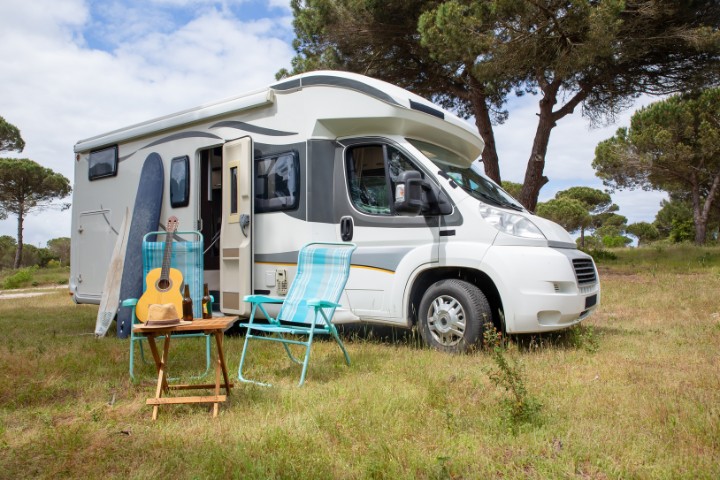
Often yes, but owning the land is not what makes it legal. Where the parcel sits and how the RV is used are what matter, and the second part trips people up because four different activities get discussed as if they were one:
- Storage. An unoccupied RV on the property, often restricted only by setbacks or screening.
- Temporary parking. An RV on site, occupied briefly, often with a stated day limit.
- Guest occupancy. Someone staying in the RV short term while a primary residence exists on the property.
- Full-time residential occupancy. The RV is the dwelling.
A city that permits the first three may still prohibit the fourth. When you call a planning department, asking whether RVs are allowed on the property will get you a misleading yes. Ask specifically whether continuous residential occupancy of a travel trailer, fifth wheel, or motorhome is permitted at that address, and ask for the answer in writing.
A common pattern in Texas cities is to allow RV occupancy only as temporary housing while a permanent home is under construction on the same lot, tied to an active building permit. That is a real allowance, but it ends when the permit does.
Outside city limits and outside any ETJ, there is often no land use ordinance to violate. That is not the same as being cleared to move in. The constraints move to sewage, floodplain, platting, and private restrictions, and those are where full-time setups usually fail.
How Long Can Someone Live in an RV on Your Property?
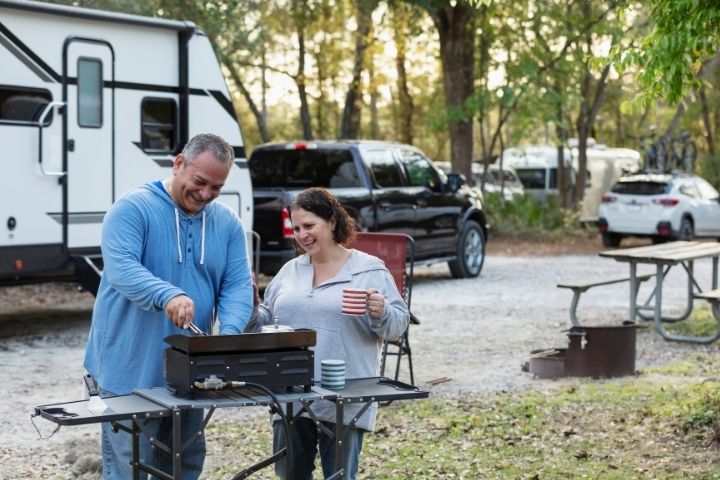
There is no single statewide maximum stay. Duration limits come from city ordinances, and they vary widely. Some cities cap occupied RV stays at a set number of days per year. Some allow indefinite occupancy tied to a construction permit. Some prohibit occupancy entirely regardless of duration.
Where no city has authority, a day limit is less likely, but do not assume none exists. Recorded restrictions, plat conditions, floodplain rules, and the terms of your septic approval can all constrain how a property is occupied. Ask the county in writing rather than inferring an answer from the absence of zoning.
The number of RVs is a separate question. Placing several occupied RVs on one parcel can trigger platting requirements or cause the property to be treated as an unlicensed RV park. Talk to the county before anything gets parked.
Septic and Sewage: What Stops Most Private Land Setups
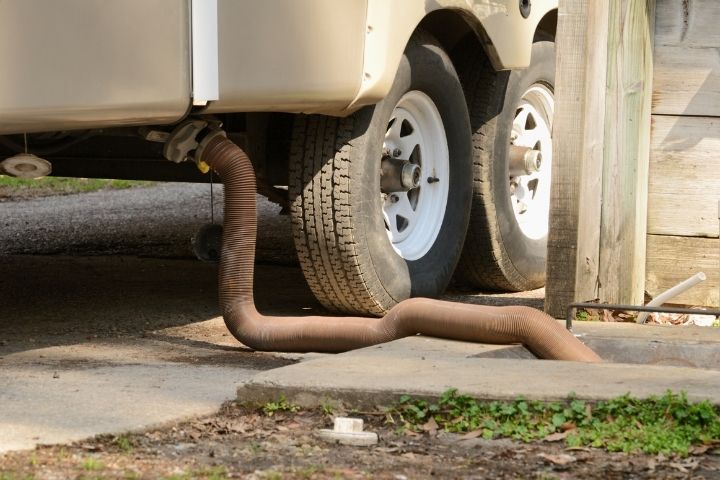
This ends more private land RV plans than zoning ever does, and it is the requirement most articles skip.
Texas regulates on-site sewage facilities under Health and Safety Code Chapter 366 and Title 30, Texas Administrative Code, Chapter 285. TCEQ delegates most permitting to local authorized agents, usually a county office. A permit and approved plan are generally required to construct, alter, repair, extend, and operate an OSSF, and approval depends on soil conditions, parcel size, setbacks from wells and property lines, and a site evaluation. Not every parcel can support one.
One narrow exemption matters in the Hill Country, where large rural tracts are common. Under what is usually called the 10-acre rule, an OSSF may be exempt from permitting only where every condition is met: the tract is 10 acres or larger, the system has a site evaluation by a licensed site evaluator or professional engineer, it serves a single family dwelling that is the only dwelling on the tract, effluent is disposed of on the property, all components sit at least 100 feet from the property line, and the system causes no nuisance or groundwater pollution.
Read those conditions closely, because two of them disqualify common plans. If the tract already has a house, an RV is not the only dwelling. If you are thinking about more than one unit, a guest rental, or anything resembling a small park, this exemption does not cover you. And the exemption removes the permit requirement, not the requirement to have a compliant system built to Chapter 285 standards. TCEQ’s own guidance says you might not need a permit and to confirm with your local permitting authority.
Graywater deserves a precise answer, because it is widely misunderstood. Texas does allow limited residential graywater reuse, and no TCEQ authorization is required for residential use averaging under 400 gallons per day when the system meets the rules. But graywater is defined narrowly: showers, tubs, handwashing sinks, sinks not used for food preparation, and clothes washers, excluding anything that has contacted toilet waste. Do not assume an RV graywater tank or hose arrangement qualifies as a lawful reuse system. Whether a given setup works depends on the wastewater source, system design, volume, site conditions, and local OSSF requirements, and the OSSF rules describe a graywater reuse system as beginning at the graywater stub-out of a single family dwelling. Reuse systems are also not authorized to overflow onto the ground. Confirm any arrangement with the local OSSF authority before you use it.
One more thing. An approved electric meter does not indicate the site is approved as a residence. Utility service and sanitation approval are separate processes, and getting power connected proves nothing about the legality of living there. Verify the wastewater question before you buy the land, not after.
Deed Restrictions and HOA Covenants
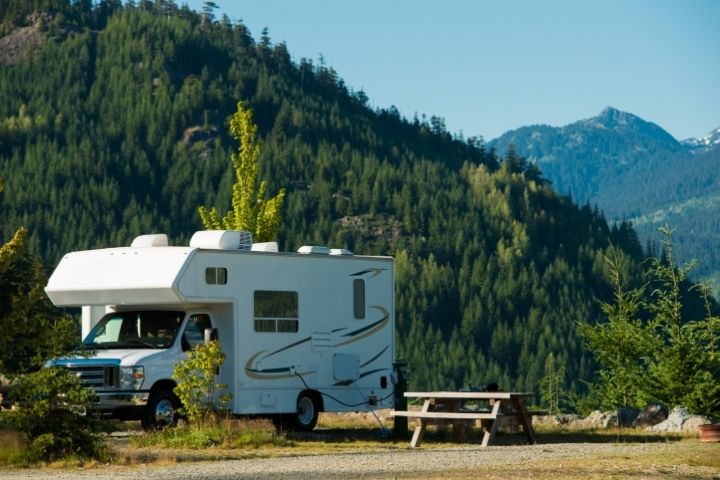
Even where no zoning exists, private restrictions can prohibit exactly what you are planning. Deed restrictions and subdivision covenants run with the land, bind you as the new owner, and are enforceable by neighbors regardless of what the county allows.
Be skeptical of land marketed as unrestricted. That word usually refers to deed restrictions alone, and sellers use it loosely. It does not confirm the parcel is outside a city’s ETJ, that an OSSF permit is obtainable, that the site is out of the floodplain, or that an address can be assigned. Pull the recorded restrictions from the county clerk yourself rather than trusting a listing description.
Registration, Inspection, and Insurance

Registration. Motorized RVs are titled and registered like other motor vehicles, with annual renewal. Towable RVs such as travel trailers and fifth wheels are registered as trailers, and titling requirements differ by weight, so confirm your category with TxDMV rather than assuming the rules are identical. New residents are generally expected to title and register within 30 days of moving to Texas.
Inspection. As covered above, non-commercial vehicles no longer need a safety inspection before registration, emissions testing still applies in designated counties, and commercial vehicles are unaffected.
Insurance. Texas financial responsibility rules apply to motor vehicles operated on public roads, so a motorized RV needs liability coverage like any other vehicle. A towable RV is generally covered under the tow vehicle’s liability policy while in tow rather than carrying its own statutory requirement, so do not assume the two categories work the same way.
The bigger issue for full-timers is coverage type, and this is practical guidance rather than a legal requirement. Many standard recreational RV policies are written on the assumption the vehicle is used for occasional travel, and they can limit or exclude losses that occur while the RV is occupied as a permanent residence. Most carriers offer a full-timer’s policy or endorsement that addresses this, along with personal liability coverage at the site.
Tell your insurer plainly that the RV is your full-time residence and where it is parked. Discovering the distinction after a hail claim is expensive.
Establishing Texas Domicile From an RV

Living in an RV in Texas and being legally domiciled in Texas are two different things, and one does not automatically produce the other.
Domicile is about demonstrating intent to make Texas your permanent home: a Texas driver license, vehicles registered here, and voter registration in the county where your domicile address sits. DPS requires documentation showing a Texas residential address, so the address you use has to hold up.
That is where full-timers run into trouble. A mailing address, a physical address, and a legal domicile address are not interchangeable. Some parks accept mail but will not allow the address to be used for licensing, and an undeveloped parcel may have no assigned 911 address at all, which affects both your paperwork and whether emergency services can find you. Ask the county about address assignment early.
Several mail forwarding services in Texas market themselves to full-time RVers. Do not assume a commercial mail-receiving address will be accepted as a Texas residential or domicile address. Confirm current documentation requirements directly with DPS, and with the county election office, before you rely on any address.
One related note: an RV can qualify as a residence for federal tax purposes if it has sleeping, cooking, and toilet facilities. Whether that helps your situation is a question for a tax professional, not a campground.
Public Land, Roadside Parking, and Prohibited Camping
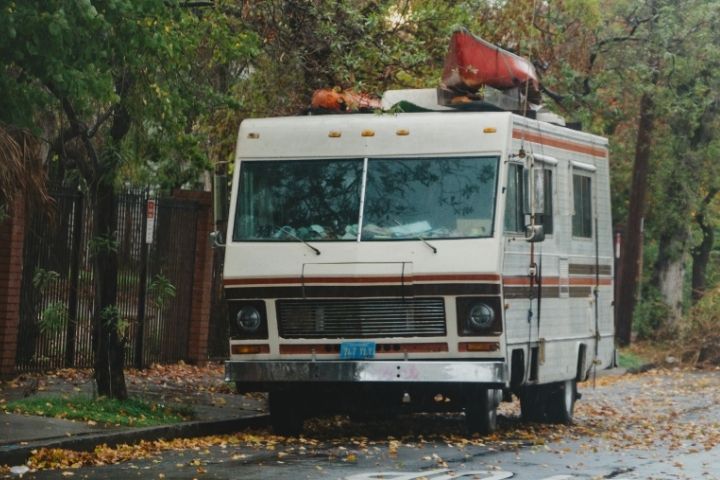
Texas state parks are for travel, not permanent housing. Stay limits vary by park, and none are designed as a residential base.
There is no single statewide rule on roadside parking, and that is not the same as permission. Local ordinances, posted restrictions, and the rules of whichever agency manages the right of way all apply, and overnight occupancy is a different question from parking.
Penal Code Section 48.05 is the provision to know. Camping in a public place without the effective consent of the authority responsible for that place can be a Class C misdemeanor. The operative test is whether the location is a public place, not whether a park holds a license, so it generally does not govern occupancy on private property with the owner’s permission. Other laws, local rules, park agreements, and permit conditions can still apply.
When a Licensed RV Park Is the Simpler Legal Path
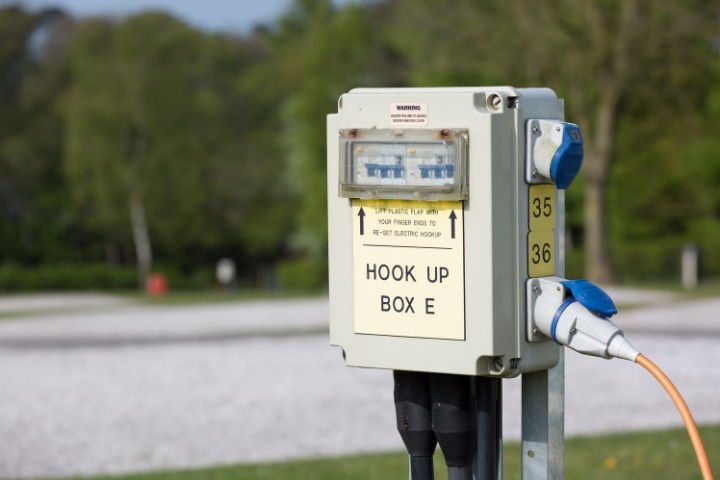
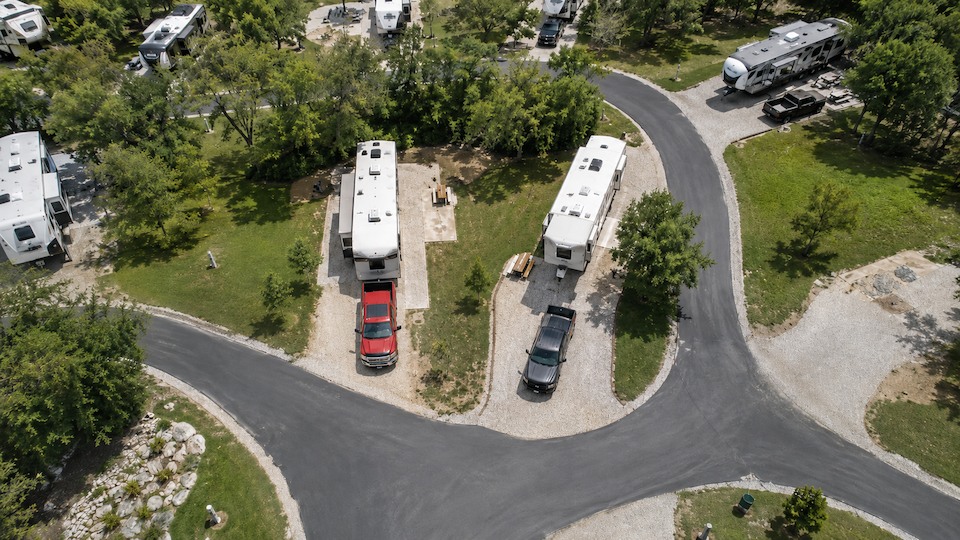
For most people asking these questions, an established park is the answer, and not as a consolation prize. Sanitation, electrical service, water, and address are already permitted and inspected. The OSSF rules recognize this directly: connecting an RV to a rental space is not treated as construction so long as the existing system is not altered, which is why a permitted park sidesteps the process that stalls most private land plans.
One legal wrinkle is worth understanding. Until 2013, RVs were treated as manufactured homes under Property Code Chapter 94. Senate Bill 1268 repealed those references, so Chapter 94 no longer applies to RVs. Attorney General Opinion KP-0222 then concluded that whether an RV park occupant is a licensee or a tenant depends on the parties’ agreement and the facts of the case. The opinion declined to set a bright-line test and pointed to factors including the length of stay, the occupant’s right to have other guests, and each party’s right to terminate. Length of stay matters, but a monthly agreement does not by itself create a tenancy. Your written agreement matters more than any default assumption. Read it, and keep a copy.
Ask any park about maximum stay, whether the quoted rate is truly monthly, how electricity is billed, mail policy, and whether the address can be used for licensing. Our guest guide covers how we handle these, and our 10 tips for choosing the perfect long-term RV park walks through what to look for.
Infrastructure matters more than amenities on a long stay. Confirm pedestal service before you commit, since 30-amp and 50-amp hookups are not interchangeable and Texas summers punish an undersized connection. The amenities that actually matter long term tend to be the unglamorous ones.
How to Verify Your Own Parcel

This takes an afternoon and it is worth doing before money changes hands.
- Get the parcel ID. Pull it from the county appraisal district using the address or legal description.
- Determine jurisdiction. Ask the county development office whether the parcel is inside city limits, in a municipality’s ETJ, or fully unincorporated. This tells you which governments may have authority, but it is only the first step. Wastewater, floodplain, platting, access, and private restrictions still have to be checked separately.
- Ask about occupancy, not parking. If a city has authority, ask the planning department whether continuous residential occupancy of an RV is permitted at that address. Request the ordinance section or a written response.
- Check sewage before electric. Ask the county’s designated OSSF authority whether the site can connect to sewer or support a permitted on-site system.
- Check floodplain and access. Confirm with the county floodplain administrator that the pad and driveway sit outside a mapped flood hazard area and that the road can handle your rig.
- Pull deed restrictions and confirm the address. Get recorded restrictions from the county clerk, check whether an HOA exists, and ask whether a 911 address can be assigned.
Get answers in writing. A verbal yes from someone at a counter is worth very little eighteen months later.
Frequently Asked Questions
Is it legal to live in an RV full-time in Texas?
There is no statewide prohibition. Legality depends on the specific location, which authority governs it, and whether sanitation requirements are met.
Can I live in an RV in my backyard?
Inside city limits, usually only under specific conditions, often tied to an active building permit for a home on the same lot. Outside city limits and outside any ETJ, there is often no land use ordinance to apply, but septic approval, floodplain rules, and recorded restrictions still govern. Confirm the address with both the city and the county.
Do I need a permit to live in an RV on my property?
Sometimes. Cities may require a temporary use permit, specific use permit, or conditional use permit. Counties generally do not issue land use permits, but an OSSF permit is usually required regardless of jurisdiction.
Can an RV be a permanent residence in Texas?
It can function as your residence and can qualify as a residence for federal tax purposes. It does not become real property, and it remains a registered vehicle.
How long can someone live in a camper on my property?
There is no statewide maximum. City ordinances set day limits where they apply. Where no city has authority, a limit is less likely, but recorded restrictions, plat conditions, and the terms of a septic approval can still constrain occupancy. Ask the county in writing.
Does my RV still need a Texas inspection?
Non-commercial vehicles have not required a safety inspection since January 1, 2025. Emissions testing still applies in designated counties, which do not include Blanco, Hays, Gillespie, or Burnet.
Planning a Long-Term Stay in the Hill Country
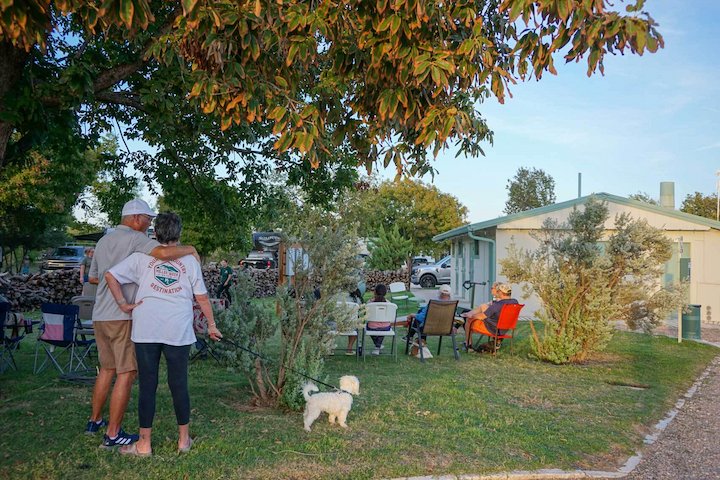
Sorting out the legal side is far cheaper before you commit to a parcel than after. If an established park makes more sense than private land, Miller Creek RV Park sits between Johnson City and Blanco with full hookups and long-term sites, and our long-term community includes people who came for a season and stayed for years.
For the day-to-day of the lifestyle, see our tips for full-time RVers and our guide to transitioning to long-term RV living in Texas.
This guide is general information about Texas RV living laws, not legal advice. Ordinances, plats, deed restrictions, permit conditions, and agency interpretations change over time and can control the outcome for a specific address. Verify current requirements with the authorities governing your parcel before you commit to a property or a setup.