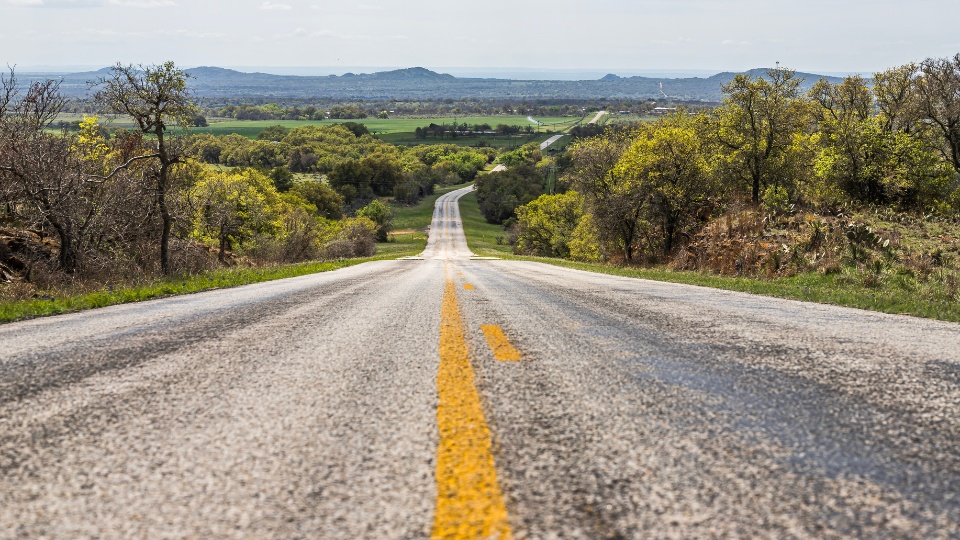
There is no single best place for RV camping in Texas, because the state is too big and its seasons too uneven for one answer to hold all year. The desert that feels perfect in February is punishing by July, and a Gulf beach that is breezy in April sits inside hurricane season by September. The better question is which region fits the month you’re traveling and the rig you’re driving.
The short version:
- October through April: Big Bend Country and the Hill Country, when the desert and the limestone hills are at their most comfortable.
- November through March: the Rio Grande Valley and the lower Gulf Coast, where Winter Texans settle in for weeks or months.
- Spring and fall: the Piney Woods and Prairies & Lakes for lake camping, and the Panhandle canyons before summer heat builds and after it breaks.
- Summer: go high in the Davis Mountains, go coastal with a hurricane plan, or camp near a Hill Country river with a flood plan.
The rest of this guide compares all seven regions on the things that actually change a trip: season, hookups, rig limits, booking rules, and distance. Mileages are measured from our front gate at Miller Creek RV Park, between Johnson City and Blanco, because the Hill Country makes a useful center point for sizing up a statewide route.
Texas RV Regions Compared at a Glance
The regions below follow the seven used by Travel Texas, the state’s tourism office. Distances are Google Maps driving miles from our park, checked in September 2026; a towed or motorized rig will take longer than the car times Google shows. Every row is expanded in the region sections that follow.
Seven RV Camping Destinations in Texas, Region by Region
Hill Country
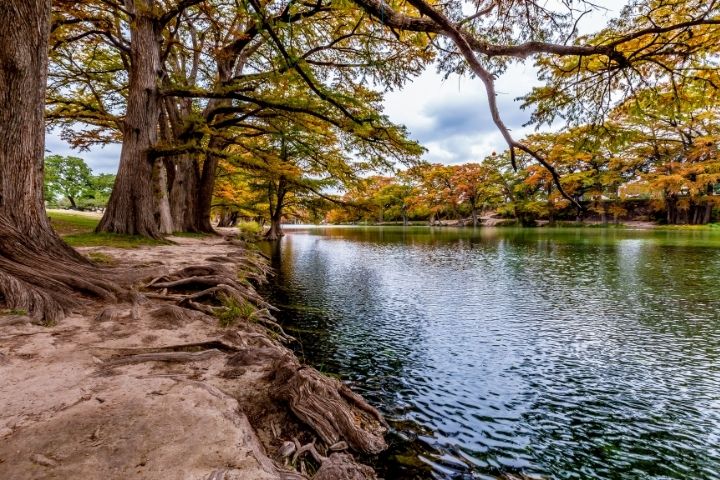
The Hill Country, the core of RV camping in Central Texas, packs state parks, private parks, rivers and small towns into short drives, so a full campground or a rained-out plan usually has a backup within the hour. Austin is about 43 miles from our gate, Fredericksburg about 37 and downtown San Antonio about 57, which makes the area a practical base rather than a one-night stop.
For state park camping, Blanco State Park sits 8.5 miles from us and has 17 full-hookup sites (eight of them with 50-amp service) plus 12 water-and-electric sites. Pedernales Falls State Park, about 18 miles away, offers 69 sites with water and 30-amp electric but no sewer, so plan on the dump station and a 30-amp power budget. Farther west on the Frio River, Garner State Park runs from water-only sites to a dozen full-hookup sites and more than 130 sites with water and 50-amp service. Our guide to Hill Country state and national parks covers what to do once you’re parked.
Private parks fill the gaps state parks leave, especially for 50-amp rigs and stays longer than two weeks. Our own sites run about 40 to 45 feet long and 15 to 22 feet wide depending on the type, and every one has 20/30/50-amp service, water and sewer (current specs and rates are on our RV sites page). If you want to compare other options nearby, there are write-ups on RV parks around Fredericksburg and scenic RV campgrounds near Austin.
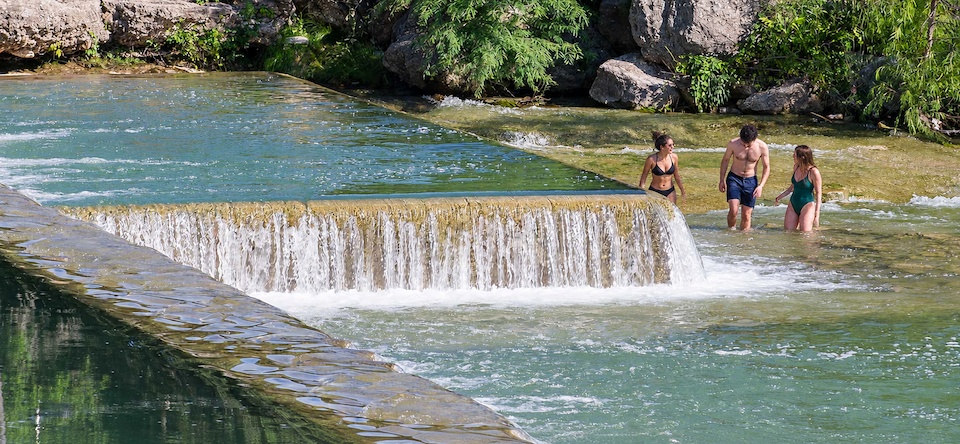
Spring is the headline season, with bluebonnet season drawing crowds to the back roads, and fall is just as comfortable. Summer is hot (Texas Parks and Wildlife lists a 94-degree July average high at Pedernales Falls), which is why the rivers matter so much here. The same rivers are the region’s main hazard: TPWD warns that the Pedernales can turn from a placid stream to a torrent within minutes, and low-water crossings on ranch roads can flood fast after a storm. Pick a site with a clear route to higher ground, watch the forecast and local alerts, and move up rather than waiting for water to reach you. Never drive a rig through a flooded road or low-water crossing.
Between park days, a day in Johnson City or a loop of Hill Country wineries fits easily into a morning-to-dinner trip.
Big Bend Country
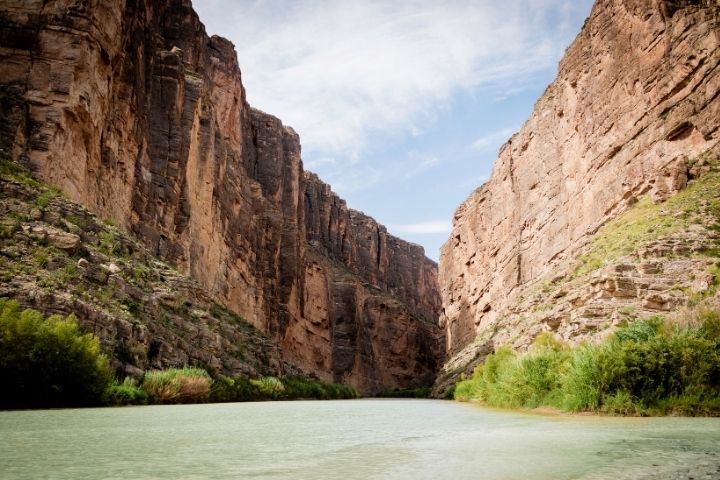
Big Bend rewards planning more than any other region in this guide, mostly because of distance and heat. Panther Junction, the national park’s main visitor center, is about 420 miles from our gate, and Davis Mountains State Park is about 386, so most rigs split the drive over two days.
Inside Big Bend National Park, full hookups exist in one place: the concessioner-run Rio Grande Village RV Park, with 25 sites and a 38-foot maximum length, booked by phone rather than through the park service. The park’s own campgrounds have no hookups at all. The Chisos Basin campground sits at 5,400 feet and stays cooler, but the park does not recommend trailers over 20 feet or RVs over 24 feet because of the narrow, winding road and small, unlevel sites. If your rig is longer than that, the road is the real constraint, so drive up in the tow vehicle and camp elsewhere. Check current conditions before you count on either campground.
Timing decides the whole trip. The National Park Service notes the desert floor is usually well above 100 degrees by late morning in summer, and Rio Grande Village averages a 107-degree high in June. January 1 through April 15 is the park’s busy season, with stricter stay limits, and spring is its busiest stretch. Between late fall and early spring is when an RV trip here makes the most sense.
For summer, look north to Davis Mountains State Park, which sits between 5,000 and 6,000 feet and has 26 full-hookup sites with 30- and 50-amp service. TPWD describes its summers as hot days with low humidity and cool nights, while winters often drop below freezing. Either way, distances between services out here can be long, so top off fuel and fresh water before you leave the interstate.
Gulf Coast
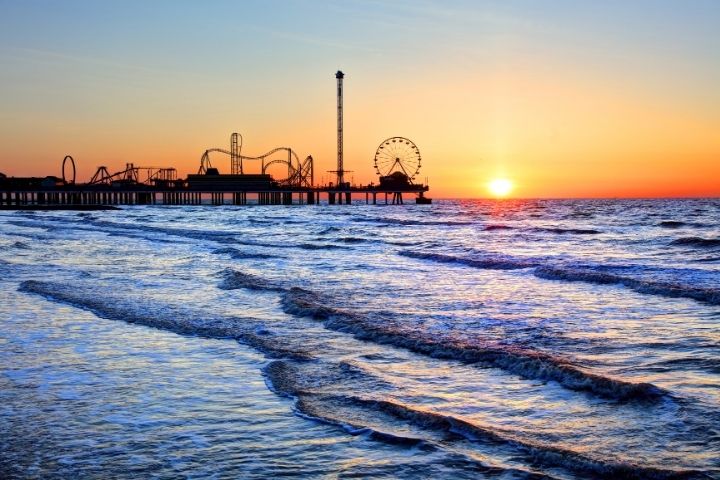
The coast is the one region where you can camp with the sand under your tires, but not always with hookups. At Mustang Island State Park, about 221 miles from us, the 48 sites with water and 50-amp electric sit behind the dunes roughly 400 yards from the water, while 50 primitive drive-up sites line a 1.5-mile stretch of beach with no hookups at all. Galveston Island State Park, about 260 miles away, has water-and-electric sites with 50-amp service on both the beach side and the bay side.
Padre Island National Seashore is the wilder option. There are no electric or water hookups in the park. Primitive beach camping is allowed on North Beach, South Beach and Yarborough Pass without a permit, though entrance fees apply. Stays are capped at 14 consecutive nights and 28 nights a year, and once you hit 14 nights, whether in a row or spread out, you have to be out of the park for 14 nights before coming back. Sand is the practical limit for a big rig: the Park Service recommends against driving large two-wheel-drive RVs on the beach at all, points RVs and trailers to the Malaquite and Bird Island Basin campgrounds instead, and recommends four-wheel drive even on the first five miles of South Beach.
The season question here is storms, not just heat. The Atlantic hurricane season runs June 1 through November 30, with most activity between mid-August and mid-October. Coastal trips in that window work best with flexible dates and an evacuation route you’ve already looked at. Salt air and constant wind are the smaller costs: a freshwater rinse of the undercarriage after a beach stay keeps the salt from sitting.
South Texas Plains
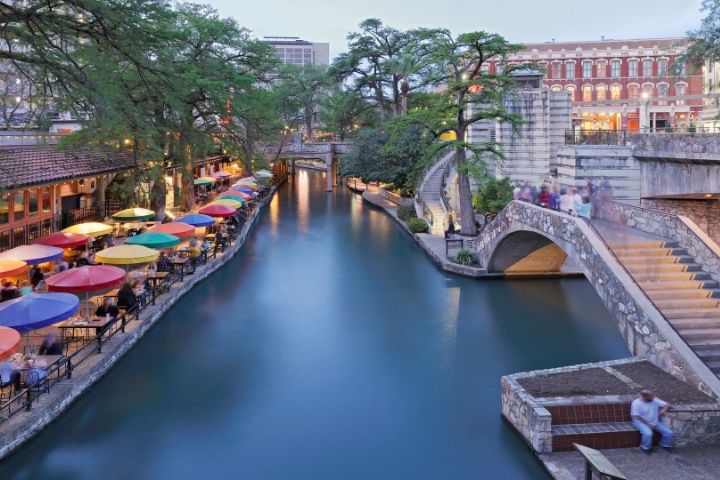
This region runs from San Antonio down to the Rio Grande Valley, and for RVers it’s mostly a winter story. The University of Texas Rio Grande Valley’s 2022-23 Winter Texan report estimated about 57,000 Winter Texan households in the Valley, drawn mostly from the Upper Midwest and Canada, and describes their stays as running from three weeks to six months. That demand is the reason monthly sites in the Valley are worth booking early if you’re aiming for January through March.
McAllen is about 296 miles from our gate. On the border, Falcon State Park, about 279 miles away, has 31 full-hookup sites with 30- and 50-amp service. Closer in, San Antonio works as a city stop on a Hill Country trip, and if you’d rather sleep in the hills and drive into town, we sit about an hour north as a Hill Country base for San Antonio. Our roundup of San Antonio’s historical sites covers the missions and downtown, and there’s a separate guide to RV parks near San Antonio if you’d rather stay in town.
Summers here are long and hot, so this is not the region to pick for a July trip unless you’re already based nearby.
Piney Woods
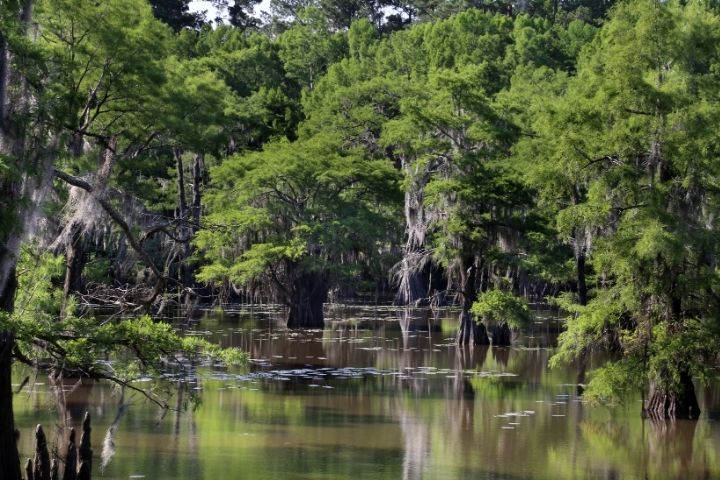
East Texas trades wide-open views for tree cover, lakes and bayous. Caddo Lake State Park, about 357 miles from us, has 46 campsites ranging from water-only to full hookup, set among bald cypress hung with Spanish moss, with paddling trails through the bayou. Martin Dies, Jr. State Park near Jasper has more than 80 sites with water and 50-amp electric and another 33 with 30-amp, plus nearly 14 miles of paddling trails where two rivers meet.
The trees are the draw and the catch. A wooded loop can mean tight turns and low branches, so check the RV length limit and parking space for your setup and look at site photos for overhead clearance before you book. Humidity makes summer heat feel heavier here than the thermometer suggests, so spring and fall are the comfortable seasons.
Prairies & Lakes
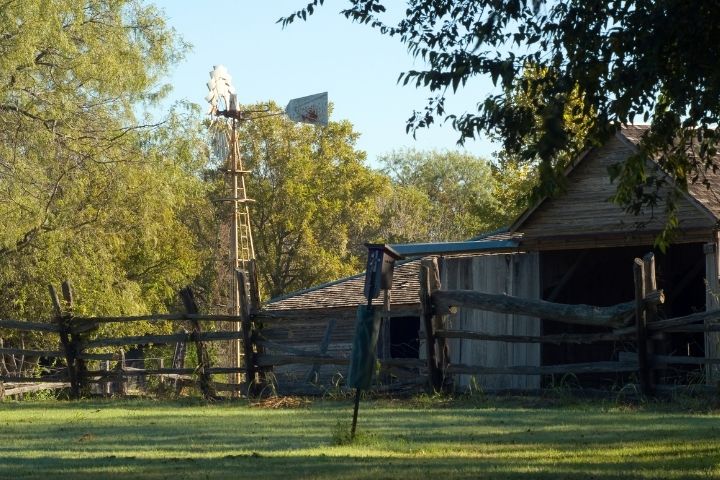
This is the North Texas region around Dallas, Fort Worth and Waco, and its RV appeal is lake camping close to the Metroplex. Cedar Hill State Park sits on Joe Pool Lake about 20 miles from downtown Dallas (232 miles from our gate) and has 147 full-hookup sites with 30- and 50-amp service, plus 192 more with electric. That is far more full-hookup sites than any other park in this guide, which makes it a good fallback when a Dallas-area trip needs sewer.
Parks this close to a big metro area tend to fill on weekends and holidays, so a Sunday-to-Thursday stay is usually easier to book than a Friday arrival.
Panhandle Plains
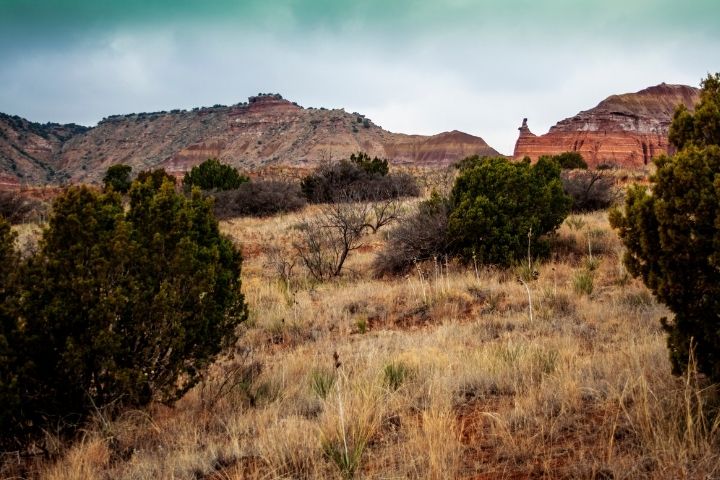
The Panhandle rewards the long drive with canyon country most visitors don’t expect in Texas. Palo Duro Canyon State Park, about 462 miles from our gate, sits in a canyon that TPWD describes as about 120 miles long, 20 miles wide and up to 800 feet deep. Its RV loops have water and electric, with 30- and 50-amp service in the Juniper, Mesquite and Sagebrush areas and 20- and 30-amp in Hackberry; no full-hookup sites are listed, and the Fortress Cliff area is tent-only, with no trailers or motorhomes.
Weather swings are the planning problem. TPWD lists a 19-degree January average low and a 92-degree July average high at Palo Duro, and it calls flash flooding a serious danger in the canyon. At nearby Caprock Canyons State Park, home to the Texas State Bison Herd, TPWD notes summer air temperatures can climb above 110 degrees. Late spring and early fall are the most comfortable windows; TPWD lists summer, during the outdoor musical season, as the park’s busiest stretch.
Where to RV Camp in Texas in Summer
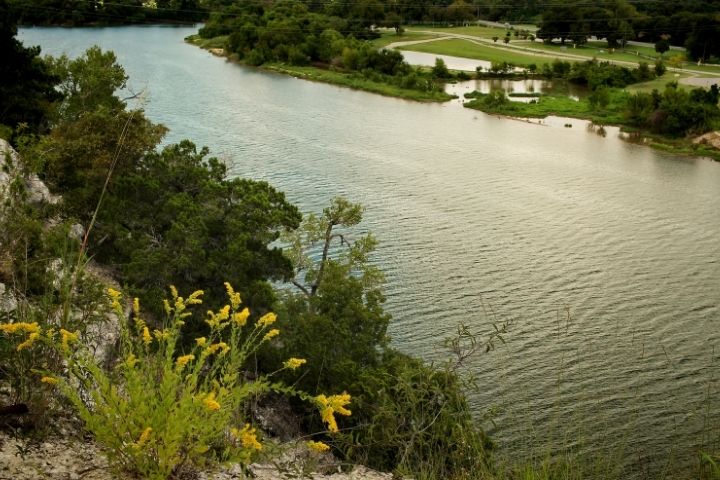
Summer RV camping in Texas works if you pick one of three strategies and plan your power around it.
- Go high. Elevation is the most reliable cooling in the state. The Davis Mountains sit between 5,000 and 6,000 feet, and Big Bend’s Chisos Basin at 5,400 feet runs well below the desert floor, though it has no hookups and suits only smaller rigs.
- Go coastal. The Gulf breeze takes the edge off, but you’re camping inside hurricane season, so book with flexible dates and watch the forecast.
- Go to the water. Hill Country rivers give you a place to cool off by day, as long as your site has a clear route to higher ground and you leave early when storms are forecast rather than waiting for the water to rise.
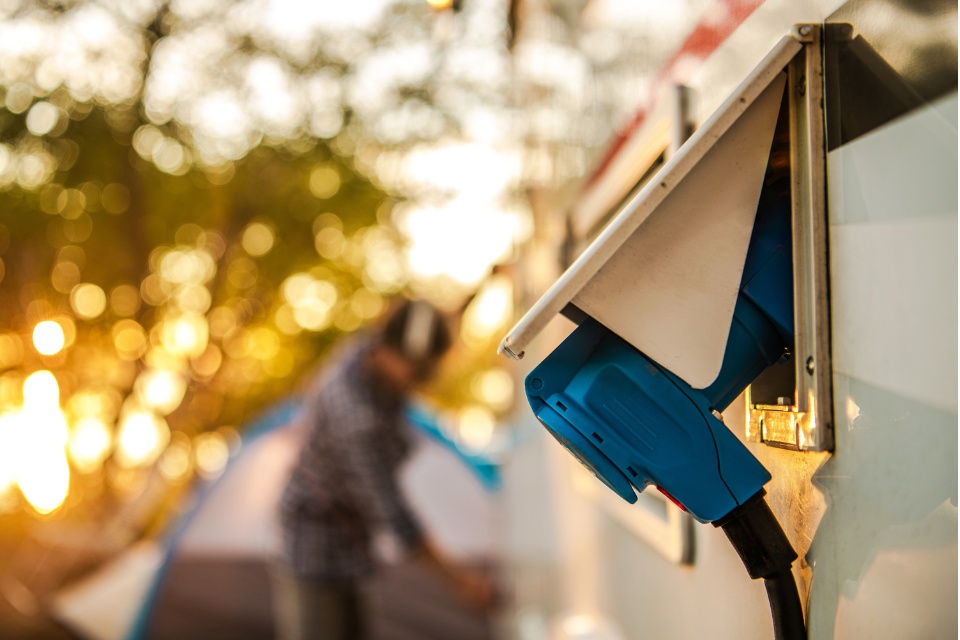
Power is the part most summer plans skip. A 30-amp pedestal delivers about 3,600 watts, which is enough for one air conditioner and modest loads, while a 50-amp pedestal supplies two 50-amp legs for about 12,000 watts. On a 30-amp site like those at Pedernales Falls, a rig with two air conditioners will usually run one at a time, and what else you can run alongside it depends on your own equipment. Our guide to essential RV hookups explains the 30- and 50-amp math, and thunderstorm safety for RV campers covers the storms that often break the heat.
Texas State Parks vs Private RV Parks
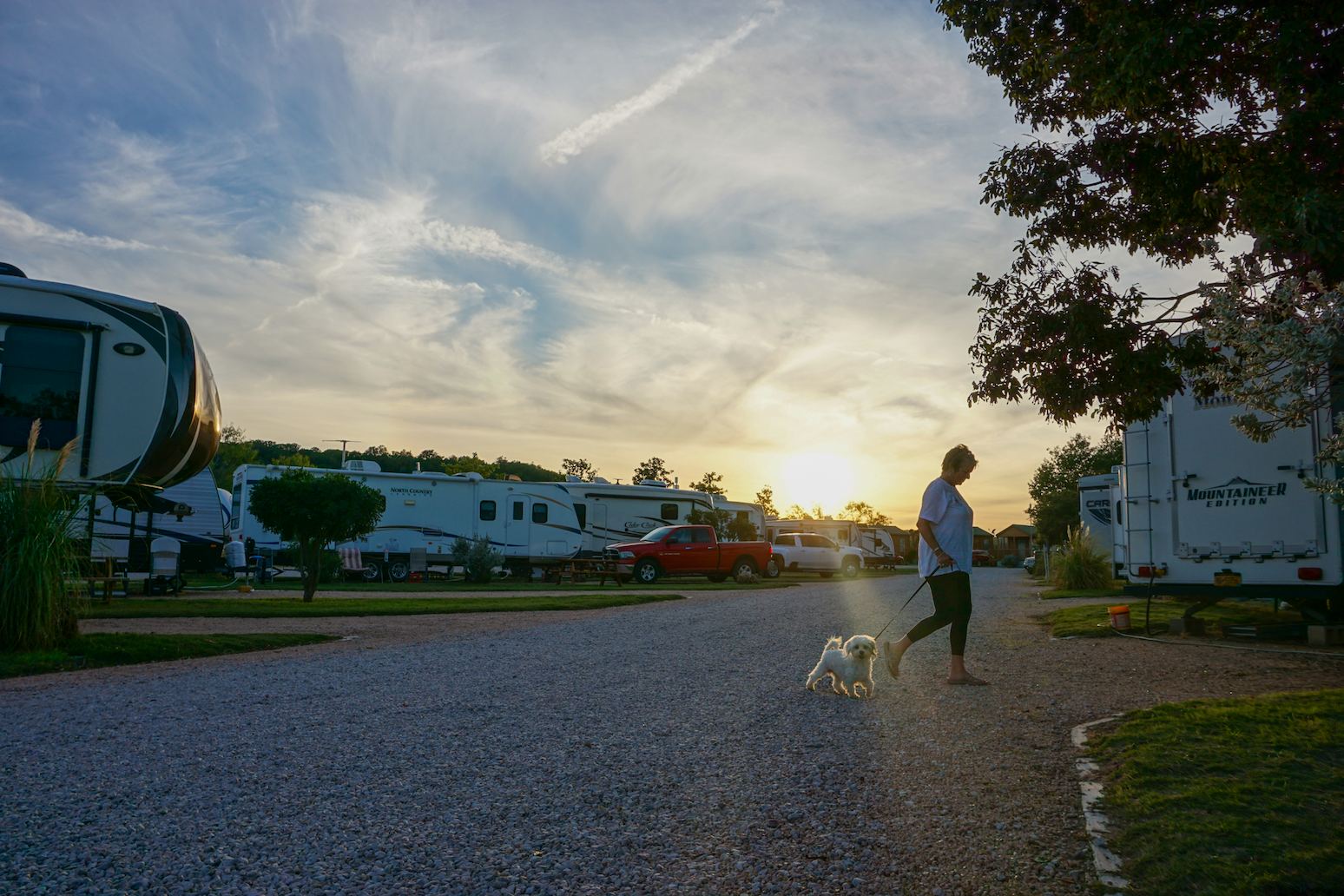
The biggest decision after choosing a region is which kind of park to book, and for RV camping in Texas the rules differ more than the scenery.
How TPWD Campsite Types Translate for RVs
Texas Parks and Wildlife sorts campsites into categories that matter more to an RV than to a tent:
- Full hookup: water, electric and sewer at the site. The only category that empties your tanks without a trip to the dump station or an approved portable tote.
- Water and electricity: power and a spigot, but no sewer connection. You’ll dump at the park’s station, where one exists, so plan how often your tanks need emptying before you book a long stay.
- Water only: no power, and the spigot may be shared rather than at your site. Plan on battery and solar capacity, and check the park’s generator rules.
- Drive-up with no hookups: vehicle-accessible camping without utilities. It describes the access, not the rig: Palo Duro’s Fortress Cliff sites are drive-up and tent-only, so read the individual listing.
Amp service varies inside the same park, so read each site’s listing rather than the park’s summary.
Booking Windows and Stay Limits
According to TPWD, most overnight camping reservations can be made up to five months in advance, and a stay is generally capped at 14 consecutive days, though some parks set other limits. For spring weekends in the Hill Country, that five-month window is when the good sites go. It is a TPWD policy and nothing more: Big Bend’s national park campgrounds are booked through recreation.gov, the Rio Grande Village RV Park is booked by phone through the park’s concessioner, and private parks set their own windows, so check each one for winter and spring trips. If your plan runs longer than two weeks, a private park with weekly or monthly rates is usually the simpler answer. Our look at booking lead times in Fredericksburg walks through the same timing question for one of the state’s busiest RV towns.
Matching the Destination to Your Trip
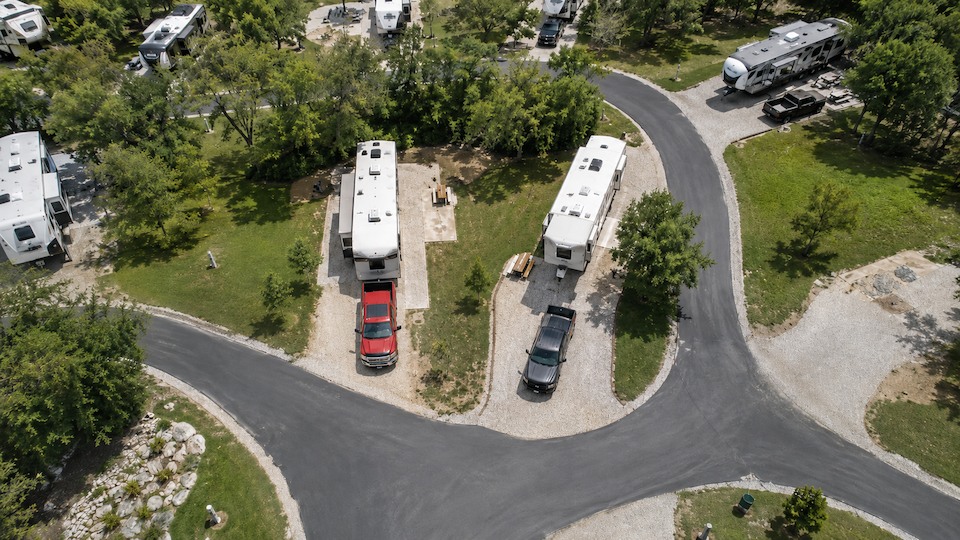
Families
With kids aboard, shorter driving days matter more than the destination. From our gate, Blanco and Pedernales Falls state parks are within 20 miles and the coast and the Dallas-area lakes are a single day’s drive, while Big Bend and Palo Duro Canyon are two-day hauls. State park entrance fees are charged per person for guests 13 and older; Tyler and Palo Duro Canyon, for example, let children 12 and under in free. For Hill Country trips, our list of family-friendly RV campgrounds in Fredericksburg covers parks with room for kids to roam.
Big Rigs
Check the site’s own RV length limit and the usable parking space, and if you tow, confirm where the tow vehicle goes once you unhitch. Don’t assume a park that fits you in one loop fits you in all of them. At Chisos Basin the Park Service advises against trailers over 20 feet and RVs over 24 feet, which is a recommendation rather than a posted limit, while the concessioner-run Rio Grande Village RV Park lists a firm 38-foot maximum. The softer constraints are tree canopy in the Piney Woods and tight turns on older loops. Whether you back in or pull through changes how much length you really need, which our comparison of pull-through vs back-in RV sites breaks down.
Long Stays and Winter Texans
Most Texas state parks cap a stay at about 14 consecutive days, though some make their own arrangements: Galveston Island, for example, publishes weekly and monthly bay-side rates from November through February. For anything longer, private parks are usually the practical answer. Our published monthly rates start at $450 for a standard back-in site and $625 for a creek-side site, and weekly stays have a seven-night minimum, with monthly availability worth a phone call. If you’re weighing a longer stretch, the realities of RV park living are worth reading first, and our overview of Texas RV living laws covers what changes if you’re thinking about parking on your own land instead. If part of your group would rather not sleep in the rig, we also rent two cabins along Miller Creek.
Rallies and Groups
A rally needs a park that can hold sites together and a place to gather when the weather turns. Our rec hall has a full kitchen, and our page on rallies and planned group activities covers how group stays work here. For statewide event timing, the RVer’s guide to festivals across Texas pairs major festivals with places to park.
How to Size Up a Texas RV Destination Before You Book
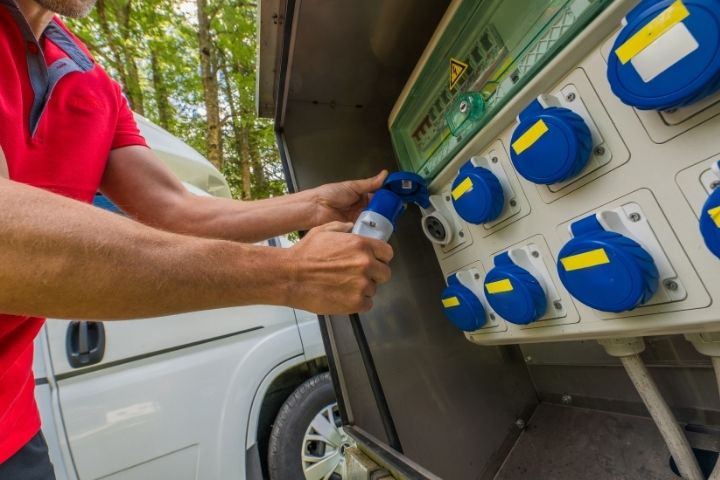
Most of what ruins a Texas RV trip is visible before you leave, if you know where to look.
- Rig and parking length: check the specific site’s RV limit, its parking space, and where a tow vehicle can sit, not just the park’s summary.
- Amp service per site: a 30-amp site in August is a different trip from a 50-amp site.
- Sewer or dump station: without sewer at the site, your gray and black tank capacity sets your stay.
- The road in: canyon descents, the Chisos Basin road, and flooded low-water crossings stop rigs that the campsite itself would fit.
- Burn bans: county judges and commissioners courts set them, and the Texas A&M Forest Service burn ban map shows current bans. At our park, only supervised charcoal fires for cooking are allowed during a ban.
- Water and weather exposure: look at where the loop sits relative to the river or the beach, and check the hurricane calendar for coastal trips.
- House rules: private parks set their own age, generator, and pet rules. We generally don’t accept RVs older than 10 years, generators aren’t permitted, quiet hours run 10 p.m. to 8 a.m., and each site allows up to two dogs. Our guest guide has the full list, and most parks publish something similar.
Once the destination is settled, our checklist for RV camping in Texas covers what to pack and check before you pull out.
Quick Answers
Where is the best place to RV camp in Texas?
It depends on the month. Big Bend Country and the Hill Country are best from fall through spring, the Rio Grande Valley and lower coast in winter, and the Davis Mountains or the coast in summer.
Do Texas state parks have full-hookup RV sites?
Some do, but many offer water and electric only. Cedar Hill has 147 full-hookup sites and Blanco has 17, while Pedernales Falls and Palo Duro Canyon list none.
How far ahead can you book a Texas state park campsite?
Most overnight state park reservations open five months in advance, and that window is a TPWD policy. Book at the start of it for spring weekends, and check Big Bend National Park and private parks separately, since they use their own systems and release dates.
Can you RV camp on the beach in Texas?
Yes, without hookups. Mustang Island State Park has primitive drive-up beach sites, and Padre Island National Seashore allows primitive camping on North Beach, South Beach and Yarborough Pass.
What is the 10-year rule at RV parks?
Some private parks limit how old a rig can be. We generally don’t accept RVs older than 10 years. If yours is older, call before booking any park with a similar rule.
What is the 3-3-3 rule for RV travel?
It’s a common rule of thumb: drive no more than 300 miles a day, arrive by 3 p.m. and stay three nights. From the Hill Country, it makes the coast a one-day drive and Big Bend or Palo Duro Canyon a two-day one.
Your Hill Country Home Base at Miller Creek
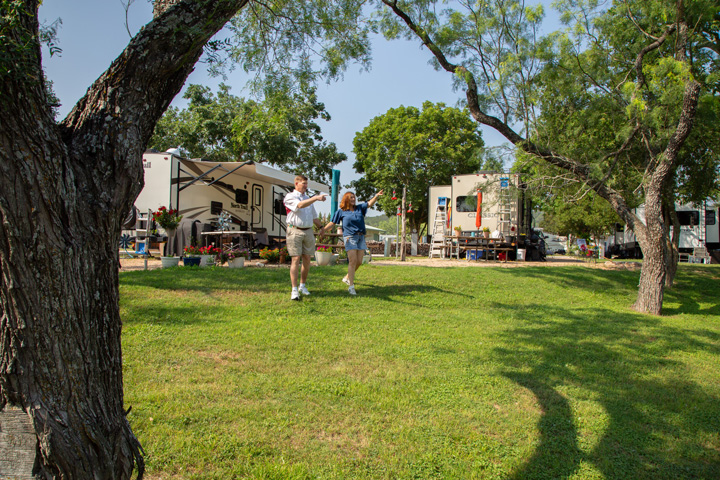
If the Hill Country is on your route, whether as the destination or a stop between longer legs, that’s where we are. Miller Creek RV Park sits on US 281 about five miles from Johnson City, between Johnson City and Blanco, with Fredericksburg about 37 miles away, Austin about 43 and downtown San Antonio about 57. Blanco State Park is 8.5 miles from our gate and Pedernales Falls State Park about 18.
Every site here has full hookups with 20/30/50-amp service, water and sewer, in four layouts: standard pull-through, standard back-in, large-yard back-in and creek-side back-in. Nightly rates start at $52, weekly stays bring the nightly rate down, and monthly stays start at $450, which suits Winter Texans and anyone using the Hill Country as a base for a longer trip. Between drives, you’ll have a 24-hour gym, on-site laundry, dog runs, free Wi-Fi and a rec hall with a full kitchen, and our two cabins along Miller Creek are there if someone in your group would rather not sleep in the rig.
Check current rates and site details and book your stay online, or call us at (830) 868-2655 to talk through your rig length and travel dates before you commit.