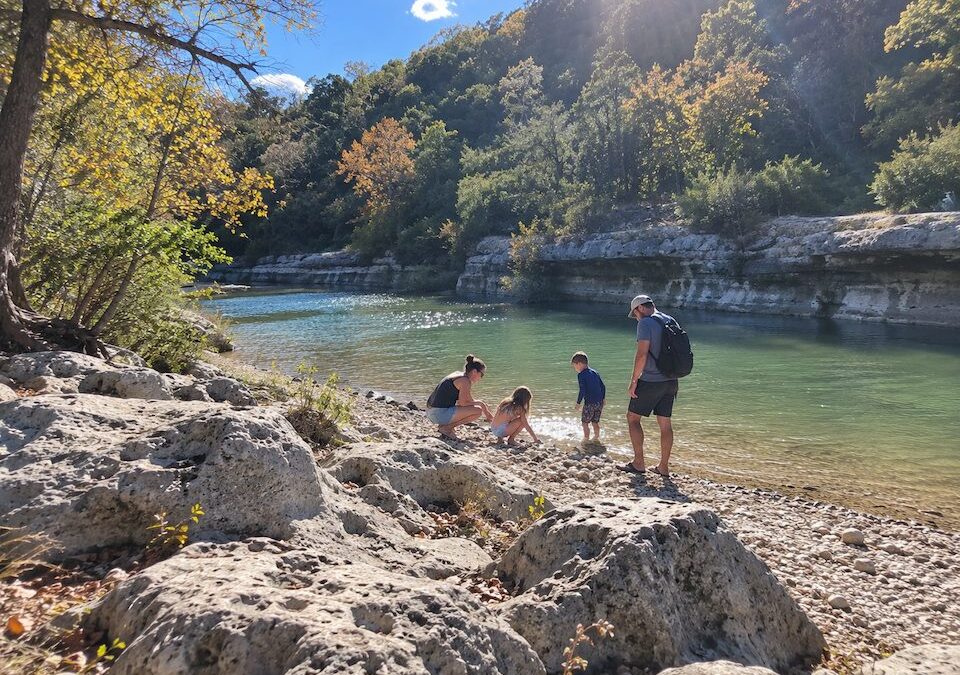
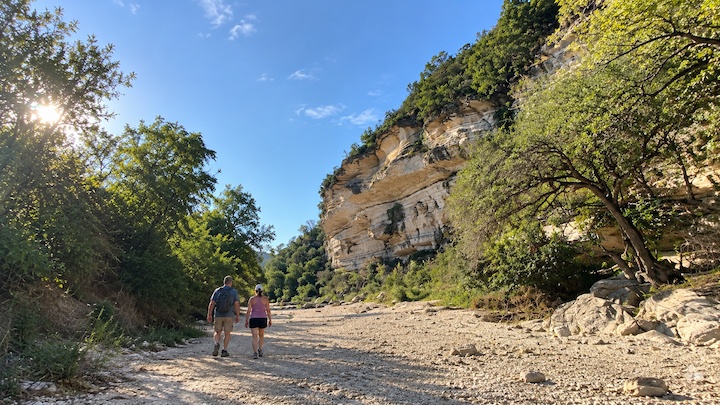
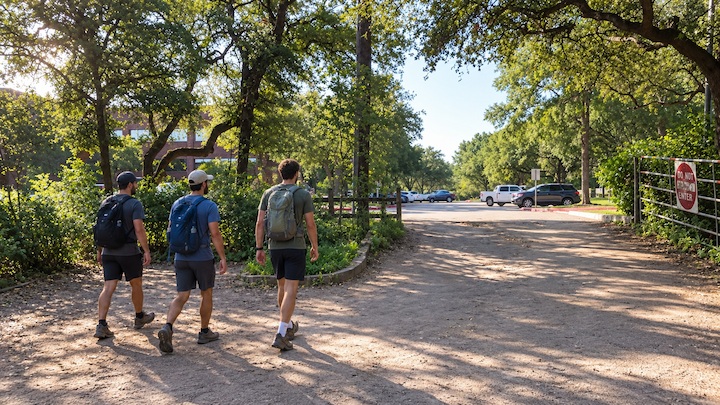
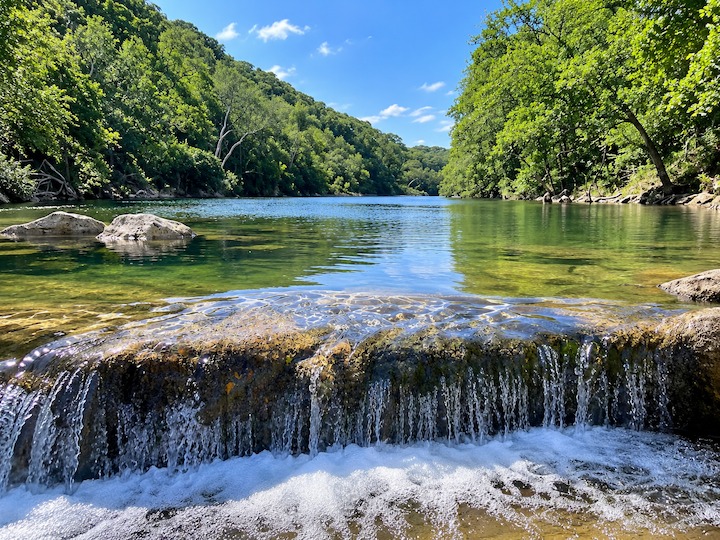
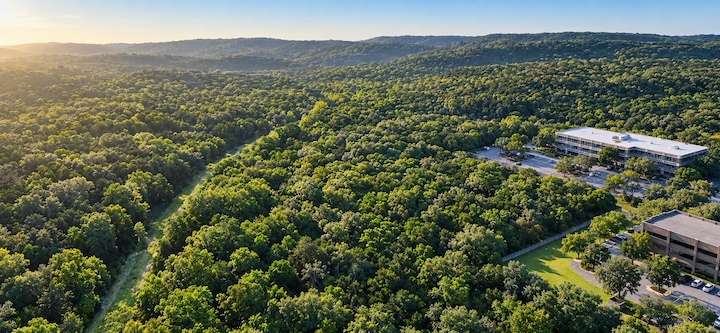
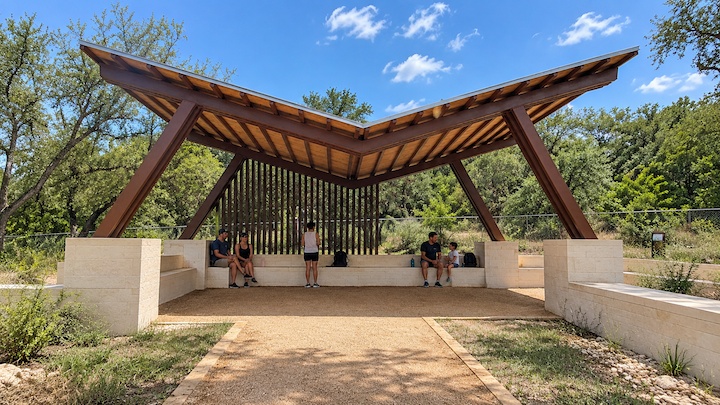
Two things can catch first-time visitors out. Someone parks at the wrong end of a creek corridor with more than 12 miles of trail and seven City-listed access points, or they hike in to a famous swimming hole and find dry, pale limestone where the photos showed green water. The pool that was full last month can be bare rock this week.
That makes two decisions more important than anything else about a trip to the Barton Creek Greenbelt: which access point you use, and what the creek is likely doing that day. This guide covers both, along with where to park and what it costs, how to check the water before you drive, and the rules that apply to your dog, your cooler, and your timing. Current conditions and notices live on the City of Austin’s Greenbelt page, which is worth a look before every visit.
Barton Creek Greenbelt at a Glance
Item
Details
Operator
Austin Parks and Recreation (City of Austin)
Size on City record
About 810 acres
Trail length
Main trail of about 7.5 miles; more than 12 miles to explore in total, per the City
Access points
Seven City-listed trailheads, from Zilker Park (mile 0) to Camp Craft Road (mile 7.5)
Hours
City parks are generally open 5 a.m. to 10 p.m. unless otherwise posted
Admission
The City lists no entry fee, parking costs vary by trailhead
Dogs
Allowed on a leash no longer than six feet
Camping
Not permitted on the Greenbelt
Water levels
Not monitored by the City; check USGS and LCRA gauges on Barton Creek
Hours, fees, and conditions change. Confirm on the City of Austin site before visiting.
How the Greenbelt Is Laid Out
The City organizes the Greenbelt by mile marker. Mile 0 sits at Zilker Metropolitan Park, next to Barton Springs Pool, and the corridor runs upstream to mile 7.5 at Camp Craft Road. Barton Creek and the main trail follow the valley between those two points, and the other access points drop in from neighborhoods and highways along the way: Spyglass Drive, Homedale Drive, Barton Hills Drive, Loop 360 (South Capital of Texas Highway), and the MoPac Expressway service road.
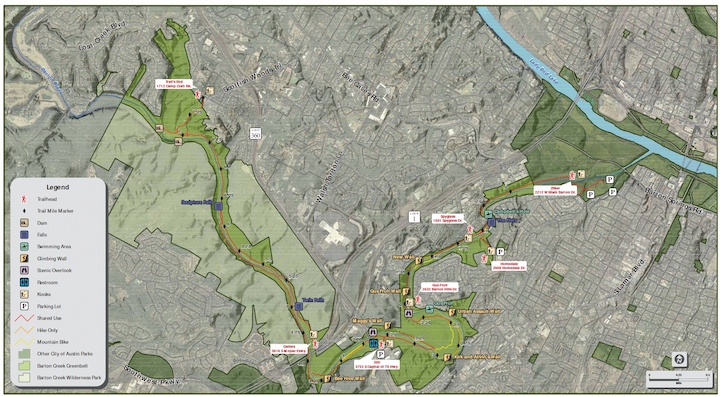
You will see the length quoted as 7, 7.25, 7.6, 7.9, and even 12.68 miles depending on where you read. The City describes a main trail of about 7.5 miles and more than 12 miles to explore across the Greenbelt, so use its official trailhead map (PDF) to plan a specific route rather than treating either figure as one fixed end-to-end distance.
A practical plan is to walk one stretch from one access point and turn around, so your entry point decides the day.
Barton Creek Greenbelt Access Points Compared
All seven trailheads below come from the City of Austin’s own listing, in the City’s mile order, with the City’s names and addresses.
Access point (City name)
Address
Mile band
Parking*
Restrooms and notes
Zilker / Barton Creek Greenbelt Trailhead
2212 William Barton Dr, Austin, TX 78746
0 to 2
Parking lot; seasonal weekend and holiday charges apply. Check the City’s Zilker parking page and on-site signs
Restroom near Zilker Hillside Theater, Violet Crown Trail starts here
Spyglass / Barton Skyway Trailhead
1601 Spyglass Dr, Austin, TX 78746
0 to 2
Street parking
One composting restroom a short walk in
Barton Hills School Park / Homedale Dr.
2009 Homedale Dr, Austin, TX 78704
0 to 2
Free lot at Barton Hills School Park
No restrooms
Gus Fruh / Barton Hills Dr.
2632 Barton Hills Dr, Austin, TX 78704
0 to 2
Limited free street parking
No restrooms
360 Trailhead
3753 S Capital of Texas Hwy NB, Austin, TX 78704
2 to 4.5
Dedicated free lot
Composting restrooms at trailhead
Gaines Park / Mopac Trailhead
3918 S Mopac Expy SVRD SB, Austin, TX 78746
2 to 4.5
Limited free street parking
No restrooms; access to Twin Falls
Trail’s End / Camp Craft Rd.
1712 Camp Craft Rd, Austin, TX 78746
4.5 to 7.5
Paid street parking, 8 a.m. to 8 p.m. daily
Two composting restrooms a short walk in; access to Hill of Life
*Parking terms are as listed by the City of Austin and can change. Confirm before visiting.
Lower Greenbelt: Zilker, Spyglass, Homedale and Gus Fruh (Miles 0 to 2)
The lower Greenbelt has the most entrances and the most residential parking.
Zilker trailhead, 2212 William Barton Drive. The mile 0 entrance has a parking lot, a restroom near Zilker Hillside Theater, and the start of the Violet Crown Trail. Seasonal weekend and holiday parking charges apply here, covered in the parking section below.
Spyglass, 1601 Spyglass Drive. Street parking only, with one composting restroom a short walk in from the trailhead.
Barton Hills School Park, 2009 Homedale Drive. A free lot at the school park and no restrooms, so plan accordingly before you leave the car.
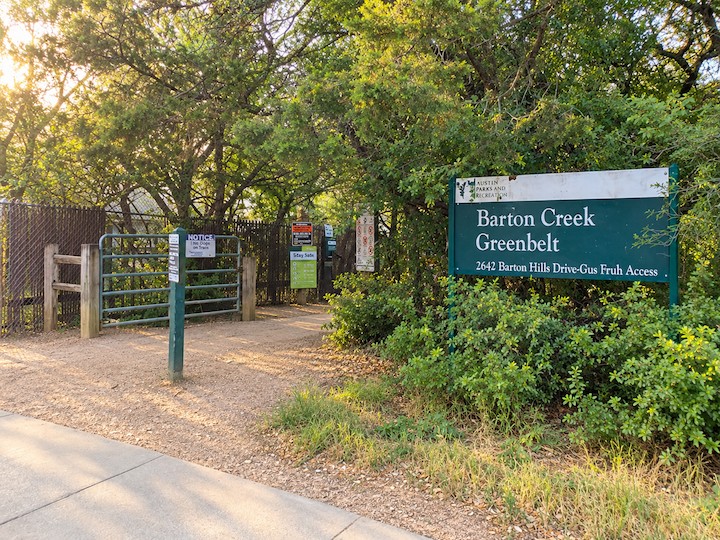
Gus Fruh, 2632 Barton Hills Drive. Limited free street parking and no restrooms. This entrance shares its name with Gus Fruh, one of the best-known swimming spots on this stretch.
Campbell’s Hole and Gus Fruh are the two swimming spots most people associate with the lower Greenbelt. The City does not publish walking distances to either, so trace your route on the official map before you set out. Three of these four entrances sit on residential streets, which is why parking etiquette matters more here than anywhere else on the corridor.
Middle Greenbelt: Loop 360 and Twin Falls (Miles 2 to 4.5)
360 Trailhead, 3753 South Capital of Texas Highway (northbound). A dedicated free lot with composting restrooms right at the trailhead.
Gaines Park/MoPac Trailhead, 3918 South MoPac Expressway southbound service road. Limited free street parking and no restrooms. This is the City-listed access to Twin Falls.
Sculpture Falls, the other well-known falls on the Greenbelt, is also reached from this middle part of the corridor. The City does not list a distance from any trailhead, so check the map for your route.
If you want a dedicated free lot and restrooms at the entrance, the 360 trailhead is a sensible choice. Space is never guaranteed, though. Homedale also has a free lot, but it opens onto the lower Greenbelt, so switching there changes your starting point and the distance to your intended destination.
Upper Greenbelt: Trail’s End and the Hill of Life (Miles 4.5 to 7.5)
Trail’s End/Camp Craft Road Trailhead, 1712 Camp Craft Road. Paid street parking daily from 8 a.m. to 8 p.m., two composting restrooms a short walk in, and the City-listed access to the Hill of Life.
The Hill of Life is a steep, rocky climb, the kind where your footing matters more than your pace. The City publishes no parking rate for Camp Craft Road, so read the posted signage when you arrive.
Parking, Fees and Hours
Admission. The City lists no entry fee for the Greenbelt. What you pay for, if anything, is parking.
Zilker trailhead lot. The City’s Zilker Metropolitan Park page lists, as of October 2026, $3 per hour per vehicle on Saturdays, Sundays, and official holidays, from the first Saturday of Spring Break through Labor Day, paid at pay stations or through the Park ATX app, with all parking first-come, first-served. The Greenbelt page still shows an older flat fee, so confirm the lot, price, and posted terms on the City site and the on-site signs before you park.
Camp Craft Road. Paid street parking from 8 a.m. to 8 p.m. daily. Check the posted rate on arrival.
Everywhere else. The City lists a free lot at 360 and Homedale, free street parking at Gus Fruh and Gaines Park/MoPac, and street parking at Spyglass.
Hours. City parks are generally open 5 a.m. to 10 p.m. unless otherwise posted, and the City’s Greenbelt page states that all park facilities close at 10 p.m. under City ordinance. The City also notes the Greenbelt has little to no lighting.
A weekend or holiday arrival at Zilker during the paid season means paying by the hour. The free lots at 360 and Homedale avoid the fee but are first-come, first-served like everything else.
Parking in Neighborhoods Without Becoming a Problem
Spyglass, Gus Fruh and Camp Craft Road all rely on street parking in residential areas. A few habits keep that access workable:
Leave driveways and mailboxes clear. Park fully clear of both, even for a short hike.
Read the signs before you lock the car. Restrictions vary street by street.
Keep it quiet coming back. Car doors and speakers carry at the end of a long day.
Keep your trash in your car. Not on a resident’s curb or in their bins.
These are residents’ streets, and the Camp Craft trailhead stayed closed for several years at a neighborhood’s request after it was built. Access depends partly on goodwill.
Swimming Holes and Why the Water Comes and Goes
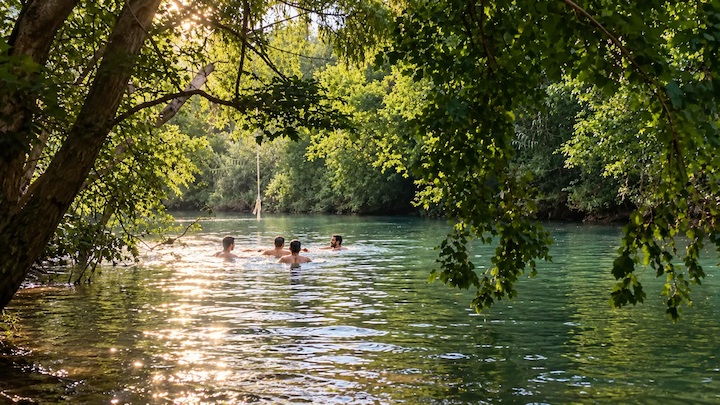
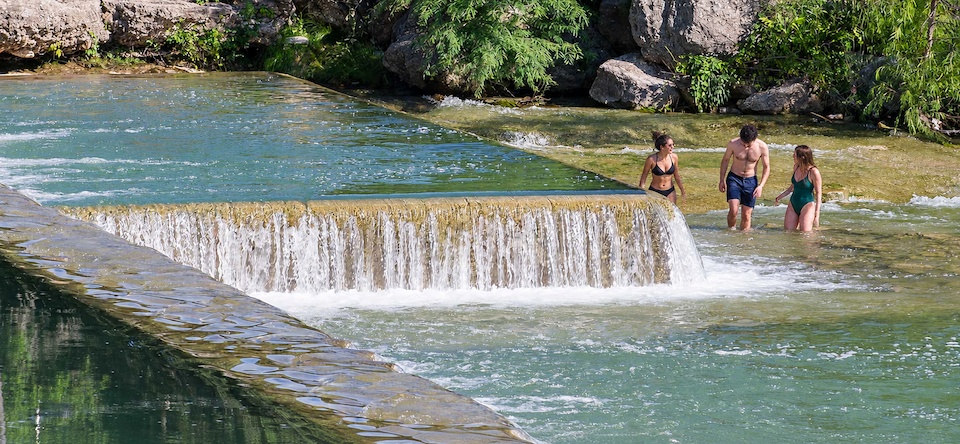
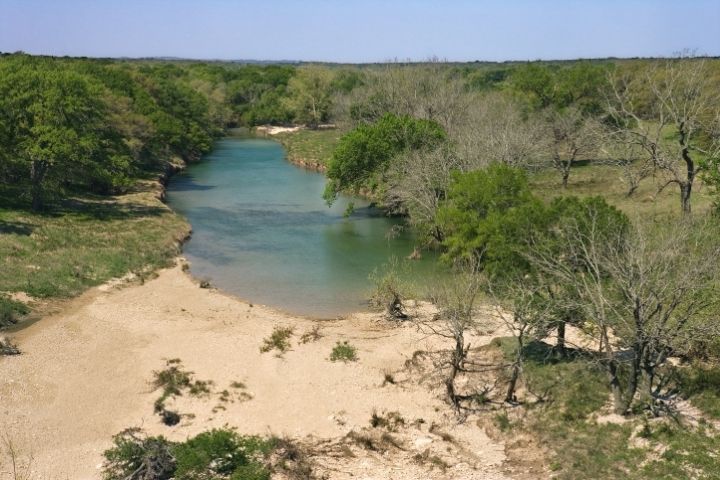
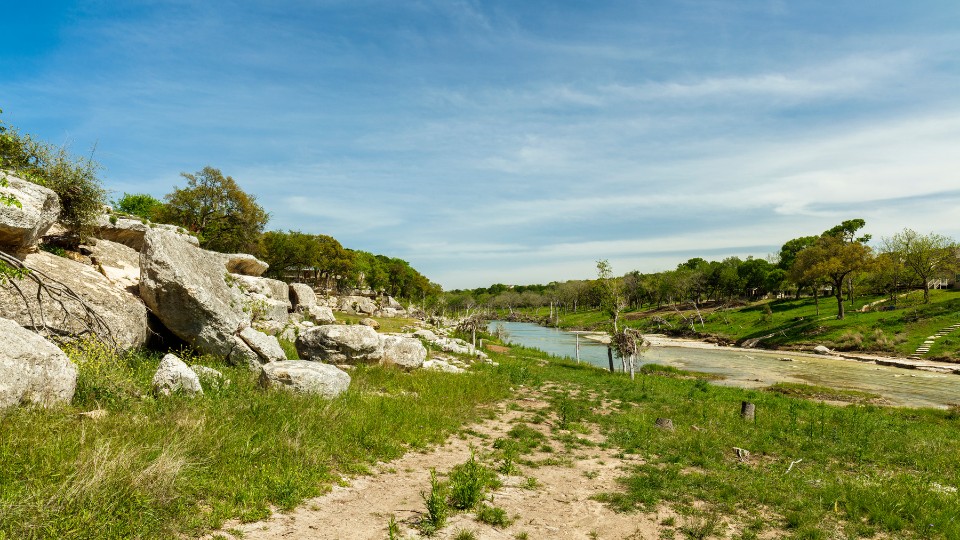
The Greenbelt’s water is unreliable for a structural reason. Barton Creek crosses the Edwards Aquifer recharge zone, where caves and openings in the Edwards limestone meet the land surface. According to City of Austin Watershed Protection material, some surface water enters fractures and openings in the limestone and moves into the aquifer that feeds Barton Springs. Recent rainfall and runoff drive creek flow, and losses to the aquifer can contribute to low or dry stretches when incoming flow is limited. The City notes the Barton Creek watershed holds about 60 springs and 20 caves.
That is why the same pool can be swimmable one month and dry rock the next.
Where People Swim on the Greenbelt
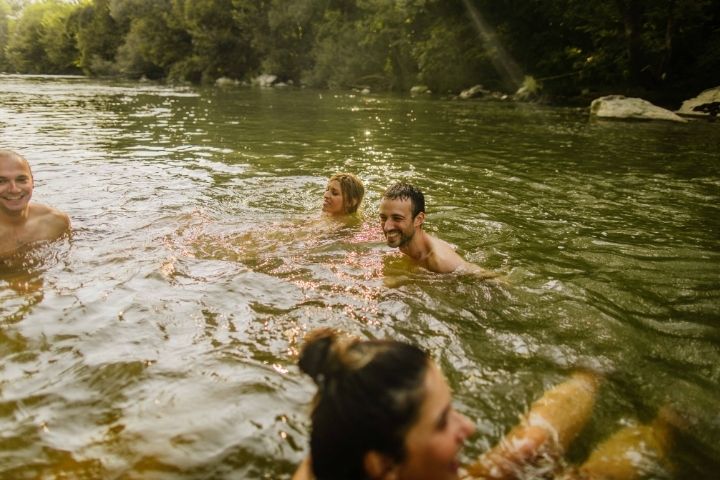
Campbell’s Hole. A lower Greenbelt spot reached from the 0 to 2-mile band. Whether it holds swimmable water depends on how much has been coming down the creek recently.
Gus Fruh. Shares its name with the Barton Hills Drive trailhead. Like every pool on the corridor, it can range from inviting to a shrinking puddle depending on recent rain.
Twin Falls. The City lists Gaines Park/MoPac as the access point. The falls need flow to be falls, so a dry spell can turn them into a rock ledge.
Sculpture Falls. Reached from the middle Greenbelt, though the City’s trailhead listing does not name it as the destination of any access point, so plan your route on the official map. Like Twin Falls, it depends on flow. The City has recorded a past harmful algae bloom below the falls when the creek dried into an isolated pool, so stay out of stagnant water here and check current City guidance before swimming.
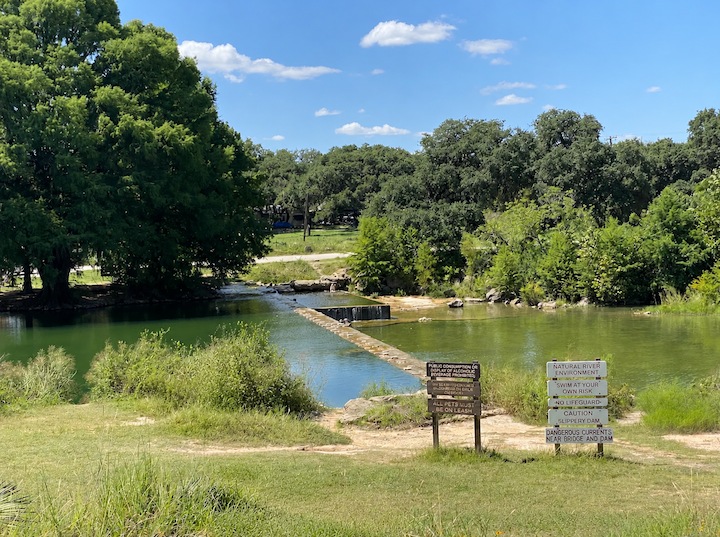
These are natural creek pools with no lifeguards. They are not a managed swimming facility, and the City does not publish depth, temperature, or walking times for any of them. When the creek is low, Barton Springs Pool at Zilker, right next to the mile 0 trailhead, is the City-run alternative. Check that page for its current hours and fees.
Why Barton Creek Runs High, Low or Dry
The City says it directly: water levels on the Greenbelt vary with recent rainfall. Upstream rainfall can raise creek flow, but not every rain does. When little is coming in, losses to the aquifer over the recharge zone can leave stretches low or dry.
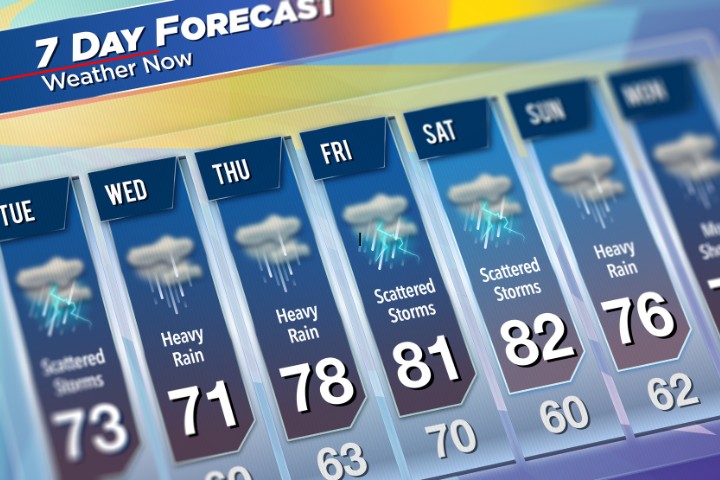
The City also cautions that water levels can rise quickly, even in dry conditions. Rain upstream can reach the corridor when the sky above you is clear. There is no reliable “full season” to plan around. Water follows recent rainfall and local conditions rather than the calendar.
How to Check the Water Before You Drive
Austin Parks and Recreation does not monitor the Barton Creek water level. The USGS and LCRA maintain gauges on Barton Creek, and those are the tools to use.
USGS gauge “Barton Creek at Loop 360” (site 08155300). Open the USGS monitoring location page, choose discharge or gage height, check the observation time, and look at the recent trend rather than a single number.
LCRA Hydromet. The LCRA Hydromet system carries Barton Creek data as well, useful as a second look.
The two measures mean different things:
Discharge is flow, reported in cubic feet per second. It tells you how much water is moving past the gauge.
Gage height is the height of the water surface above a reference point at the station. It is not swimming depth.
Know the limits before you trust a reading. The gauge describes the Loop 360 location, not every pool on the corridor. It does not test whether the water is safe. A zero-flow reading does not prove every pool is empty, and a healthy flow does not promise a particular hole is swimmable. No official reading marks “good swimming.” Combine the gauge with the weather forecast, any current City notices, and what you see when you arrive. That five-minute check is worth it whether you live ten minutes away or are driving in from the Hill Country for the day.
Water Quality After Rain and the Algae Warning
The City advises people and pets not to enter natural water if there has been rain in the past three days, or if the water is warm or stagnant or shows scum, film, or algae. After any contact, rinse your skin and your animal’s fur, and do not let a dog lick its fur before it has been rinsed.
Waiting three days is not a guarantee that swimming is safe. The higher-risk scenario is the shrinking pool: once a stretch stops flowing and the water sits warm and still, conditions change. That has happened here before. A harmful algae bloom once occurred in Barton Creek below Sculpture Falls during a summer when the creek dried into an isolated pool. Treat that as history, not as a current alert or an all-clear.
For current status, check the City’s Algae in Austin’s Waterways page before you go. None of this is a reason to skip the Greenbelt. It is a reason to look before you get in.
Hiking the Greenbelt: Picking a Stretch by Effort
The City describes the Greenbelt as rugged, with limestone cliffs and trails that are rough and uneven. On the ground, that means rocky footing almost everywhere and creek crossings that are easy or tricky depending on the water level.
Pick your stretch by the day you want:
Families and first-timers. A short out-and-back from a lower access point keeps the walk manageable and the car close.
A dedicated lot with restrooms. Start a mid-corridor walk from the 360 trailhead.
The Hill of Life. Start from Camp Craft Road on the upper Greenbelt and expect a steep, rocky climb.
Hikers wanting distance beyond the Greenbelt can pick up the Violet Crown Trail, which begins at the Zilker entrance. The City does not publish trail mileage between named spots, so the official map is your reference for route length.
Mountain Biking and Rock Climbing
Mountain biking. Bikes are allowed, and the City’s rules are clear: yield to pedestrians, ride single file, announce passes or use a bell, and obey posted speed limits. The City also states that road, cruiser, and commuter bikes are not recommended on this terrain. Bring a mountain bike or plan to walk.
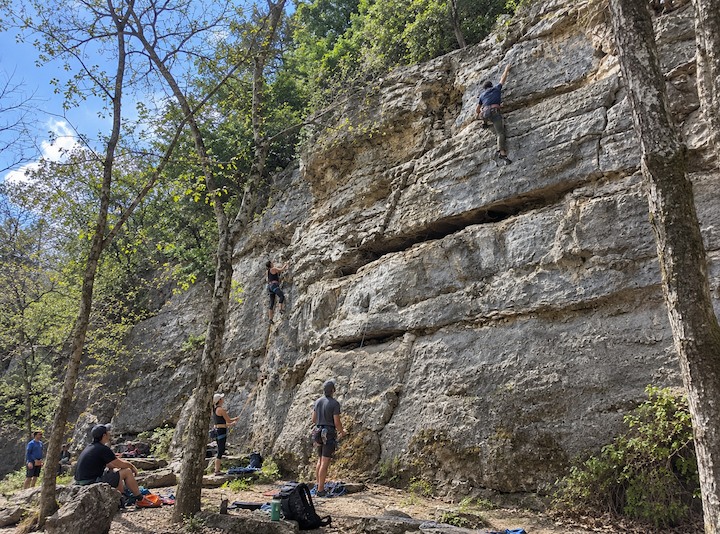
Rock climbing. The limestone cliffs along the creek have a long-established climbing culture. The City publishes no climbing guidance, so check posted signage at the trailhead and use established access trails to reach the walls. That keeps you consistent with the City’s stay-on-trail rule and protects the habitat along the creek.
Bringing a Dog to the Greenbelt
Dogs are welcome, under clear rules:
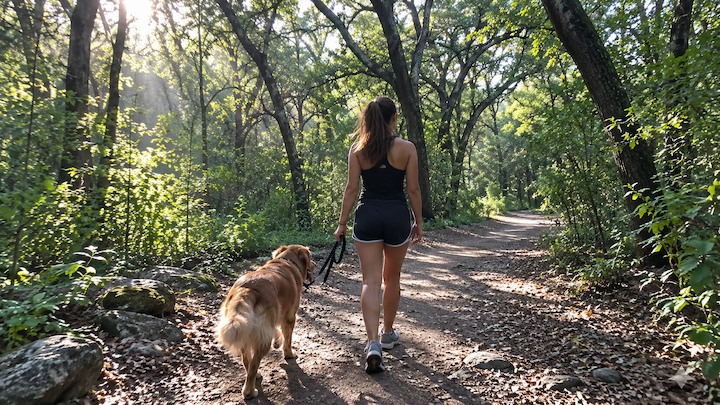
Six-foot leash, maximum. Keep your dog close on the leash at all times.
No off-leash areas here. City Code requires dogs on leash in public areas unless they are in a designated off-leash area, and the Greenbelt is not one. The City’s dog parks page lists where off-leash play is allowed.
Pick up and carry out waste. The City notes that animal waste affects Austin’s water quality. Trash receptacles exist only at trailheads, so waste bags travel with you for the whole walk.
Same water caution as for The City’s three-day rain guidance and algae precautions apply to dogs, including rinsing fur before your dog can lick it.
Bring drinking water for your dog. The City advises people and pets not to drink directly from natural water bodies or enter warm or stagnant water.
Rules That Shape a Visit
Facilities close at 10 p.m. Plan your exit so you are back at the car before then.
No alcohol. City Code 8-3-1 prohibits possessing or consuming alcohol in a public recreation area unless code provides otherwise. Leave it at home.
No camping. Camping is not allowed on the Greenbelt under City camping guidance citing City Code 9-4-11.
No glass, Styrofoam, smoking, or vaping. The City’s parks policy prohibits glass, Styrofoam and smoking in all City parks, and its park rules handbook lists vaping alongside smoking. Pack reusable, non-glass containers.
Pack it all out. Bins are only at trailheads. Trash, recyclables, and pet waste leave with you.
Stay on established trails. Do not feed or approach wildlife.
Share the trail. Keep right, pass on the left with a “passing on left,” and walk no more than two abreast.
The Greenbelt is strict about this for good reasons. It was named a 2020 Leave No Trace Hot Spot (the City is a Leave No Trace Community Partner), and the creek and surrounding habitat support federally protected species, including the endangered Golden-cheeked Warbler, Austin Blind Salamander and Barton Springs Salamander, and the threatened Bracted Twistflower. If you travel by RV, the same habits carry over to camp, and the post on eco-friendly choices while camping covers them in more detail.
Staying Safe: Flash Flooding, Heat and Dusk
The City publishes three cautions, and each has a mechanism behind it.
Water can rise quickly, even when it is dry where you are. Rain upstream reaches the corridor on its own schedule. Never cross fast or rising water, and check the gauge and forecast before you go. The National Weather Service’s Turn Around Don’t Drown guidance notes that six inches of fast-moving flood water can knock over an adult. If you are traveling the region by RV, see our notes on planning around Central Texas storms for the same caution at your campsite.
There is little to no lighting. Carry a flashlight, headlamp, or safety light if there is any chance you will still be out near sunset.
Heat on exposed limestone is real. Central Texas sun bounces off pale rock, and the City lists no drinking water at trailheads. Carry more water than you think you need.
Before choosing a start time, check three things: water, weather, and sunset.
Best Time to Visit by Season
Spring and fall can bring milder hiking weather. Summer means preparing for heat. In every season, check conditions before you leave, because water depends on recent rainfall and local conditions rather than the calendar. If the creek is low when you plan to swim, our guide to Hill Country state and national parks covers other outdoor options west of Austin.
Who the Greenbelt Suits, and Who Should Plan Differently
The Greenbelt’s interior trails are rough and uneven. At the Zilker entrance, the City’s Mile Zero project added improved crosswalks and ADA access, a stabilized decomposed-granite trail, and an observation deck and overlook, described on the City’s Violet Crown Trail page. Those entrance improvements do not create an accessible route through the Greenbelt or to its swimming holes.
Wheelchair users and people with limited mobility. Plan around the interior terrain and contact Austin Parks and Recreation to confirm the specific route you need.
Families with standard strollers. The improved surface is at the entrance only, so plan for the interior trail without the stroller.
Families with young kids. Shorter out-and-backs, water shoes, and a firm turn-around point make for a better day.
Dog owners. The six-foot leash and the algae precautions both apply.
Visitors without a car. Confirm transportation to and from your chosen trailhead before you leave, including your return trip before dark.
How the Greenbelt Came to Be
Barton Springs, the spring-fed landmark at the Greenbelt’s mile 0 end, takes its name from William Barton, an early settler, according to the Texas State Historical Association.
Before 1980. The City had acquired the Greenbelt between Zilker Park and Loop 360.
1980 and 1981. The City acquired 377 acres between Loop 360 and Lost Creek.
The trail, a parking lot, trail entries, composting toilets, and signs were completed with grant assistance from Texas Parks and Wildlife. The Camp Craft trailhead was built that year but kept closed at the Woods of Westlake neighborhood’s request.
The City Council approved opening the Camp Craft trailhead in June.
Separately, the Trust for Public Land reports purchasing nearly 1,000 acres in the Barton Creek watershed between 1992 and 1999.
Today the City records about 810 acres for the Greenbelt and, as a separate entry, about 1,128 acres for Barton Creek Wilderness Park. Those are different records, not measurements of the same acquisitions.
The newest chapter starts at mile 0. The Violet Crown Trail, developed by the City with the Hill Country Conservancy and planned at 30 miles, begins at the Greenbelt’s Zilker entrance, and its Mile Zero Trailhead opened in fall 2025.
Visiting the Greenbelt From the Hill Country
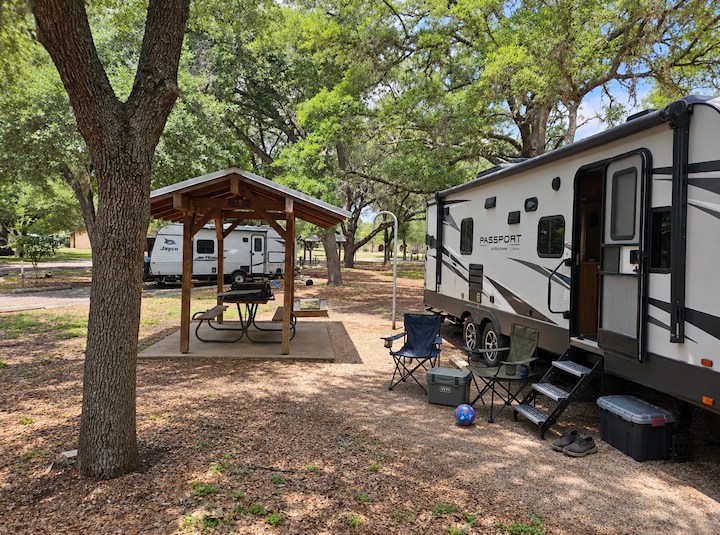
The Greenbelt is a day-use destination, not an RV campground. Do not camp there or plan an overnight stay in a trailhead lot, since facilities close at 10 p.m. The City’s access point listing does not specify RV or trailer accommodation, so a passenger vehicle, tow vehicle, or second car is the simpler way in. Check lot and street signs before you park.
Whether you live ten minutes away or are driving in from the Hill Country for the day, the same planning applies: pick the access point, check the gauge, then go.
The City lists no entry fee. Parking is free at several trailheads, while the Zilker lot charges on weekends and holidays in season, and Camp Craft Road has paid street parking.
What are the Greenbelt hours?
City parks are generally open 5 a.m. to 10 p.m. unless otherwise posted, and all facilities close at 10 p.m. under City ordinance. There is little to no lighting.
Where can you park for the Greenbelt?
The City lists free lots at the 360 trailhead and at Barton Hills School Park on Homedale Drive, free street parking at Gus Fruh and Gaines Park/MoPac, street parking at Spyglass, paid street parking at Camp Craft Road, and a seasonal paid lot at Zilker. Confirm current terms with the City before you go.
How long is the Barton Creek Greenbelt trail?
The City describes a main trail of about 7.5 miles and more than 12 miles to explore across the Greenbelt. Use the official trailhead map to plan your specific route.
How can you check water levels on the Greenbelt?
Use the USGS “Barton Creek at Loop 360” gauge (site 08155300) or LCRA Hydromet and look at the recent trend in discharge or gage height. The gauge describes one location, does not test water safety, and cannot tell you the depth of any pool.
Is it safe to swim in Barton Creek?
The pools are natural, with no lifeguards. The City advises staying out if there has been rain in the past three days or if the water is warm, stagnant, or shows scum, film, or algae, and to rinse skin and pet fur after contact.
Which access point is closest to Twin Falls?
The City lists the Gaines Park/MoPac Trailhead at 3918 South MoPac Expressway southbound service road as the access point for Twin Falls.
Where do you start for the Hill of Life?
The City lists the Trail’s End/Camp Craft Road Trailhead at 1712 Camp Craft Road as the access point for the Hill of Life.
Are dogs allowed on the Greenbelt?
Yes, on a leash no longer than six feet. There are no off-leash areas on the Greenbelt, and pet waste must be carried out.
Can you camp at the Greenbelt?
No. Camping is not allowed on the Greenbelt under City guidance citing City Code 9-4-11.
Can you bring glass bottles to the Greenbelt?
No. City parks policy prohibits glass containers in all City parks, along with Styrofoam and smoking.
Is alcohol allowed on the Greenbelt?
No. City Code 8-3-1 prohibits possessing or consuming alcohol in public recreation areas unless code provides otherwise.
A Creek That Rewards Checking First
Pick the access point that matches the day you want, check the gauge and the forecast, and the Greenbelt delivers. Skip either step and the day can end at a full lot or a dry creek bed.
If you are looking for a base in the Hill Country for Austin day trips, Miller Creek RV Park sits on U.S. 281 between Johnson City and Blanco, with full-hookup RV sites and log cabins for travelers without a rig. Call us at (830) 868-2655 or check availability and book your stay.
RV retirement living in one long-term park comes down to a monthly site rate, often plus electric, and that rate is only one line of a retirement budget. Rates vary with location, site type and what the park includes, so the clearest way to show the math is with real published numbers. This guide uses one park’s rate sheet as a worked example: Miller Creek RV Park in Johnson City, Texas, where monthly full hookup sites start at $450 plus electric (as published in October 2026).
Parks marketed as retirement RV parks or senior RV parks are usually long-term parks of this kind: you pay a monthly site rate and treat the RV as a small home with a fixed address. If you are looking for a licensed care facility or an owned-lot community instead, the comparison table further down shows how those differ.
What RV Retirement Living Costs Per Month in a Long-Term Park
Monthly rates usually sit well below nightly ones, partly because the park does not have to rebook the site every few days. Here is what that looks like on a real rate sheet, using Miller Creek’s published monthly rates:
Site type
Approximate size
Monthly, from
Standard Back-In
15 ft wide x 45 ft long
$450
Standard Pull Through
15 ft wide x 45 ft long
$575
Large Yard Back-In
22 ft wide x 40 ft long, double lot with side-by-side parking for 2 vehicles
$575
Creek Side Back-In
17 ft wide x 45 ft long
$625
All four are full hookup sites, as published on the RV sites page in October 2026. For scale, the same standard back-in is $52 a night, so 30 nights booked nightly would run $1,560; by the month it starts near $15 a night before electric.
The site rate is not the whole monthly bill. At this park, electric is billed on top; the monthly rate assumes two adults, with $60 a month for each additional guest; and a monthly stay takes a $100 deposit and one month’s written notice to end, all set out in the park’s guest guide. A general RV park cost guide covers these extras in more detail. For a retiree, the more useful question is what they do to a fixed monthly income, which the Social Security section below works through.
Electric is the one line nobody can quote in advance. In a Hill Country summer, air conditioning is usually what drives it, so ask any park for the usage history on the site you are considering before you sign.
What to ask before comparing monthly rates
Two parks with the same monthly rate can deliver very different value, because of what comes with the site. Before comparing rates, ask each park:
Which utilities come with the site, and whether electric is billed separately
Whether Wi-Fi is included, and whether a faster tier costs extra
Where laundry is and how it is paid for
Which shared spaces residents can use, such as a rec hall, fitness room or dog area
Whether restrooms and common areas are accessible, if mobility matters to you
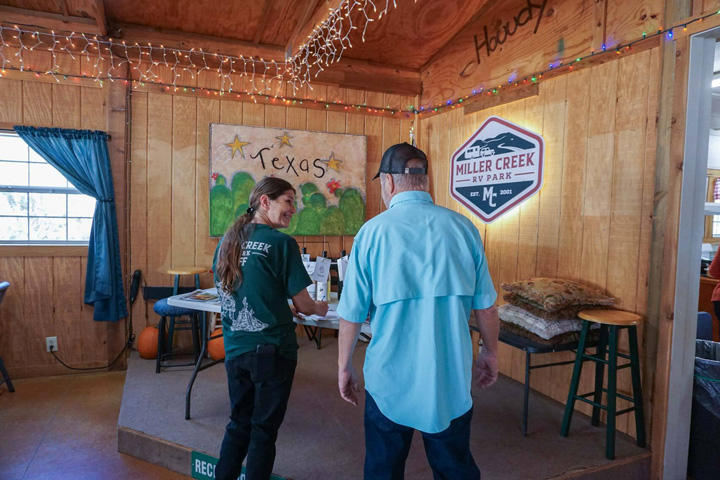
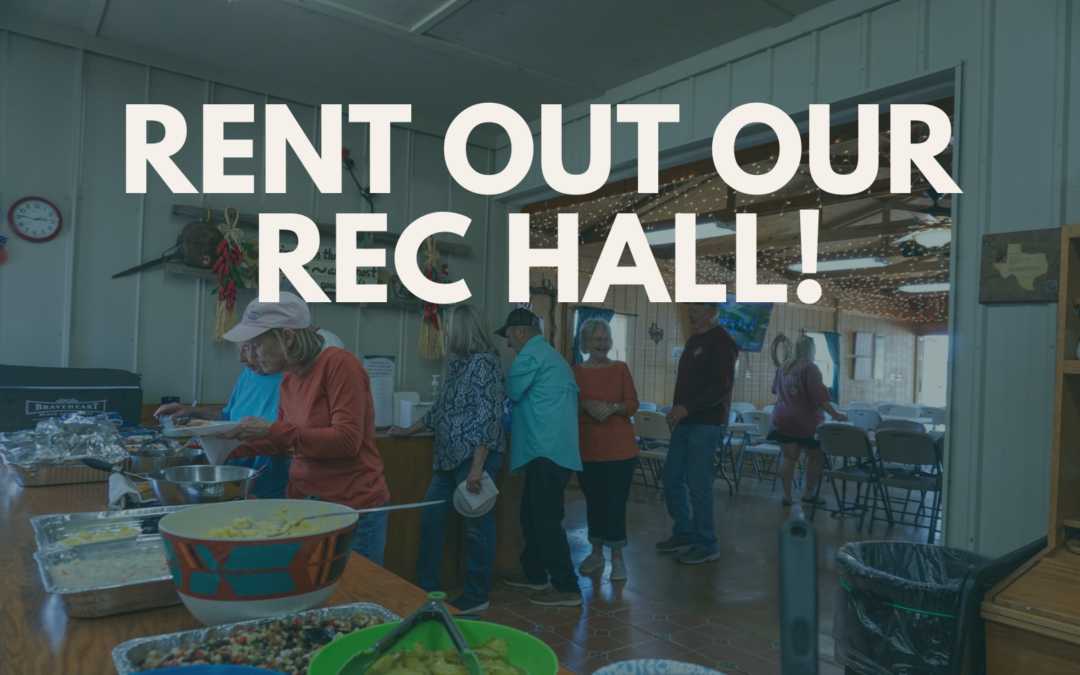
At Miller Creek, for example, every site is full hookup, and residents have access to a rec hall with a full kitchen, a 24-hour fitness room, two laundry rooms, two dog runs, a community restroom with handicap accessibility, and free basic Wi-Fi with upgraded broadband available.
Can you live in an RV on Social Security?
Many people can, at least on the housing line, but the math has to include more than site rent. After the 2.8% cost-of-living increase that took effect with January 2026 payments, the Social Security Administration estimated the average monthly benefit for retired workers at about $2,071. If you are 65 or older and enrolled in Part B, the premium is usually deducted from your Social Security payment (higher-income enrollees pay more), and CMS set the 2026 standard Part B premium at $202.90 a month. That leaves roughly $1,868.
Against that $1,868, the example park’s monthly rates before electric work out like this:
Standard back-in from $450: about 24% of the remaining benefit
Your own benefit may be well above or below the average, so run the same math with your real figure. If two of you draw benefits, use your combined figure minus a Part B premium for each of you, and check how many adults the monthly rate covers; Miller Creek’s, for example, is based on two adults per site.
Timing matters as much as the amount. Social Security is paid on the second, third or fourth Wednesday of the month depending on your birth date (or on the 3rd if you started receiving benefits before May 1997 or receive both Social Security and SSI), according to the SSA payment schedule. Monthly park rent may be due earlier. Miller Creek, for example, charges monthly rent on the 1st, adds a $5 daily late fee once payment is more than four days late, and reviews renewal after a second late payment. Keep a month’s rent in reserve, or ask before you sign whether a different payment arrangement is possible.
Costs that do not go away when you stay put
RV insurance, which some insurers price differently when the RV is your full-time residence
Maintenance and repairs on the RV, including roof, seals, tires and appliances
A vehicle for errands, plus its insurance and fuel
Medicare supplement, Advantage or drug plan premiums beyond Part B
Phone and, if the park’s Wi-Fi is not enough, an internet upgrade or hotspot
Propane in cooler months
Build your budget from all of these lines, not site rent alone, and leave a cushion for repairs. Our RV retirement planning checklist goes deeper on budgeting, Medicare coverage and choosing a domicile state.
Retirement RV Parks, RV Retirement Communities and Assisted Living: How They Differ
People search for “senior RV parks,” “RV retirement communities,” and “assisted living RV parks” as if they were the same thing. They are not, and the difference decides what you pay, what you own, and what happens if your health changes.
Question
All-ages long-term RV park
Age-restricted (55+) RV community
Owned-lot or membership RV community
Licensed assisted living
Who can live there
Anyone who meets park rules, with no minimum age
Set by the community, commonly a minimum age of 55 for at least one resident
Set by the community; some are also age-restricted
Residents assessed for the level of care they need
What you pay for
A monthly site rate, often plus electric
A monthly or seasonal site rate
A lot purchase or membership, plus ongoing dues or assessments
A monthly rate for housing, meals and personal care
Do you own the land
No
No
Yes, or a membership interest
No
Care services
None
None; social programs vary
None
Personal care and health assistance
Do you keep living in your RV
Yes, within the park’s RV rules
Yes, within the community’s RV rules
Yes, within association rules
No, you move into the facility
How you leave
Notice per your agreement
Notice per your agreement
You sell the lot or membership, if you can
Per the facility contract
What to verify first
Written rules, fee schedule and electric history
How the age rule applies to a younger spouse or guests
Dues history, special assessments and resale limits
State license status and inspection history
Miller Creek, the park used in the cost examples above, falls in the first column: its guest guide states that all ages are welcome, and it is an RV park, not a care provider.
One real hybrid is Escapees CARE in Livingston, Texas, a program built so retired RVers in the Escapees community can age in place in their own RVs with services such as meals and transportation. It is a specific program for a specific group, not a type of park you will find in every region. If you or a partner already need daily help, start from licensed care options and work back, rather than starting from an RV park and hoping it fits.
If you want an age-restricted community
Age-restricted RV communities suit retirees who want neighbors at the same life stage. Our list of retirement RV parks in Texas popular with RVers 55 and older is a place to start; check each park’s age rule directly, since not every park on it is age-restricted.
Staying in One Park vs Traveling Full Time
Many common warnings about RV retirement, from fuel costs to the scramble for campground reservations, are really warnings about traveling. Staying in one park removes many of them, but not all.
Factor
Traveling full time
Staying in one long-term park
Monthly housing cost
Changes with every campground and season
A fixed site rate, often plus electric
Fuel and driving
A recurring cost, and the main physical demand
Only for the trips you choose to take
Reservations
Constant, and hardest in peak season
One agreement, renewed on a monthly or longer term
Doctors and pharmacy
Harder to keep one provider network
One local network you can keep year round
Neither version is cheaper by default. A traveler who stays at low-cost campgrounds can spend less on sites than a monthly resident. The difference is predictability: a monthly resident knows the housing line on next month’s budget before the month starts, which matters a great deal when long-term RV living runs on a fixed retirement income. Many retirees end up doing both, with a home-base site for most of the year and shorter trips from it.
What staying in one park does not fix
The RV keeps aging. Many long-term parks limit RV age; Miller Creek generally does not accept RVs older than 10 years without a management exception. An RV bought at the start of retirement may limit which parks will accept it later, if you ever want to move.
The RV has to suit your body. Entry steps, a high bed and a small bathroom are easy at 65 and can become a reason to leave later on, so check them before you buy.
Health can change faster than a lease. If daily help becomes necessary, an RV park is not a care provider, which is why the comparison above matters.
The Park Rules That Decide Whether You and Your RV Get In
Long-term parks often screen RVs and residents more closely than overnight campgrounds, because you will be there for months. Ask any park for its rules in writing. The ones that matter most to retirees usually cover the RV itself, repairs, vehicles, pets and payment, and Miller Creek’s published rules are one example:
RV age: RVs older than 10 years are generally not accepted but may receive an exception from management. Age limits like this are common at long-term parks, but the cutoff and how strictly it is applied vary. If your RV is older, ask before you book whether an exception is possible.
Road-ready: the RV must be licensed, insured, currently registered and road ready, with leak-free water connections.
Repairs: vehicle repair is not allowed in the park, except by a mobile RV repair service. If you planned to do your own maintenance in retirement, that matters.
Vehicles: two vehicles per site, both registered with the office. Additional vehicles need permission.
Pets: a maximum of two dogs per site, with current vaccination records, leashes no longer than 6 feet outside designated areas, and no aggressive dogs.
Payment record: after a second late payment, renewal of a monthly agreement is subject to review.
Can you live in an RV park permanently? Inside a park, what keeps you there long term is a renewable agreement, an RV that meets the park’s standards and a clean payment record. Outside a park, local zoning and deed restrictions decide where full-time RV living is allowed, which our guide to Texas RV living laws covers in detail.
How to Test RV Retirement Living Before You Commit
Do not sell the house and sign a year-long agreement in the same month. Test the stationary version of RV retirement first.
Start with a short stay. A few nights is enough to see the site, the neighbors and the noise level before you commit to anything longer.
Book one month. A single month shows you a real electric bill, how the RV handles daily living, and whether the routine suits you. Use it to map real drive times to the nearest emergency room, your primary care doctor and any specialist you see, and if you are on a Medicare Advantage plan, confirm it covers the county the park is in.
Try a full season, ideally the one you expect to find hardest. In Texas that usually means summer heat, when electric bills and time spent indoors tend to peak.
For an honest look at the day-to-day once you are settled, from mail and Wi-Fi to weather and site upkeep, read what RV park living is really like.
Quick Answers
Is a retirement RV park the same as an age-restricted RV community?
Not always. “Retirement RV park” is a marketing term. Some are age-restricted; many are all-ages parks. Ask whether an age rule applies and how.
Do RV parks offer assisted living?
Generally no. Assisted living is a separately licensed type of facility in Texas, and an RV park is not one. One specialized program, Escapees CARE in Livingston, Texas, offers services such as meals and transportation to retired RVers in the Escapees community living in their own RVs.
Do RV parks accept RVs older than 10 years?
Policies vary, and some long-term parks set an age limit on RVs. Ask before you book, and ask whether exceptions are made for RVs in good condition.
Retiring at Miller Creek RV Park
If the stay-in-one-place version of RV retirement fits you, Miller Creek RV Park is a Hill Country base about 5 miles from Johnson City, within reach of Austin without living in the city. It is an all-ages park with full hookup sites, a rec hall, a 24-hour gym and monthly rates built for long stays.
Monthly sites start at $450 for a standard back-in, $575 for a pull-through or large yard site, and $625 for a creek side site, plus electric, as published in October 2026. For a trial run, the Get 1 Night Free offer gives you one more night free when you pay for at least one at the regular rate, on stays of up to six nights; for longer stays, the Winter Texan Snowbird Special rewards longer winter stays, and the Long-Term Special adds incremental monthly savings worth up to $1,000 over a year. Terms are on the promotions page.
Monthly stays are booked by phone: call the office at 830-868-2655, Monday to Friday 9am to 5pm and Saturday 9am to 1pm, with questions about RV age, longer stays or current promotions. For a short trial stay, check nightly availability.
RV campground activities come from three places: what the park schedules, what its amenities let you do on your own time, and what sits within a short drive. How much you get from each depends on the kind of property you book. Large RV resorts often run frequent programming with a pool and sports courts on site. Smaller RV parks may offer occasional gatherings, with guests planning much of their own recreation. State park campgrounds lean on trails, water and ranger programs.
RV campground activities at a glance:
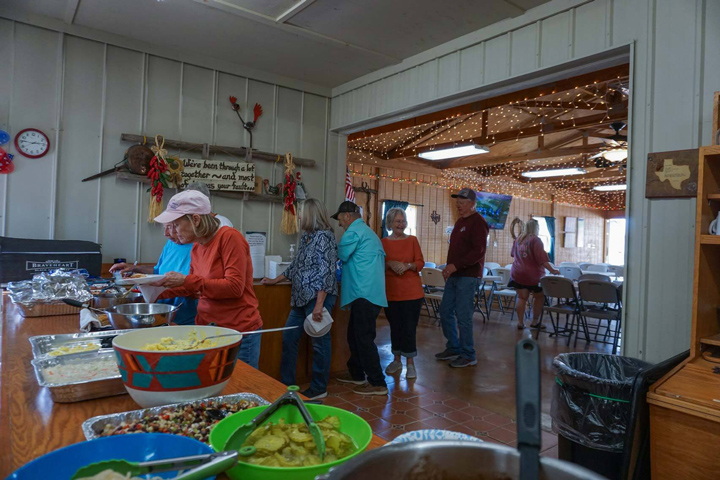
Shared meals: potlucks, breakfasts and cookouts
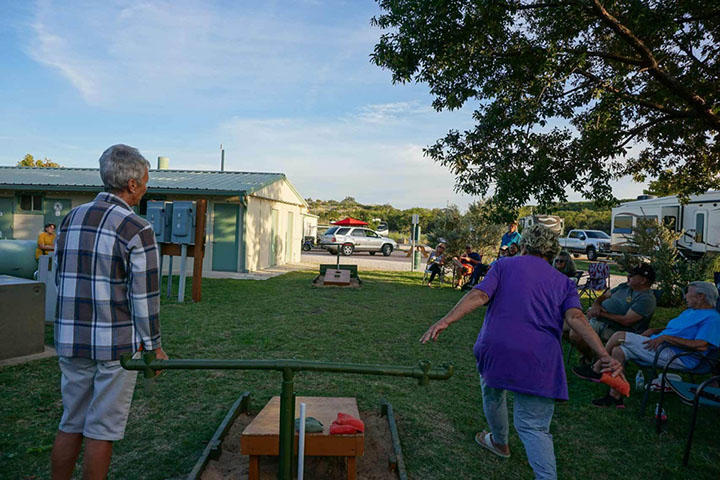
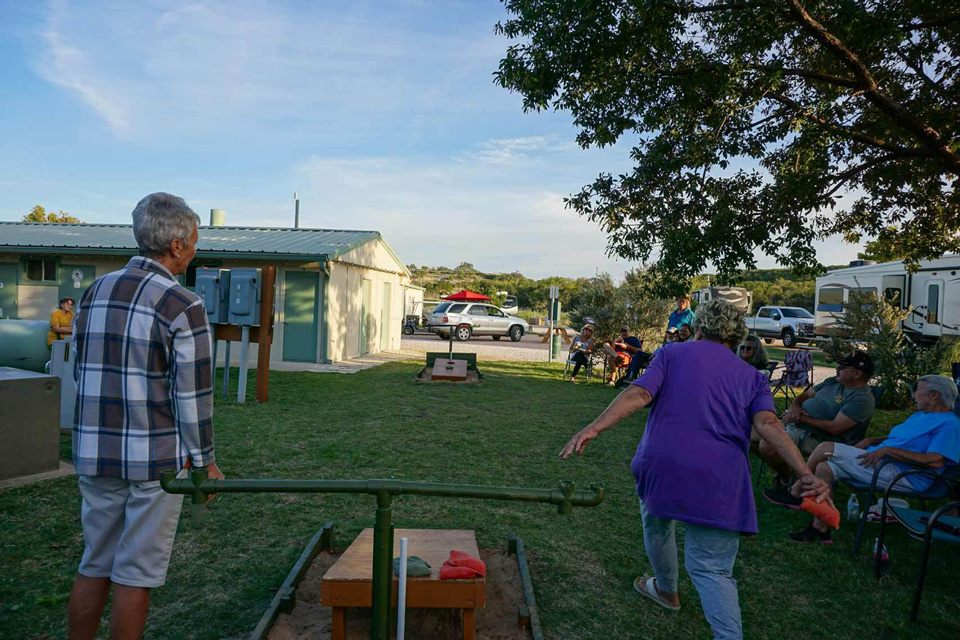
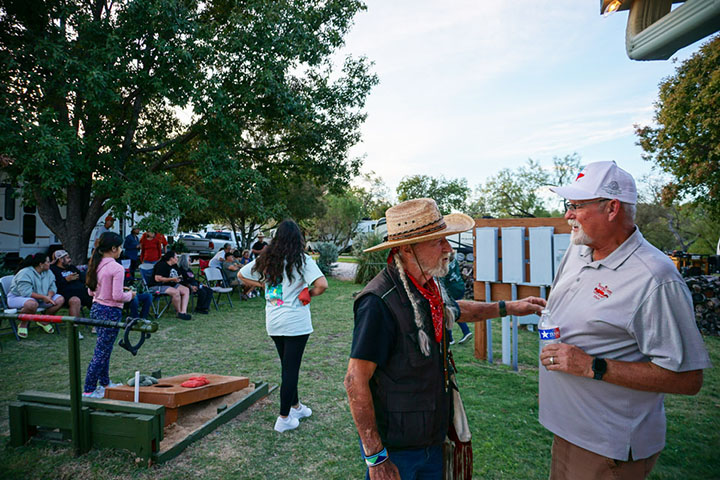
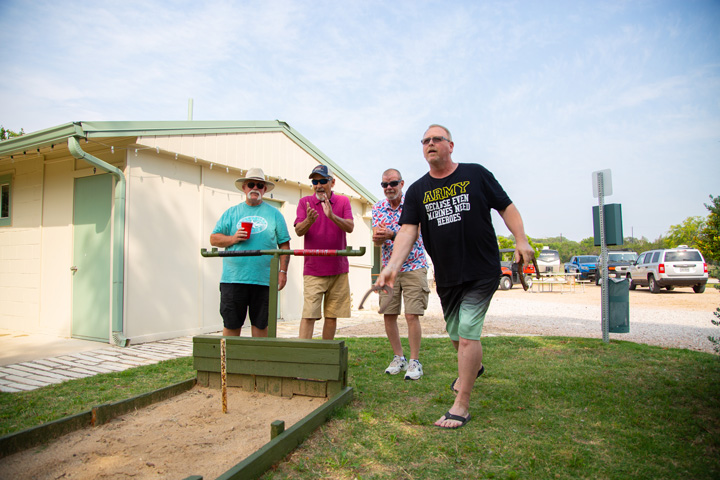
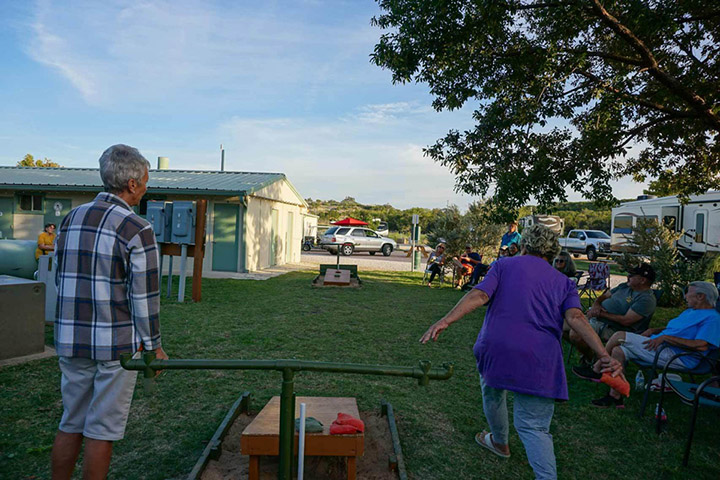
Games: cards, trivia, horseshoes, bocce and cornhole
Outdoors: walks, bike rides, stargazing and state park swimming
Group events: movie nights, open mics and holiday parties
Low-key time: crafts, a book swap and a morning workout
At Miller Creek RV Park, a Hill Country RV park about 5 miles from Johnson City, our event calendar has included gatherings in our Rec Hall, such as a Community Breakfast, alongside events at nearby venues like Pecan Street Brewing. The ideas below can work at many campgrounds, and later sections show how to check what a specific park offers before you book.
Each of these ideas works with a common room or open space and a few supplies. Join one your campground already runs, or start it yourself as a guest, rally leader, campground host or activity director. The last column names the rule worth checking before you invite anyone.
#
Idea
Space needed
What to bring
Rule to check first
1
Themed potluck
Room with a kitchen
A dish, serving utensils, allergen labels
Whether the room can be reserved
2
Talent show or open mic
Room with a stage or speakers
Sign-up sheet and a host
Quiet hours
3
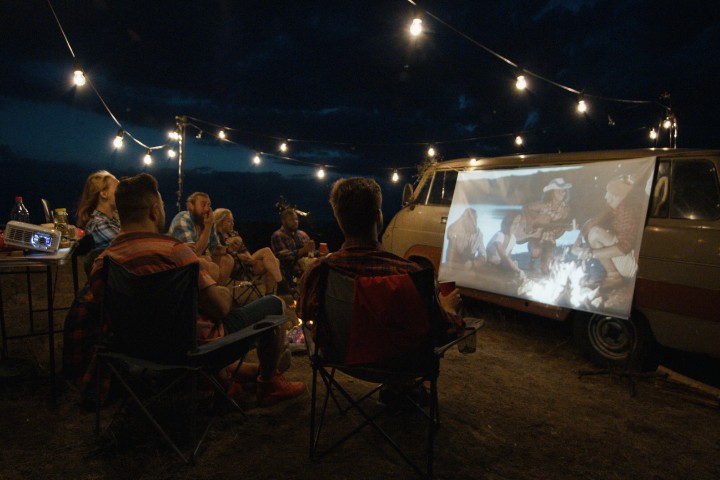
Outdoor movie night
Open common area
Projector, screen, chairs, popcorn
Management approval, screening rights, quiet hours and power access
4
Game night
Indoor common room
Cards, board games, trivia questions
First come or reservable
5
Group hike or nature walk
Trail on site or nearby
Water, a map, one person at the back
Park entrance fees off site
6
Arts and crafts session
Tables with easy cleanup
Supplies and drop cloths
Supervision of children
7
Morning stretching or fitness
Open lawn or gym
Mats and water
Gym rules and time limits
8
Seasonal celebration
Common room or open area
Decorations and a theme
Fireworks bans
9
Coffee morning
Common room
Coffee, cups, breakfast snacks
Kitchen use
10
Community service project
Park grounds or a local site
Gloves and trash bags
Management approval
Start with one event rather than several. Pick a day and time, post it where guests will see it, such as the office, a share table or the park’s Facebook page, and keep any costs voluntary. A simple gathering that happens more than once builds more community than a big party that happens one time.
For a movie night open to other campers, confirm the film is cleared for public screening, even if admission is free. A personal streaming subscription or a purchased copy does not by itself cover a public showing.
Organized Social Activities at RV Campgrounds
The social activities that last at a campground are simple, cheap and easy to repeat. A shared meal or a game at the fire pit is often what guests remember. For the etiquette side of meeting neighbors, see our guide to building community at an RV campground.
Shared Meals: Potlucks, Breakfasts and Cookouts
A potluck works best with a sign-up sheet split into mains, sides, desserts and drinks, so the table does not end up with six pasta salads. Pick a theme, such as a Tex-Mex night or a comfort food night, ask everyone to bring a serving utensil, and label dishes that contain common allergens. A breakfast is even simpler: one person makes coffee and everyone brings something small.
At Miller Creek, the Rec Hall has a full community kitchen, and our calendar has included a Community Breakfast there. Special events we have planned in the past include a Memorial Day weekend dip competition, with an optional entry fee benefiting K9s For Warriors, and a BBQ lunch during a Guest Appreciation Weekend. For cookouts at your own site, our guest guide allows grills on the gravel outside your RV. During a county burn ban, check with our office and Blanco County before lighting any cooking fire.
Game Nights and Indoor Gathering Spots
A good campground game night uses games anyone can learn in a few minutes: rummy, dominoes, charades or team trivia. Post a start time and place, bring a spare deck, and choose at least one game that newcomers can join between rounds. Teams mixed with strangers turn a game into introductions.
Our Watering Hole is an indoor community fire pit where guests play games, eat, read, and talk, with a maximum capacity of 23. The laundry room has a share table where guests trade books and movies. Tournament formats add energy too: the program for a past Guest Appreciation Weekend at our park included horseshoe, cornhole and Jenga tournaments with a prize for each winner. Before planning a game night at any park, ask the office whether the common room can be reserved or is first come, first served.
Live Music and Open Mic Nights
An open mic needs three things: a sign-up sheet, short slots of about five minutes, and one host who keeps time and introduces each performer. Acoustic sets, poetry and short comedy suit a small room. Start early enough to finish well before quiet hours, and let people sign up as a group if they are nervous about going alone.
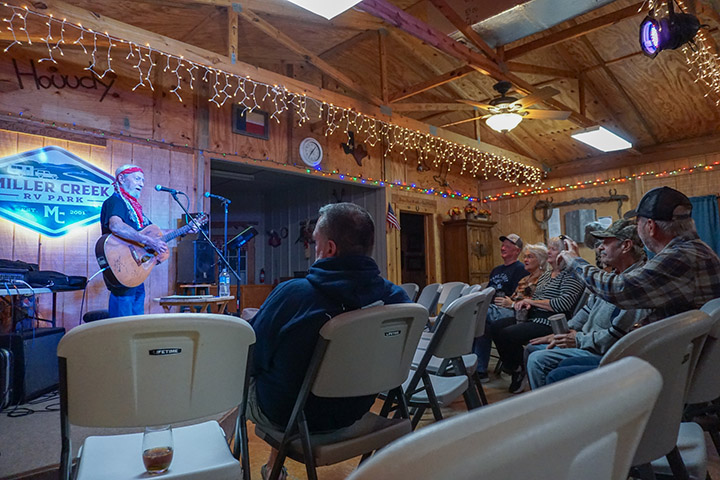
Our Rec Hall has a raised stage, a speaker system, and two TVs, and live music there was part of the program for a past Guest Appreciation Weekend. Our calendar has also listed off-site music at Pecan Street Brewing in Johnson City and Bindseil Park in Blanco. Quiet hours at Miller Creek run from 10pm to 8am, and loud music is not permitted at any time.
Seasonal and Holiday Events
Check holiday weekends for special events, and reserve early if your dates are fixed. To host your own, a theme and one shared activity are enough: a costume parade, a decorated-site contest or a holiday potluck. Events we have planned in the past include a Memorial Day weekend dip competition with a dog photo op next to the Watering Hole, and a four-day fall Guest Appreciation Weekend with a college football tailgate, a wine tasting with a local vineyard and a Veteran Appreciation Breakfast.
Treat a park’s past events as a signal of what it is willing to host, not a promise that it repeats them, and remember that fireworks are banned at many parks, ours included, whatever the holiday.
Outdoor Activities at and Around an RV Campground
Lawn Games, Campfires and Stargazing
Lawn games are the easiest outdoor activity to plan: cornhole, ladder toss, horseshoes, washers and bocce. Bocce is a good one for mixed skill levels, since players simply roll larger balls toward a small target ball and the closest ball scores. Miller Creek has horseshoes and bocce on site, so you do not need to pack your own. If you bring other games, measure first. Our standard sites are about 15 feet wide by 45 feet long, and once a rig, a slide-out and a vehicle are in place, an open common area usually works better. Our guest guide also limits what can stay outside the RV to patio furniture, grills and satellite dishes, so games get packed away after play.
Campfires at Miller Creek are limited to fire rings or pits on gravel and are subject to current fire restrictions. In Texas, a county judge or commissioners court can put a burn ban in place during drought, and the Texas A&M Forest Service burn ban resources explain how bans work. Before lighting any fire here, including a cooking fire, check with our office and Blanco County. Stargazing needs nothing more than a chair and a clear night. A dim red flashlight helps preserve your night vision; keep it pointed at the ground and away from neighboring windows.
Walks, Dogs and Fitness
A daily walk is the simplest campground routine to share: pick a time, invite a neighbor, and let the dogs set the pace. Miller Creek has walking trails and two dog runs, allows a maximum of two dogs per site, and requires a leash no longer than 6 feet outside designated off-leash areas.
Our 24-hour gym suits guests who keep a routine on the road; cardio machines are limited to 30 minutes when others are waiting. Our Creek Side Back-In sites have views of Miller Creek, where the water level varies by season. If water views are central to your trip, compare RV parks near Austin with scenic waterfronts.
Short Drives: State Parks, Swimming and Small Towns
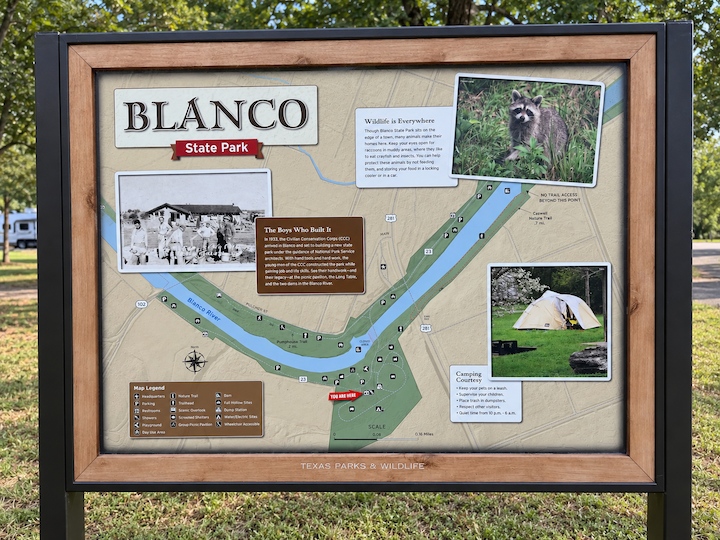
Blanco State Park is 8.5 miles from Miller Creek, about a 14-minute drive. According to Texas Parks and Wildlife, the park hugs a one-mile stretch of the spring-fed Blanco River, where visitors can swim, fish, paddle, hike, picnic and geocache. You do not need a license to fish from shore within the park, and the river is stocked with trout in winter. A daily entrance fee applies to visitors 13 and older, and children 12 and under enter free. Texas Parks and Wildlife asks day visitors to reserve a pass online or by phone before arriving, so check its Blanco State Park page for current fees, alerts and water conditions before your trip. Our Blanco State Park guide covers sites, swimming areas and trails.
A photo scavenger hunt is one of the easiest kids’ activities to run. Give each team a phone or camera and a list of things to find, such as a license plate from another state, a bird, a wildflower, a fire ring, something red and a dog on a walk. Set a time limit and a meeting point, and have kids photograph items rather than collect them. Bike rides where the park allows them, horseshoes, bocce, craft sessions and shore fishing at a nearby state park also work with little gear.
Teens tend to engage more when they have a role, such as keeping score at a cornhole tournament or running the music at a family game night. Supervision rules vary by park, so read them before kids roam. At Miller Creek, children under 16 may not be left without adult supervision, and guests are responsible for all of their guests or visitors under 18. Families who want the property to entertain children all day will usually do better at a resort with a pool.
Adults and Retirees
Adults on longer stays tend to build a weekly rhythm around low-key, repeatable activities: a morning walk group, a regular card or tile game, a book swap, gentle stretching and one day trip a week. At Miller Creek, the walking trails, the 24-hour gym, and the laundry room share table suits that rhythm.
Mixed-Age Groups and Rallies
Mixed groups work best when everyone has a way to take part. Build teams that mix ages, keep rounds short, and create seated roles such as scorekeeper, judge or music picker for anyone who would rather not play. Bocce, trivia, and a potluck all let grandparents and kids join on equal terms.
Our Rec Hall has a total capacity of 66, tables and chairs for up to 60, a full kitchen and a raised stage, and we offer a group discount for stays of up to 5 nights. If you are hosting a rally or group event near Austin, ask the office about space for your group when you book your sites. Not everyone in a family group owns an RV; we have seven air-conditioned cabins along Miller Creek, so relatives without a rig can stay on the property.
If you are inviting someone to stay overnight as your visitor, check the park’s guest policy. Our guest guide requires overnight guests to register at the office and lists a $5 per person nightly fee; confirm how it applies to your reservation.
Rainy-Day and Hot-Weather Activities
Texas summers push outdoor activities to the early morning and evening. Schedule walks and lawn games before the midday heat, keep the afternoon for indoor options, and review the National Weather Service heat safety tips, especially for children, older guests and pets.
Indoor options at our park include the 24-hour gym, the Watering Hole, the Rec Hall and the laundry room share table. Pack a rainy-day kit of your own too: a deck of cards, a puzzle, a board game and movies downloaded in advance. Our free Wifi covers basic internet needs with upgraded broadband available, but access is not guaranteed, so do not count on streaming during a storm. Our list of practical RV camping hacks has more ideas for making a small space work on a wet day.
RV Resort vs. RV Park vs. State Park: What Activities to Expect
A property’s label is a starting point, not a schedule; its amenity list and event calendar show what is actually offered. Our overview of the types of RV parks and campgrounds covers the categories in full. The table below looks only at what you will find to do, with Miller Creek shown as a worked example.
RV resort
RV park
State park campground
Miller Creek RV Park
Organized events
May offer daily or weekly programming; check the schedule
May offer occasional gatherings, or none
Ranger programs at many parks
Calendar has listed events such as a Community Breakfast in the Rec Hall
Typical facilities
Pools, clubhouses, sports courts and game rooms are common
Rec room or clubhouse, laundry, dog area
Trails, picnic areas, swimming or paddling where there is water
Rec Hall with full community kitchen, Watering Hole indoor fire pit, horseshoes, bocce, walking trails, 24-hour gym, 2 dog runs
Where most of the fun happens
On the property
A mix of on-site downtime and day trips
Inside the park, outdoors
On-site games plus day trips: Johnson City about 5 miles, Blanco State Park 8.5 miles
What activities cost
Amenities may be priced into a higher rate; some events may charge
Amenity access is often included in the site rate; ask what is extra
Texas state parks generally add a per-person entrance fee to the campsite
Site rates include access to park amenities; ask about private room use, paid services and event fees
Best fit
Families who want the property itself to be the destination
Travelers who plan their own days and want a quiet base
Campers who want nature over programming
Guests who use the Hill Country as the main activity
What a park does not have matters as much as what it does. Miller Creek does not list a pool among its amenities, so if a pool is non-negotiable for your group, book a resort. If you want a quiet base with lawn games, a shared fire pit and the Hill Country on your doorstep, the ideas in this guide will fill the days.
How to Check What a Campground Actually Hosts Before You Book
A line like “planned activities” on a booking page tells you very little about the RV campground activities you will actually find. Four quick checks tell you a lot more.
Read the venue and date on every calendar listing. Many park calendars, ours included, mix on-site events with ones at nearby venues.
Check the date of the most recent listing. If a calendar has not been updated in months, call the office to confirm whether activities are still being offered.
Call the office with specific questions. Which events repeat, which are seasonal, which carry a fee, and whether they are open to short-stay guests or aimed at monthly residents.
Compare parks in the same area. Programming varies widely between neighbors. Our roundup of top-rated RV parks near Fredericksburg is one starting point for this part of the Hill Country.
Campground Rules That Shape What You Can Do
Park rules decide which RV campground activities are possible long before anyone plans one. The left column shows what is common across RV parks; the right column shows our own rules from our guest guide.
Rule area
Common across RV parks
At Miller Creek RV Park
Quiet hours
Many parks set overnight quiet hours
10pm to 8am; loud music not permitted at any time
Generators
Often restricted or banned
Not permitted in the park
Campfires
Often limited to fire rings; county burn bans apply
Fire rings or pits on gravel only, subject to current restrictions; confirm any cooking-fire exception with the office and county
Fireworks
Often banned
Not permitted on park grounds
Visitors
Registration rules vary
Overnight visitors register at the office; the guest guide lists $5 per person per night
Children
Supervision rules vary
Children under 16 may not be left without adult supervision
Pets
Leash rules and dog limits are common
Maximum two dogs per site; 6-foot leash outside off-leash areas
Items outside the RV
Varies widely
Patio furniture, grills and satellite dishes only
Quick Answers
What activities do RV campgrounds usually offer?
Depending on the property, options can include lawn games, walking areas, shared indoor spaces and scheduled gatherings. Some resorts also offer pools, courts and organized programs. Check the property’s amenities and calendar before booking.
Are campground activities included in the site rate?
Check what your booking includes. Our RV site listings include access to park amenities, but private room use, paid services and special events may involve separate charges, so ask the office about the activity you have in mind.
Can I bring friends to a campground event?
Ask the office whether outside visitors may attend the specific event and whether registration or a fee applies. At Miller Creek, our guest guide requires overnight visitors to register at the office and lists a $5 per person nightly fee.
What can kids do at an RV park without a pool?
A photo scavenger hunt, lawn games such as horseshoes and bocce, bike rides where allowed, crafts and shore fishing at a nearby state park.
Building a Trip Around the Activities You Want
The best campground stays start with matching the property to the activities you care about. Decide whether you want the park itself to be the entertainment or a quiet base for day trips, read the event calendar for your dates with an eye on venues, check the rules that affect fires, music and visitors, and pack a few games for the evenings nothing is scheduled. In Texas, plan the outdoor parts of each day around the heat.
There is no single best place for RV camping in Texas, because the state is too big and its seasons too uneven for one answer to hold all year. The desert that feels perfect in February is punishing by July, and a Gulf beach that is breezy in April sits inside hurricane season by September. The better question is which region fits the month you’re traveling and the rig you’re driving.
The short version:
October through April: Big Bend Country and the Hill Country, when the desert and the limestone hills are at their most comfortable.
November through March: the Rio Grande Valley and the lower Gulf Coast, where Winter Texans settle in for weeks or months.
Spring and fall: the Piney Woods and Prairies & Lakes for lake camping, and the Panhandle canyons before summer heat builds and after it breaks.
Summer: go high in the Davis Mountains, go coastal with a hurricane plan, or camp near a Hill Country river with a flood plan.
The rest of this guide compares all seven regions on the things that actually change a trip: season, hookups, rig limits, booking rules, and distance. Mileages are measured from our front gate at Miller Creek RV Park, between Johnson City and Blanco, because the Hill Country makes a useful center point for sizing up a statewide route.
Texas RV Regions Compared at a Glance
The regions below follow the seven used by Travel Texas, the state’s tourism office. Distances are Google Maps driving miles from our park, checked in September 2026; a towed or motorized rig will take longer than the car times Google shows. Every row is expanded in the region sections that follow.
Region
Where to point your rig
Most comfortable window
Summer and weather
Hookups to expect
Rig watch-outs
Miles from our gate
Hill Country
Blanco SP, Pedernales Falls SP, Garner SP; Fredericksburg and Johnson City
October to May; spring wildflowers
Hot; 94°F July average high at Pedernales Falls; rivers for relief
Full hookup and 30-amp water and electric at state parks; private parks fill 50-amp gaps
River flash floods, low-water crossings
9 to 135
Big Bend Country
Big Bend National Park, Davis Mountains SP
November to April (park busy season January 1 to April 15)
Desert floor well above 100°F by late morning; mountains run cooler
25 full-hookup sites in the national park; 26 at Davis Mountains
Chisos Basin not recommended for trailers over 20 ft or RVs over 24 ft; Rio Grande Village RV Park 38 ft max
386 to 420
Gulf Coast
Mustang Island SP, Galveston Island SP, Padre Island National Seashore
October to May
Humid heat; hurricane season June 1 to November 30
Water and 50-amp electric at the state parks; no hookups at Padre Island
Soft sand, vehicle restrictions and tides, wind, salt air
221 to 260
South Texas Plains
San Antonio, Falcon SP, Rio Grande Valley
November to March
Long, hot summers
31 full-hookup sites at Falcon SP
Winter demand for monthly sites
57 to 296
Piney Woods
Caddo Lake SP, Martin Dies, Jr. SP
Spring and fall
Humid heat under tree cover
Water-only to full hookup at Caddo Lake; water and 50-amp at Martin Dies
Tree canopy, tight loops
About 357 (Caddo Lake)
Prairies & Lakes
Cedar Hill SP on Joe Pool Lake
Spring and fall
Hot; lake swimming and boating
147 full-hookup sites at Cedar Hill
Weekend crowds near Dallas-Fort Worth
About 232
Panhandle Plains
Palo Duro Canyon SP, Caprock Canyons SP
Late spring and early fall
92°F July average high and 19°F January average low at Palo Duro
Water and electric at Palo Duro; no full hookups listed
Canyon road, flash floods, wind
About 462 (Palo Duro)
Seven RV Camping Destinations in Texas, Region by Region
Hill Country
The Hill Country, the core of RV camping in Central Texas, packs state parks, private parks, rivers and small towns into short drives, so a full campground or a rained-out plan usually has a backup within the hour. Austin is about 43 miles from our gate, Fredericksburg about 37 and downtown San Antonio about 57, which makes the area a practical base rather than a one-night stop.
For state park camping, Blanco State Park sits 8.5 miles from us and has 17 full-hookup sites (eight of them with 50-amp service) plus 12 water-and-electric sites. Pedernales Falls State Park, about 18 miles away, offers 69 sites with water and 30-amp electric but no sewer, so plan on the dump station and a 30-amp power budget. Farther west on the Frio River, Garner State Park runs from water-only sites to a dozen full-hookup sites and more than 130 sites with water and 50-amp service. Our guide to Hill Country state and national parks covers what to do once you’re parked.
Private parks fill the gaps state parks leave, especially for 50-amp rigs and stays longer than two weeks. Our own sites run about 40 to 45 feet long and 15 to 22 feet wide depending on the type, and every one has 20/30/50-amp service, water and sewer (current specs and rates are on our RV sites page). If you want to compare other options nearby, there are write-ups on RV parks around Fredericksburg and scenic RV campgrounds near Austin.
Spring is the headline season, with bluebonnet season drawing crowds to the back roads, and fall is just as comfortable. Summer is hot (Texas Parks and Wildlife lists a 94-degree July average high at Pedernales Falls), which is why the rivers matter so much here. The same rivers are the region’s main hazard: TPWD warns that the Pedernales can turn from a placid stream to a torrent within minutes, and low-water crossings on ranch roads can flood fast after a storm. Pick a site with a clear route to higher ground, watch the forecast and local alerts, and move up rather than waiting for water to reach you. Never drive a rig through a flooded road or low-water crossing.
Big Bend rewards planning more than any other region in this guide, mostly because of distance and heat. Panther Junction, the national park’s main visitor center, is about 420 miles from our gate, and Davis Mountains State Park is about 386, so most rigs split the drive over two days.
Inside Big Bend National Park, full hookups exist in one place: the concessioner-run Rio Grande Village RV Park, with 25 sites and a 38-foot maximum length, booked by phone rather than through the park service. The park’s own campgrounds have no hookups at all. The Chisos Basin campground sits at 5,400 feet and stays cooler, but the park does not recommend trailers over 20 feet or RVs over 24 feet because of the narrow, winding road and small, unlevel sites. If your rig is longer than that, the road is the real constraint, so drive up in the tow vehicle and camp elsewhere. Check current conditions before you count on either campground.
Timing decides the whole trip. The National Park Service notes the desert floor is usually well above 100 degrees by late morning in summer, and Rio Grande Village averages a 107-degree high in June. January 1 through April 15 is the park’s busy season, with stricter stay limits, and spring is its busiest stretch. Between late fall and early spring is when an RV trip here makes the most sense.
For summer, look north to Davis Mountains State Park, which sits between 5,000 and 6,000 feet and has 26 full-hookup sites with 30- and 50-amp service. TPWD describes its summers as hot days with low humidity and cool nights, while winters often drop below freezing. Either way, distances between services out here can be long, so top off fuel and fresh water before you leave the interstate.
Gulf Coast
The coast is the one region where you can camp with the sand under your tires, but not always with hookups. At Mustang Island State Park, about 221 miles from us, the 48 sites with water and 50-amp electric sit behind the dunes roughly 400 yards from the water, while 50 primitive drive-up sites line a 1.5-mile stretch of beach with no hookups at all. Galveston Island State Park, about 260 miles away, has water-and-electric sites with 50-amp service on both the beach side and the bay side.
Padre Island National Seashore is the wilder option. There are no electric or water hookups in the park. Primitive beach camping is allowed on North Beach, South Beach and Yarborough Pass without a permit, though entrance fees apply. Stays are capped at 14 consecutive nights and 28 nights a year, and once you hit 14 nights, whether in a row or spread out, you have to be out of the park for 14 nights before coming back. Sand is the practical limit for a big rig: the Park Service recommends against driving large two-wheel-drive RVs on the beach at all, points RVs and trailers to the Malaquite and Bird Island Basin campgrounds instead, and recommends four-wheel drive even on the first five miles of South Beach.
The season question here is storms, not just heat. The Atlantic hurricane season runs June 1 through November 30, with most activity between mid-August and mid-October. Coastal trips in that window work best with flexible dates and an evacuation route you’ve already looked at. Salt air and constant wind are the smaller costs: a freshwater rinse of the undercarriage after a beach stay keeps the salt from sitting.
South Texas Plains
This region runs from San Antonio down to the Rio Grande Valley, and for RVers it’s mostly a winter story. The University of Texas Rio Grande Valley’s 2022-23 Winter Texan report estimated about 57,000 Winter Texan households in the Valley, drawn mostly from the Upper Midwest and Canada, and describes their stays as running from three weeks to six months. That demand is the reason monthly sites in the Valley are worth booking early if you’re aiming for January through March.
McAllen is about 296 miles from our gate. On the border, Falcon State Park, about 279 miles away, has 31 full-hookup sites with 30- and 50-amp service. Closer in, San Antonio works as a city stop on a Hill Country trip, and if you’d rather sleep in the hills and drive into town, we sit about an hour north as a Hill Country base for San Antonio. Our roundup of San Antonio’s historical sites covers the missions and downtown, and there’s a separate guide to RV parks near San Antonio if you’d rather stay in town.
Summers here are long and hot, so this is not the region to pick for a July trip unless you’re already based nearby.
Piney Woods
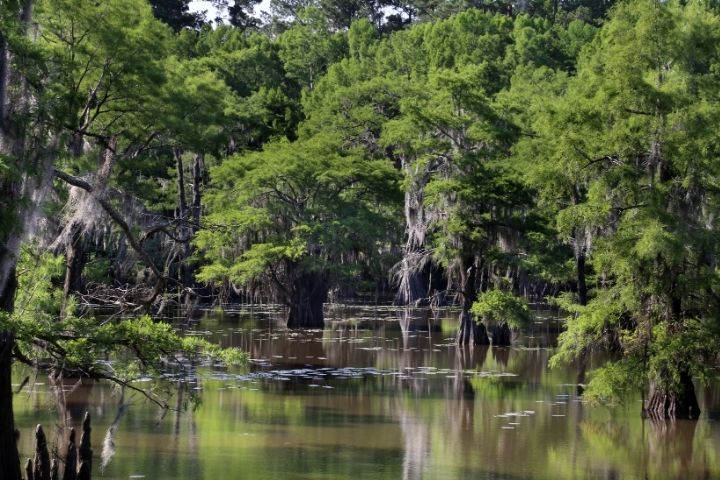
East Texas trades wide-open views for tree cover, lakes and bayous. Caddo Lake State Park, about 357 miles from us, has 46 campsites ranging from water-only to full hookup, set among bald cypress hung with Spanish moss, with paddling trails through the bayou. Martin Dies, Jr. State Park near Jasper has more than 80 sites with water and 50-amp electric and another 33 with 30-amp, plus nearly 14 miles of paddling trails where two rivers meet.
The trees are the draw and the catch. A wooded loop can mean tight turns and low branches, so check the RV length limit and parking space for your setup and look at site photos for overhead clearance before you book. Humidity makes summer heat feel heavier here than the thermometer suggests, so spring and fall are the comfortable seasons.
Prairies & Lakes
This is the North Texas region around Dallas, Fort Worth and Waco, and its RV appeal is lake camping close to the Metroplex. Cedar Hill State Park sits on Joe Pool Lake about 20 miles from downtown Dallas (232 miles from our gate) and has 147 full-hookup sites with 30- and 50-amp service, plus 192 more with electric. That is far more full-hookup sites than any other park in this guide, which makes it a good fallback when a Dallas-area trip needs sewer.
Parks this close to a big metro area tend to fill on weekends and holidays, so a Sunday-to-Thursday stay is usually easier to book than a Friday arrival.
Panhandle Plains
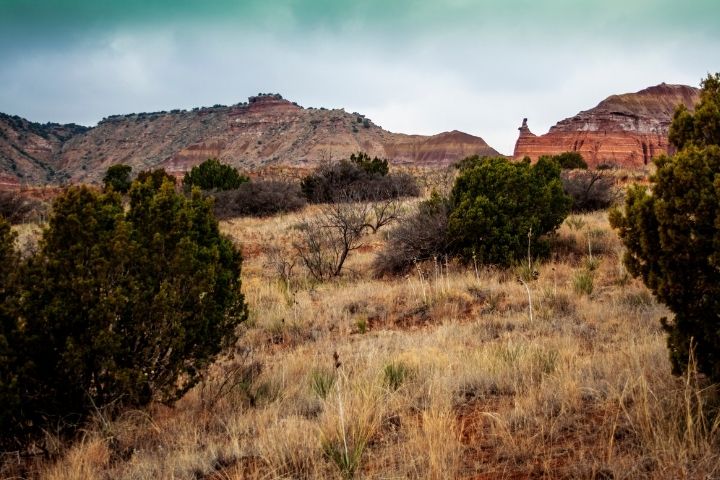
The Panhandle rewards the long drive with canyon country most visitors don’t expect in Texas. Palo Duro Canyon State Park, about 462 miles from our gate, sits in a canyon that TPWD describes as about 120 miles long, 20 miles wide and up to 800 feet deep. Its RV loops have water and electric, with 30- and 50-amp service in the Juniper, Mesquite and Sagebrush areas and 20- and 30-amp in Hackberry; no full-hookup sites are listed, and the Fortress Cliff area is tent-only, with no trailers or motorhomes.
Weather swings are the planning problem. TPWD lists a 19-degree January average low and a 92-degree July average high at Palo Duro, and it calls flash flooding a serious danger in the canyon. At nearby Caprock Canyons State Park, home to the Texas State Bison Herd, TPWD notes summer air temperatures can climb above 110 degrees. Late spring and early fall are the most comfortable windows; TPWD lists summer, during the outdoor musical season, as the park’s busiest stretch.
Where to RV Camp in Texas in Summer
Summer RV camping in Texas works if you pick one of three strategies and plan your power around it.
Go high. Elevation is the most reliable cooling in the state. The Davis Mountains sit between 5,000 and 6,000 feet, and Big Bend’s Chisos Basin at 5,400 feet runs well below the desert floor, though it has no hookups and suits only smaller rigs.
Go coastal. The Gulf breeze takes the edge off, but you’re camping inside hurricane season, so book with flexible dates and watch the forecast.
Go to the water. Hill Country rivers give you a place to cool off by day, as long as your site has a clear route to higher ground and you leave early when storms are forecast rather than waiting for the water to rise.
Power is the part most summer plans skip. A 30-amp pedestal delivers about 3,600 watts, which is enough for one air conditioner and modest loads, while a 50-amp pedestal supplies two 50-amp legs for about 12,000 watts. On a 30-amp site like those at Pedernales Falls, a rig with two air conditioners will usually run one at a time, and what else you can run alongside it depends on your own equipment. Our guide to essential RV hookups explains the 30- and 50-amp math, and thunderstorm safety for RV campers covers the storms that often break the heat.
Texas State Parks vs Private RV Parks
The biggest decision after choosing a region is which kind of park to book, and for RV camping in Texas the rules differ more than the scenery.
Factor
Texas state parks
Private RV parks
Hookups
A mix of full hookup, water and electric, and water only; many sites have no sewer
Full hookups are common, but amp service still varies by site
Booking window
Most overnight reservations open up to five months ahead
Set by each park; many take weekly and monthly bookings
Stay length
Generally 14 consecutive days; some parks set other limits and a few publish winter monthly rates
Set by each park; monthly and seasonal stays are common
Extra fees
Daily entrance fee per person 13 and older (for example $6 at Tyler, $8 at Palo Duro Canyon) on top of the site fee; a $70 annual Texas State Parks Pass covers entry for the holder and guests in the same vehicle and takes half off the second night of consecutive nights in the same site, subject to each park’s blackout dates and not combinable with other discounts
Varies; ask about guest, pet and utility charges before a long stay
Setting
Trails, lakes, rivers and canyons; fewer on-site services
Laundry, Wi-Fi, rec halls and dog runs vary by park
Rig rules
Length limits are set site by site in the reservation listing
Each park sets its own age, generator and pet rules
How TPWD Campsite Types Translate for RVs
Texas Parks and Wildlife sorts campsites into categories that matter more to an RV than to a tent:
Full hookup: water, electric and sewer at the site. The only category that empties your tanks without a trip to the dump station or an approved portable tote.
Water and electricity: power and a spigot, but no sewer connection. You’ll dump at the park’s station, where one exists, so plan how often your tanks need emptying before you book a long stay.
Water only: no power, and the spigot may be shared rather than at your site. Plan on battery and solar capacity, and check the park’s generator rules.
Drive-up with no hookups: vehicle-accessible camping without utilities. It describes the access, not the rig: Palo Duro’s Fortress Cliff sites are drive-up and tent-only, so read the individual listing.
Amp service varies inside the same park, so read each site’s listing rather than the park’s summary.
Booking Windows and Stay Limits
According to TPWD, most overnight camping reservations can be made up to five months in advance, and a stay is generally capped at 14 consecutive days, though some parks set other limits. For spring weekends in the Hill Country, that five-month window is when the good sites go. It is a TPWD policy and nothing more: Big Bend’s national park campgrounds are booked through recreation.gov, the Rio Grande Village RV Park is booked by phone through the park’s concessioner, and private parks set their own windows, so check each one for winter and spring trips. If your plan runs longer than two weeks, a private park with weekly or monthly rates is usually the simpler answer. Our look at booking lead times in Fredericksburg walks through the same timing question for one of the state’s busiest RV towns.
Matching the Destination to Your Trip
Families
With kids aboard, shorter driving days matter more than the destination. From our gate, Blanco and Pedernales Falls state parks are within 20 miles and the coast and the Dallas-area lakes are a single day’s drive, while Big Bend and Palo Duro Canyon are two-day hauls. State park entrance fees are charged per person for guests 13 and older; Tyler and Palo Duro Canyon, for example, let children 12 and under in free. For Hill Country trips, our list of family-friendly RV campgrounds in Fredericksburg covers parks with room for kids to roam.
Big Rigs
Check the site’s own RV length limit and the usable parking space, and if you tow, confirm where the tow vehicle goes once you unhitch. Don’t assume a park that fits you in one loop fits you in all of them. At Chisos Basin the Park Service advises against trailers over 20 feet and RVs over 24 feet, which is a recommendation rather than a posted limit, while the concessioner-run Rio Grande Village RV Park lists a firm 38-foot maximum. The softer constraints are tree canopy in the Piney Woods and tight turns on older loops. Whether you back in or pull through changes how much length you really need, which our comparison of pull-through vs back-in RV sites breaks down.
Long Stays and Winter Texans
Most Texas state parks cap a stay at about 14 consecutive days, though some make their own arrangements: Galveston Island, for example, publishes weekly and monthly bay-side rates from November through February. For anything longer, private parks are usually the practical answer. Our published monthly rates start at $450 for a standard back-in site and $625 for a creek-side site, and weekly stays have a seven-night minimum, with monthly availability worth a phone call. If you’re weighing a longer stretch, the realities of RV park living are worth reading first, and our overview of Texas RV living laws covers what changes if you’re thinking about parking on your own land instead. If part of your group would rather not sleep in the rig, we also rent two cabins along Miller Creek.
Rallies and Groups
A rally needs a park that can hold sites together and a place to gather when the weather turns. Our rec hall has a full kitchen, and our page on rallies and planned group activities covers how group stays work here. For statewide event timing, the RVer’s guide to festivals across Texas pairs major festivals with places to park.
How to Size Up a Texas RV Destination Before You Book
Most of what ruins a Texas RV trip is visible before you leave, if you know where to look.
Rig and parking length: check the specific site’s RV limit, its parking space, and where a tow vehicle can sit, not just the park’s summary.
Amp service per site: a 30-amp site in August is a different trip from a 50-amp site.
Sewer or dump station: without sewer at the site, your gray and black tank capacity sets your stay.
The road in: canyon descents, the Chisos Basin road, and flooded low-water crossings stop rigs that the campsite itself would fit.
Burn bans: county judges and commissioners courts set them, and the Texas A&M Forest Service burn ban map shows current bans. At our park, only supervised charcoal fires for cooking are allowed during a ban.
Water and weather exposure: look at where the loop sits relative to the river or the beach, and check the hurricane calendar for coastal trips.
House rules: private parks set their own age, generator, and pet rules. We generally don’t accept RVs older than 10 years, generators aren’t permitted, quiet hours run 10 p.m. to 8 a.m., and each site allows up to two dogs. Our guest guide has the full list, and most parks publish something similar.
It depends on the month. Big Bend Country and the Hill Country are best from fall through spring, the Rio Grande Valley and lower coast in winter, and the Davis Mountains or the coast in summer.
Do Texas state parks have full-hookup RV sites?
Some do, but many offer water and electric only. Cedar Hill has 147 full-hookup sites and Blanco has 17, while Pedernales Falls and Palo Duro Canyon list none.
How far ahead can you book a Texas state park campsite?
Most overnight state park reservations open five months in advance, and that window is a TPWD policy. Book at the start of it for spring weekends, and check Big Bend National Park and private parks separately, since they use their own systems and release dates.
Can you RV camp on the beach in Texas?
Yes, without hookups. Mustang Island State Park has primitive drive-up beach sites, and Padre Island National Seashore allows primitive camping on North Beach, South Beach and Yarborough Pass.
What is the 10-year rule at RV parks?
Some private parks limit how old a rig can be. We generally don’t accept RVs older than 10 years. If yours is older, call before booking any park with a similar rule.
What is the 3-3-3 rule for RV travel?
It’s a common rule of thumb: drive no more than 300 miles a day, arrive by 3 p.m. and stay three nights. From the Hill Country, it makes the coast a one-day drive and Big Bend or Palo Duro Canyon a two-day one.
Your Hill Country Home Base at Miller Creek
If the Hill Country is on your route, whether as the destination or a stop between longer legs, that’s where we are. Miller Creek RV Park sits on US 281 about five miles from Johnson City, between Johnson City and Blanco, with Fredericksburg about 37 miles away, Austin about 43 and downtown San Antonio about 57. Blanco State Park is 8.5 miles from our gate and Pedernales Falls State Park about 18.
Every site here has full hookups with 20/30/50-amp service, water and sewer, in four layouts: standard pull-through, standard back-in, large-yard back-in and creek-side back-in. Nightly rates start at $52, weekly stays bring the nightly rate down, and monthly stays start at $450, which suits Winter Texans and anyone using the Hill Country as a base for a longer trip. Between drives, you’ll have a 24-hour gym, on-site laundry, dog runs, free Wi-Fi and a rec hall with a full kitchen, and our two cabins along Miller Creek are there if someone in your group would rather not sleep in the rig.
Blanco State Park has no entrance gate and no gate code. You can drive straight onto Park Road 23 without stopping at a booth. Yet the Texas Parks and Wildlife Department still asks day visitors to reserve a pass online or by phone before they arrive, which is the easiest thing to miss when you are planning a first visit. Here is the second thing worth knowing: this is a small park, about 104.6 acres, among the smallest in the Texas state park system. That size is the point, not a limitation, because roughly a mile of spring-fed Blanco River runs straight through the middle of it. This Blanco State Park guide covers what it costs, what is actually there, whether your rig will fit if you are camping, and how to fit a half-day stop into a longer Hill Country trip.
Blanco State Park Guide at a Glance
Address: 101 Park Road 23, Blanco, TX 78606
Size: 104.6 acres, roughly 1 mile of Blanco River frontage
Entrance fee: $5 daily per person, age 13 and up; 12 and under free
Day pass requirement: Reserve online or by phone before visiting, even though there is no entrance gate
Park phone: (830) 833-4333
Reservation phone: (512) 389-8900
Camping types: Full hookup RV sites, electric campsites, screened shelters
Pets: Allowed on a 6-foot leash; not allowed at screened shelters or inside buildings
Gate: None. No gate code is needed to enter
Fees, Day Passes and Park Hours
The Blanco State Park entrance fee is $5 per day for anyone age 13 and up, with children 12 and under admitted free. Bring an extra vehicle or exceed the site’s occupancy limit, and you will incur a $6 nightly excess vehicle charge and a separate $6 nightly excess occupancy fee, with a maximum of eight people per campsite. All of these figures are subject to change, so treat them as a planning estimate and confirm current pricing before you go. Frequent visitors to Texas state parks sometimes offset the daily fee with a Texas State Parks Pass, which covers entrance statewide for pass holders, though pricing is worth confirming directly on the TPWD fees and facilities page since it changes.
Hours are simpler to state honestly than to guess at. The park is open daily, and the official facility map lists a 10 p.m. closing time for day visitors, meaning anyone not camping overnight needs to head out by then. Quiet hours run from 10 p.m. to 6 a.m. for everyone on site, campers included. No official source publishes a morning opening time, so check the current Blanco State Park hours on the TPWD park page rather than guessing at an early start.
Why Reserve a Day Pass Even Though There Is No Gate
This resolves what looks like a contradiction. The park’s reservation system states plainly that there is no gate and no gate code is needed to get in. At the same time, the official Texas Parks and Wildlife park page instructs visitors to reserve a Blanco State Park day pass online or through the customer service center before they arrive. Both are true, and together they describe a practical instruction rather than a paradox: the reservation is how the park manages capacity at 104.6 acres with one short stretch of swimmable river, not a physical barrier at the entrance.
That instruction holds whatever the season, and a summer Saturday is exactly when arriving without a pass turns a planned swim day into a wasted drive. Call the reservation line at (512) 389-8900 or book through the official Texas State Parks reservation page, and treat the missing gate as a reason to plan ahead rather than a reason to skip the step.
Getting There and Where to Park
The park sits at 101 Park Road 23 on the south side of Blanco, reached off U.S. Highway 281, roughly an hour from both Austin and San Antonio, according to Texas Parks and Wildlife. Blanco itself is within walking distance of the park boundary, and Johnson City sits a short drive north on U.S. 281, making this a realistic day trip from Johnson City just as easily as from Blanco. Miller Creek’s attractions near the park page covers what else is within a short drive once you have the park itself figured out.
Parking is where the park’s small footprint shows up. The official facility map states that vehicles must be parked on asphalt only, which limits where a tow vehicle, second car, or boat trailer can sit once the main lot fills. Arrival time matters more here than at a larger state park, because asphalt-only parking means there is no overflow grass to fall back on once the lot is full. On a summer weekend, plan to arrive early rather than assuming a spot will be there.
What to Do on the Blanco River
Texas Parks and Wildlife lists the full range of things to do at Blanco State Park as swimming, fishing, paddling or boating, picnicking, hiking, camping, wildlife watching, and geocaching. Most of that centers on the water: two stone dams built by the Civilian Conservation Corps back up sections of the Blanco River into pooled, slower water in an otherwise shallow, moving river. The swimming here is engineered, not a natural feature, and that distinction shapes almost everything else below.
Swimming and the Falls Dam Wading Pool
Texas Parks and Wildlife describes the shallow wading pool next to Falls Dam as one that small children will enjoy, and the reason a pool exists there at all is the dam holding water back above it. Set expectations rather than assuming a river is a river: there are no lifeguards, and depth, current, and clarity shift with rainfall and season. The calm pool in a June photo online can be running fast and cloudy a month later. Glass is prohibited in the river for a specific reason, not an arbitrary one; broken glass on a river bottom that you cannot fully see is effectively unrecoverable. Check current conditions with the park before you build a swim day around this stretch.
Fishing, Including the Winter Trout Stocking
No fishing license is required when you are fishing from shore inside the park boundary, which makes this a low-friction stop for anyone traveling without gear or paperwork. Texas Parks and Wildlife even offers loaner rods and reels. Fishing changes by season: the river gets stocked with rainbow trout during the winter months, which shifts the target species from what you would find here in July. Specific stocking dates and amounts change year to year, so check the current TPWD stocking schedule before planning a winter trip around it. Most shore fishing happens in the pooled water above the two dams, for the same reason swimmers gravitate there.
Paddling and Boating
The facility map marks a single canoe and kayak launch, and that launch is the accessible one, reached by a wide sidewalk with rails. Only electric motors are permitted. With roughly a mile of river running through the park and two dams crossing it, this is a short, flat-water paddle rather than a downstream float. Whether tubes or kayaks can be rented inside the park is not something Texas Parks and Wildlife publishes, so bring your own gear or arrange a rental before you arrive.
Hiking, Wildlife, and the Bird Blind
104.6 acres with two short trails is not a hiking destination on its own. The two named trails are the Pumphouse Trail and the Caswell Nature Trail. Published mileages for both vary widely across third-party sources, and Texas Parks and Wildlife does not publish a figure this guide can responsibly repeat, so check the official trails map for current distances.
What TPWD does describe in detail is the Pumphouse Trail: a caliche surface that stays smooth and level, a bird blind along the way with a caliche ramp and benches inside it, and a river-overlook deck at the end that sits level with the trail. Caliche, level, and smooth are specific descriptions rather than generic ones, and they tell you more than a trail mileage figure would if you are walking with a stroller or a mobility aid. Wildlife along both trails includes white-tailed deer, raccoons, herons, and turtles, moving through stands of bald cypress, sycamore, pecan, and juniper. Trail status can change with weather or maintenance, so confirm current conditions before you rely on either trail being open.
Blanco State Park Camping Compared
Several widely read guides publish campsite counts and rates for this park that do not match TPWD’s own figures. Blanco State Park RV sites are split into two full hookup tiers plus a basic electric tier, and the table below reflects the actual per-tier counts and rates Texas Parks and Wildlife publishes, current as of September 2026 and subject to change, so confirm current pricing on the TPWD site before booking.
Site Type
Sites
Hookups
Nightly / Weekly (Non-Peak)
Best Suited To
Full Hookup Premium (30/50-amp)
8
Water, sewer, 30-amp and 50-amp
$25 / $155
Larger rigs and anyone needing 50-amp service
Full Hookup (30-amp)
9
Water, sewer, 30-amp
$23 / $144
Mid-size rigs that do not need 50-amp
Campsite with Electricity
12
Water, 30-amp
$20 / $125
Tents, vans, and short stays with tank capacity to spare
Screened Shelter
7
Water, electricity, ceiling fan
$30 / $190
Travelers without an RV; no pets, no RVs in that area
Rates are per night, exclude the daily entrance fee, and are subject to change.
Every tier, shelters included, comes with a picnic table, a lantern post, and a fire ring with a grill, and restrooms are nearby rather than attached. The 30-amp full hookup sites and the electric sites add a shade shelter (we run 20/30/50-amp on every site, which is the part that changes what you can run in August). The weekly non-peak rates above apply from November through February, the same window covered later in this guide for winter trout fishing and lighter crowds. The $6 excess vehicle and excess occupancy charges from the fees section apply here too, and they change the real cost of a family booking that brings a second car or runs past the eight-person limit.
Will Your Rig Actually Fit
The reservation system lists exactly one pull-through site, numbered 016, and every other site is a back-in. Published driveway lengths run roughly 45 to 63 feet on the full hookup back-in sites and roughly 29 to 68 feet on the electric-only sites. Which number you measure against depends on the site type, and that is where most guides go wrong. On site 016, the only pull-through, you stay hitched, so combined length is what matters: a 32-foot travel trailer behind a 19-foot truck, as an illustrative example, runs about 51 feet and sits well inside that driveway. On a back-in you unhitch, so the trailer alone has to fit the driveway, and the real question becomes where the truck ends up, because vehicles have to stay on asphalt. Read both off the specific site listing rather than assuming there is room beside the pad.
Here is where the confusion started: site 016, the single pull-through, is listed at 120 feet. That figure appears to be the source of the 120-foot maximum RV length repeated across several other Blanco State Park guides, applied incorrectly to the whole park instead of one specific site. Read the driveway length on the exact Blanco State Park RV site you are booking rather than trusting a park-wide number (our standard sites run roughly 15 by 45 feet and the large yard about 22 by 40, which is the same read on a different set of numbers). A dump station is available on site.
Screened Shelters and Who They Suit
The seven screened shelters serve a different traveler than either the RV sites or a tent site. Each includes a picnic table, a ceiling fan, water, electricity, a lantern post, and a fire ring with a grill, with restrooms nearby. Shelters 43 and 47 are the accessible units.
Three constraints decide whether this tier fits your trip: RVs are not permitted in the shelter area, pets are not allowed at the shelters at all, and there is no plumbing inside. That suits a tent camper who wants a hard roof and a fan without hauling a tent, or a family without an RV who still wants power on site. It does not suit anyone traveling with a dog or anyone who needs an RV parked next to where they sleep. Book a standard campsite instead in either case.
How Far Ahead to Book
A park with three campsite tiers and seven shelters, none of them large, sells out on a different rhythm than a big regional park. The predictable pressure points are summer weekends, spring break, and major holidays. Check the official Texas State Parks reservation page for the current booking horizon rather than trusting a fixed number of months, since it shifts with demand. If Fredericksburg is also on your route, the booking window for private parks there works on the same logic and is worth checking at the same time.
Arrive after hours with a confirmed reservation, and the reservation system posts late-arrival instructions at park headquarters, with check-in required by 9 a.m. the following morning. Check-out is at noon, with the option to renew your permit by 9 a.m. if you want to extend an unbooked site.
Accessibility at Blanco State Park
Screened shelters 43 and 47 are ADA accessible. The group pavilion has two ADA parking spaces and a sidewalk connecting to the building. The kayak launch is ADA accessible, with a wide sidewalk and rails leading to the water.
A wheelchair-accessible restroom sits in the campground loop next to the main restroom, though reaching it requires a door code from park headquarters or the park host, since campground restrooms are reserved for overnight guests rather than day visitors. The Pumphouse Trail is accessible along its length, with a caliche ramp into the bird blind and a river-overlook deck that sits level with the trail rather than a step down. Texas Parks and Wildlife notes that conditions and accessible features can change, so a call to the park is worth it before a visit that depends on any one of them.
Best Time to Visit and What Changes by Season
Summer is when the dammed pools matter most, and it is also when Central Texas heat becomes a genuine planning factor rather than a footnote. A small park with an asphalt-only lot rewards an early arrival in July more than it would in November. November through February is the non-peak season, when the lower weekly camping rates above apply and when winter trout stocking changes what is worth fishing for.
Spring brings wildflowers along the river corridor, with bluebonnets and Indian paintbrush documented in the surrounding area, though no guide can promise a bloom on any specific date. Autumn is generally the mildest window for walking the Pumphouse Trail or getting on the water, and Miller Creek’s fall in the Texas Hill Country itinerary has more on pairing that season with other stops (autumn is when our creek-side sites earn their premium, though the creek level varies by season). Whatever the calendar says, river level and flow after heavy rain affect swimming more than the season does, so check conditions close to your trip regardless of month.
Park Rules Worth Reading Before You Arrive
These come from the official facility map, and most make more sense once you know the reasoning behind them.
Alcohol is prohibited throughout the park, with no exceptions tied to campsite or shelter type.
Pets must stay on a leash; six feet is the stated maximum, and pets are not allowed inside any park building.
No glass is allowed in the river, since broken glass on the river bottom cannot be fully seen and is nearly impossible to recover safely.
Firewood gathering is not permitted, and campfires are restricted to the fire rings already provided, protecting what little understory a small riparian park has left.
Vehicles stay on asphalt only, which is the rule behind the parking constraint covered above.
Quiet hours run from 10 p.m. to 6 a.m. (ours at Miller Creek run from 10 p.m. to 8 a.m.), and day use closes at 10 p.m. for anyone not staying overnight. Miller Creek’s own RV park rules and etiquette guide covers the same quiet-hours and leash conventions that hold across most Hill Country campgrounds, not just this one.
Checkout is at noon, with same-day permit renewal available by 9 a.m. if you want to extend an unbooked site.
The CCC History You Are Actually Walking On
The landscape here is not naturally occurring the way it looks. The state received the land in 1933, and Civilian Conservation Corps Company 854 arrived on June 16, 1933, with 177 workers, staying for roughly eleven months. In that time, they built the two seven-foot stone dams that create the pooled swimming water covered above, plus roads, concrete bridges, a concession building, a bathhouse, stone picnic tables and benches, and a pump house that now stands in ruins near the river. The park opened in 1934. A later renovation brought it back on July 30, 1983, and a Texas Historical Marker followed in 2009.
The Blanco River rose roughly thirty feet during the May 2015 flood, and the park did not reopen fully until October 24, 2015. Every time you stand in the calm water above one of the two dams, you are standing in a pool that the Civilian Conservation Corps stonework created on purpose, not a feature the river carved on its own. For the wider regional story this fits into, Miller Creek’s journey through the history of the Texas Hill Country picks up where this section leaves off.
Fitting Blanco State Park Into a Bigger Hill Country Trip
A 104.6-acre park with a short trail system and a mile of river is a half-day stop for most visitors, which makes the real planning question what to pair it with. Miller Creek RV Park’s own attractions page lists Pedernales Falls State Park at 18.1 miles, Lyndon B. Johnson National Historical Park at 18.9 miles, LBJ State Park at 20 miles, Guadalupe River State Park at 39.3 miles, and Enchanted Rock at 53.5 miles, sourced from Miller Creek’s own published distances rather than estimates. Closer in, the town of Blanco sits within a few minutes of the park, whether you are stopping for a meal or topping off gas before the drive home. Miller Creek’s 3-day explorer’s itinerary is a useful starting point for stringing several of those stops together.
Because the park is small enough that most visitors pair it with something else the same day, where you sleep the night before or after matters more here than it would for a destination that fills an entire day on its own, whether you are camping in the park itself or driving in for the day from a base further down the highway.
Camping in the Park or Basing at a Nearby RV Park
This is a genuine tradeoff, not a sales pitch. Camping inside Blanco State Park puts the water a few steps from your site at a lower nightly rate than most private RV parks charge, but it comes with back-in sites, shorter driveways, 50-amp service only on the eight Premium full hookup sites, and a small number of sites competing for the same summer weekends covered above.
Basing at a private RV park nearby trades river frontage for 50-amp service on every site rather than on eight, a real choice of pull-throughs, monthly rates, laundry, and a recreation hall. We publish Blanco State Park at 8.5 miles from us, and our RV site types run to standard pull-through and back-in sites, a large-yard back-in with room for two vehicles, and creek-side sites, all on 20/30/50-amp service with water and sewer. For travelers without a rig, log cabins along Miller Creek are the other option, each with air conditioning, kitchenware, and bunk sleeping for four.
If your rig fits the state park’s driveway lengths and you want to wake up next to the water, book inside the park. If you need 50-amp, want a pull-through without competing for the park’s only one, prefer a monthly rate, or would rather have laundry on site, basing a short drive up U.S. 281 is the more practical call.
Quick Answers
Do you need a reservation to visit Blanco State Park for the day?
Yes. Even though there is no gate and no gate code, Texas Parks and Wildlife instructs day visitors to reserve a pass online or by phone before arriving.
How much does it cost to get into Blanco State Park?
The entrance fee is $5 per day for anyone aged 13 and older. Children 12 and under are admitted free.
Can you swim in the Blanco River at Blanco State Park?
Yes, mainly in the pooled water behind the two CCC-built dams and the shallow wading pool at Falls Dam. There are no lifeguards, and conditions change with rainfall and season.
Do you need a fishing license at Blanco State Park?
No, not when fishing from shore inside the park boundary. Loaner rods and reels are available.
Does Blanco State Park have full hookup RV sites?
Yes. Full hookup sites are split into a Premium 30/50-amp tier with 8 sites and a 30-amp tier with 9 sites, both with water and sewer.
Will a big rig fit at Blanco State Park?
It depends on the site. Only one, number 016, is a pull-through, and back-in driveways run roughly 45 to 63 feet on the full hookup sites and 29 to 68 feet on the electric-only ones, so check the exact site rather than a park-wide figure.
Are dogs allowed at Blanco State Park?
Yes, on a leash no longer than six feet, except at the screened shelters, where pets are not permitted.
How long do you need to see Blanco State Park?
Most visitors treat it as a half-day stop, given the park’s 104.6 acres and two short trails, though campers naturally stay longer.
What is there to do near Blanco State Park?
The town of Blanco sits within a few minutes of the park, and Pedernales Falls State Park, Lyndon B. Johnson National Historical Park, and LBJ State Park are all a short drive north up U.S. 281.
A Small Park That Rewards a Slow Visit
Blanco State Park is 104.6 acres built around a dammed, spring-fed stretch of the Blanco River, and it rewards a slow half-day more than an itinerary built to conquer it. Whether you are camping in the park itself or basing nearby, knowing the fee, the day pass, the real driveway lengths, and the two dams that make the swimming possible gets you further than any packing list will.
Miller Creek RV Park sits along U.S. 281 between Johnson City and Blanco, 8.5 miles from the state park, with full-hookup RV sites and log cabins for travelers who would rather sleep at a home base than inside the park itself. Call (830) 868-2655 or check current availability to plan your stay.
Almost every guide to Texas RV living laws gives the same advice: check your county’s zoning rules. That sounds reasonable, and it sends a lot of people down the wrong path, because most Texas counties do not have zoning at all.
The real question is which authority actually controls the specific piece of land you want to park on. Get that wrong and you can spend thousands on a pad, a septic system, and an electrical pedestal before finding out the setup was never permitted. We run a park in the Texas Hill Country and field these questions constantly, so here is what Texas law actually says.
What Actually Changed in Texas RV Law Recently
Search for new RV laws in Texas and you will find a lot of confident, vague answers. Two things genuinely changed, one commonly cited “new law” is five years old, and the thing most people are asking about did not change at all.
Emissions testing is a separate program and still applies in 17 designated counties, including Travis and Williamson. Blanco, Hays, Gillespie, and Burnet counties are not among them, so an RV registered at an address in any of the four needs no emissions test. Bexar County becomes the eighteenth on November 1, 2026.
Prohibited camping became a criminal offense in 2021. Texas Penal Code Section 48.05, added by House Bill 1925, makes it a Class C misdemeanor to knowingly camp in a public place without consent of the agency managing it. This gets cited constantly as “the new Texas RV law.” It took effect September 1, 2021, and it was aimed at public encampments, not RVers. It does not apply to private property, licensed RV parks, or authorized campgrounds.
What did not change: Texas has no statewide statute that broadly authorizes or prohibits full-time RV residence. We found nothing in the 2025 legislative session that changes that for RV residents, though a search of that kind is never exhaustive. What decides your situation is local and private restrictions, not a state law.
Why “Check Your County Zoning” Is Usually the Wrong Question
Texas counties generally cannot adopt broad zoning the way cities do. Local Government Code Section 232.101(b) states directly that a commissioners court shall not regulate the use of any building or property for business, industrial, residential, or other purposes. A small number of counties hold narrow zoning-like authority under specific statutes, so treat this as a strong general rule rather than an absolute one.
County authority over unincorporated land is real but narrow. It covers subdivision platting, on-site sewage facilities, floodplain development, public nuisance abatement, and road access, but generally not dictating the use the land is put to.
Read that carefully, because the absence of zoning is not approval. It means no one will hand you a permit confirming you are in the clear, and the constraints that do apply come from somewhere else. Start by establishing which of these three situations your parcel falls into.
Jurisdiction
Who has authority
What actually governs RV occupancy
Inside city limits
The municipality
Full city zoning applies. Occupancy of an RV as a dwelling is often restricted or prohibited outright.
In a city’s extraterritorial jurisdiction (ETJ)
City and county share limited authority
City subdivision and platting rules can reach the parcel. Municipal zoning ordinarily does not extend into the ETJ, but confirm scope with both the city and the county.
Unincorporated, outside all ETJ
County, the OSSF authority, the floodplain administrator, and holders of private restrictions
Broad municipal zoning generally does not apply. Wastewater, platting, floodplain, access, deed restrictions, and HOA rules control instead.
Around our part of the Hill Country, that third category is common but not universal. Texas municipalities generally have an ETJ, and Johnson City, Blanco, Fredericksburg, Dripping Springs, Wimberley, Marble Falls, and Burnet are no exception. A parcel two miles outside a small town can sit in that town’s ETJ while the parcel next to it does not, so both the boundary and the city’s authority within it have to be confirmed address by address.
Can You Live in an RV on Your Own Land in Texas?
Often yes, but owning the land is not what makes it legal. Where the parcel sits and how the RV is used are what matter, and the second part trips people up because four different activities get discussed as if they were one:
Storage. An unoccupied RV on the property, often restricted only by setbacks or screening.
Temporary parking. An RV on site, occupied briefly, often with a stated day limit.
Guest occupancy. Someone staying in the RV short term while a primary residence exists on the property.
Full-time residential occupancy. The RV is the dwelling.
A city that permits the first three may still prohibit the fourth. When you call a planning department, asking whether RVs are allowed on the property will get you a misleading yes. Ask specifically whether continuous residential occupancy of a travel trailer, fifth wheel, or motorhome is permitted at that address, and ask for the answer in writing.
A common pattern in Texas cities is to allow RV occupancy only as temporary housing while a permanent home is under construction on the same lot, tied to an active building permit. That is a real allowance, but it ends when the permit does.
Outside city limits and outside any ETJ, there is often no land use ordinance to violate. That is not the same as being cleared to move in. The constraints move to sewage, floodplain, platting, and private restrictions, and those are where full-time setups usually fail.
How Long Can Someone Live in an RV on Your Property?
There is no single statewide maximum stay. Duration limits come from city ordinances, and they vary widely. Some cities cap occupied RV stays at a set number of days per year. Some allow indefinite occupancy tied to a construction permit. Some prohibit occupancy entirely regardless of duration.
Where no city has authority, a day limit is less likely, but do not assume none exists. Recorded restrictions, plat conditions, floodplain rules, and the terms of your septic approval can all constrain how a property is occupied. Ask the county in writing rather than inferring an answer from the absence of zoning.
The number of RVs is a separate question. Placing several occupied RVs on one parcel can trigger platting requirements or cause the property to be treated as an unlicensed RV park. Talk to the county before anything gets parked.
Septic and Sewage: What Stops Most Private Land Setups
This ends more private land RV plans than zoning ever does, and it is the requirement most articles skip.
Texas regulates on-site sewage facilities under Health and Safety Code Chapter 366 and Title 30, Texas Administrative Code, Chapter 285. TCEQ delegates most permitting to local authorized agents, usually a county office. A permit and approved plan are generally required to construct, alter, repair, extend, and operate an OSSF, and approval depends on soil conditions, parcel size, setbacks from wells and property lines, and a site evaluation. Not every parcel can support one.
One narrow exemption matters in the Hill Country, where large rural tracts are common. Under what is usually called the 10-acre rule, an OSSF may be exempt from permitting only where every condition is met: the tract is 10 acres or larger, the system has a site evaluation by a licensed site evaluator or professional engineer, it serves a single family dwelling that is the only dwelling on the tract, effluent is disposed of on the property, all components sit at least 100 feet from the property line, and the system causes no nuisance or groundwater pollution.
Read those conditions closely, because two of them disqualify common plans. If the tract already has a house, an RV is not the only dwelling. If you are thinking about more than one unit, a guest rental, or anything resembling a small park, this exemption does not cover you. And the exemption removes the permit requirement, not the requirement to have a compliant system built to Chapter 285 standards. TCEQ’s own guidance says you might not need a permit and to confirm with your local permitting authority.
Graywater deserves a precise answer, because it is widely misunderstood. Texas does allow limited residential graywater reuse, and no TCEQ authorization is required for residential use averaging under 400 gallons per day when the system meets the rules. But graywater is defined narrowly: showers, tubs, handwashing sinks, sinks not used for food preparation, and clothes washers, excluding anything that has contacted toilet waste. Do not assume an RV graywater tank or hose arrangement qualifies as a lawful reuse system. Whether a given setup works depends on the wastewater source, system design, volume, site conditions, and local OSSF requirements, and the OSSF rules describe a graywater reuse system as beginning at the graywater stub-out of a single family dwelling. Reuse systems are also not authorized to overflow onto the ground. Confirm any arrangement with the local OSSF authority before you use it.
One more thing. An approved electric meter does not indicate the site is approved as a residence. Utility service and sanitation approval are separate processes, and getting power connected proves nothing about the legality of living there. Verify the wastewater question before you buy the land, not after.
Deed Restrictions and HOA Covenants
Even where no zoning exists, private restrictions can prohibit exactly what you are planning. Deed restrictions and subdivision covenants run with the land, bind you as the new owner, and are enforceable by neighbors regardless of what the county allows.
Be skeptical of land marketed as unrestricted. That word usually refers to deed restrictions alone, and sellers use it loosely. It does not confirm the parcel is outside a city’s ETJ, that an OSSF permit is obtainable, that the site is out of the floodplain, or that an address can be assigned. Pull the recorded restrictions from the county clerk yourself rather than trusting a listing description.
Registration, Inspection, and Insurance
Registration. Motorized RVs are titled and registered like other motor vehicles, with annual renewal. Towable RVs such as travel trailers and fifth wheels are registered as trailers, and titling requirements differ by weight, so confirm your category with TxDMV rather than assuming the rules are identical. New residents are generally expected to title and register within 30 days of moving to Texas.
Inspection. As covered above, non-commercial vehicles no longer need a safety inspection before registration, emissions testing still applies in designated counties, and commercial vehicles are unaffected.
Insurance. Texas financial responsibility rules apply to motor vehicles operated on public roads, so a motorized RV needs liability coverage like any other vehicle. A towable RV is generally covered under the tow vehicle’s liability policy while in tow rather than carrying its own statutory requirement, so do not assume the two categories work the same way.
The bigger issue for full-timers is coverage type, and this is practical guidance rather than a legal requirement. Many standard recreational RV policies are written on the assumption the vehicle is used for occasional travel, and they can limit or exclude losses that occur while the RV is occupied as a permanent residence. Most carriers offer a full-timer’s policy or endorsement that addresses this, along with personal liability coverage at the site.
Tell your insurer plainly that the RV is your full-time residence and where it is parked. Discovering the distinction after a hail claim is expensive.
Domicile is about demonstrating intent to make Texas your permanent home: a Texas driver license, vehicles registered here, and voter registration in the county where your domicile address sits. DPS requires documentation showing a Texas residential address, so the address you use has to hold up.
That is where full-timers run into trouble. A mailing address, a physical address, and a legal domicile address are not interchangeable. Some parks accept mail but will not allow the address to be used for licensing, and an undeveloped parcel may have no assigned 911 address at all, which affects both your paperwork and whether emergency services can find you. Ask the county about address assignment early.
Several mail forwarding services in Texas market themselves to full-time RVers. Do not assume a commercial mail-receiving address will be accepted as a Texas residential or domicile address. Confirm current documentation requirements directly with DPS, and with the county election office, before you rely on any address.
One related note: an RV can qualify as a residence for federal tax purposes if it has sleeping, cooking, and toilet facilities. Whether that helps your situation is a question for a tax professional, not a campground.
Public Land, Roadside Parking, and Prohibited Camping
Texas state parks are for travel, not permanent housing. Stay limits vary by park, and none are designed as a residential base.
There is no single statewide rule on roadside parking, and that is not the same as permission. Local ordinances, posted restrictions, and the rules of whichever agency manages the right of way all apply, and overnight occupancy is a different question from parking.
Penal Code Section 48.05 is the provision to know. Camping in a public place without the effective consent of the authority responsible for that place can be a Class C misdemeanor. The operative test is whether the location is a public place, not whether a park holds a license, so it generally does not govern occupancy on private property with the owner’s permission. Other laws, local rules, park agreements, and permit conditions can still apply.
When a Licensed RV Park Is the Simpler Legal Path
For most people asking these questions, an established park is the answer, and not as a consolation prize. Sanitation, electrical service, water, and address are already permitted and inspected. The OSSF rules recognize this directly: connecting an RV to a rental space is not treated as construction so long as the existing system is not altered, which is why a permitted park sidesteps the process that stalls most private land plans.
One legal wrinkle is worth understanding. Until 2013, RVs were treated as manufactured homes under Property Code Chapter 94. Senate Bill 1268 repealed those references, so Chapter 94 no longer applies to RVs. Attorney General Opinion KP-0222 then concluded that whether an RV park occupant is a licensee or a tenant depends on the parties’ agreement and the facts of the case. The opinion declined to set a bright-line test and pointed to factors including the length of stay, the occupant’s right to have other guests, and each party’s right to terminate. Length of stay matters, but a monthly agreement does not by itself create a tenancy. Your written agreement matters more than any default assumption. Read it, and keep a copy.
Ask any park about maximum stay, whether the quoted rate is truly monthly, how electricity is billed, mail policy, and whether the address can be used for licensing. Our guest guide covers how we handle these, and our 10 tips for choosing the perfect long-term RV park walks through what to look for.
Infrastructure matters more than amenities on a long stay. Confirm pedestal service before you commit, since 30-amp and 50-amp hookups are not interchangeable and Texas summers punish an undersized connection. The amenities that actually matter long term tend to be the unglamorous ones.
How to Verify Your Own Parcel
This takes an afternoon and it is worth doing before money changes hands.
Get the parcel ID. Pull it from the county appraisal district using the address or legal description.
Determine jurisdiction. Ask the county development office whether the parcel is inside city limits, in a municipality’s ETJ, or fully unincorporated. This tells you which governments may have authority, but it is only the first step. Wastewater, floodplain, platting, access, and private restrictions still have to be checked separately.
Ask about occupancy, not parking. If a city has authority, ask the planning department whether continuous residential occupancy of an RV is permitted at that address. Request the ordinance section or a written response.
Check sewage before electric. Ask the county’s designated OSSF authority whether the site can connect to sewer or support a permitted on-site system.
Check floodplain and access. Confirm with the county floodplain administrator that the pad and driveway sit outside a mapped flood hazard area and that the road can handle your rig.
Pull deed restrictions and confirm the address. Get recorded restrictions from the county clerk, check whether an HOA exists, and ask whether a 911 address can be assigned.
Get answers in writing. A verbal yes from someone at a counter is worth very little eighteen months later.
Frequently Asked Questions
Is it legal to live in an RV full-time in Texas?
There is no statewide prohibition. Legality depends on the specific location, which authority governs it, and whether sanitation requirements are met.
Can I live in an RV in my backyard?
Inside city limits, usually only under specific conditions, often tied to an active building permit for a home on the same lot. Outside city limits and outside any ETJ, there is often no land use ordinance to apply, but septic approval, floodplain rules, and recorded restrictions still govern. Confirm the address with both the city and the county.
Do I need a permit to live in an RV on my property?
Sometimes. Cities may require a temporary use permit, specific use permit, or conditional use permit. Counties generally do not issue land use permits, but an OSSF permit is usually required regardless of jurisdiction.
Can an RV be a permanent residence in Texas?
It can function as your residence and can qualify as a residence for federal tax purposes. It does not become real property, and it remains a registered vehicle.
How long can someone live in a camper on my property?
There is no statewide maximum. City ordinances set day limits where they apply. Where no city has authority, a limit is less likely, but recorded restrictions, plat conditions, and the terms of a septic approval can still constrain occupancy. Ask the county in writing.
Does my RV still need a Texas inspection?
Non-commercial vehicles have not required a safety inspection since January 1, 2025. Emissions testing still applies in designated counties, which do not include Blanco, Hays, Gillespie, or Burnet.
Planning a Long-Term Stay in the Hill Country
Sorting out the legal side is far cheaper before you commit to a parcel than after. If an established park makes more sense than private land, Miller Creek RV Park sits between Johnson City and Blanco with full hookups and long-term sites, and our long-term community includes people who came for a season and stayed for years.
This guide is general information about Texas RV living laws, not legal advice. Ordinances, plats, deed restrictions, permit conditions, and agency interpretations change over time and can control the outcome for a specific address. Verify current requirements with the authorities governing your parcel before you commit to a property or a setup.
You’re on the booking screen or on the phone with the office, and the site type dropdown is asking you to choose right now. Most first-time RVers reach for pull-through out of habit, assuming it’s easier, costs more, and is simply the safest beginner pick. That assumption doesn’t hold at every park, and it doesn’t hold at Miller Creek RV Park, where the two standard site types are priced identically. The pull-through vs. back-in RV site decision comes down to how long you’re staying and what the site needs to do for you, not how good a driver you are. The short version: pull-through for one or two nights and for the longest rigs, back-in for anything longer, for better rates, and for the sites most parks hold back as their best.
Get the variables in order: length of stay first, rig length second, and the choice that looked obvious on the booking screen often isn’t the one you want.
What Each Site Type Actually Asks of You
A pull-through site lets you drive in one end and out the other, so the whole stay is forward driving only. A back-in site asks for one reversing maneuver on arrival; departure is a straight pull forward, out the same way you’d pull out of a driveway. That second half is the part most articles on this topic skip. Reversing is a one-time event per stay, not a daily one.
Back-ins make up the majority of sites at most parks, since a drive-through lane consumes more land per site than a back-in row does. Pull-throughs are usually the smaller share, positioned for convenience.
Pull-Through vs. Back-In RV Site at a Glance
The two site types compare as follows on the factors that actually change a stay; the note below the table is worth reading before you book.
Factor
Pull Through
Back In
Maneuver on arrival
Drive in one end, out the other. No reversing.
Reverse into the site. Straight pull forward on departure.
Typical setup time
Shortest. Position and stop.
Longer and highly dependent on the approach angle.
Skill required
Minimal. Forward driving only.
Learnable; eases quickly with practice.
Tow vehicle
May fit hitched if site length allows. Run the math.
Unhitched and parked alongside or as the park directs.
Typical cost pattern
Often priced higher, but not everywhere.
Often the lower rate, especially monthly.
Privacy
More open on both ends by design.
Usually, more screening behind the rig.
Control over orientation
Fixed by the drive lane direction.
Choose which way the door and awning face.
Availability at a park
Usually, the smaller share of sites.
Usually, the majority of sites.
Premium and scenic sites
Less commonly, the distinctive sites.
Frequently, where the best sites are.
Best suited to
Overnight stops, very long rigs, first arrivals.
Longer stays, orientation control, lower rates.
This table reflects common industry patterns, not a rule every park follows, and Miller Creek’s own published site specs are the clearest proof: the pattern doesn’t hold at every park, including this one.
How Long You’re Staying Changes the Answer
Length of stay is the first variable to resolve, ahead of rig size or backing skill, because it changes which factor in the table above matters most.
One night. Setup time is nearly the whole decision. Rolling in after dark or leaving before sunrise, a pull-through’s drive-in, drive-out simplicity saves real effort.
About a week. The setup-time difference mostly washes out; you’re only backing in once regardless of stay length, so privacy, orientation, and rate start to matter more.
A month or longer. A single backing maneuver gets traded against thirty-plus days of orientation control, privacy, and rate. The same RVer who wants a pull-through for one night reasonably wants a back-in for a month, and both are correct on their own trip.
What It Actually Costs, and Why the Gap Isn’t Universal
The pull-through vs back-in RV site cost question depends entirely on which rate you’re comparing. Pull-throughs often carry a premium over a comparable back-in at parks around the country, but the spread is wide, and plenty of parks don’t apply one at all. It’s wide enough that it isn’t worth assuming either way before you check. Two things typically drive where it exists: demand for the easier maneuver, and the larger land footprint a drive-through lane takes up.
That pattern isn’t universal. We price our Standard Pull-Through and Standard Back-In identically, $52 a night and $44.57 a night weekly on a seven-night minimum. Same footprint, same price. Rates are starting rates and change over time, so confirm current pricing before you book.
Rates verified against MCRV’s RV Sites page on August 13, 2026.
Where the Gap Shows Up on Monthly Stays
Our Standard Back-In starts at $450 a month, the lowest monthly rate we publish, and our Standard Pull-Through starts at $575. That’s $125 a month to avoid one reversing maneuver on arrival day. On a long-term stay, the site type that costs the same as a back-in overnight becomes the more expensive option by a wide margin.
That’s how the numbers land at our park. Two hundred miles up the road, they may land the other way around, so compare the site types at the length of stay you are actually booking.
Nightly and monthly pricing can answer the site-type question differently, so a rate comparison is only valid at the stay length you’re booking. Confirm current monthly rates directly, since they’re the figures most likely to shift.
Does Your Rig Fit, and Where Does the Tow Vehicle Go?
Here’s the question almost no article on this topic raises: does your tow vehicle fit in the site while it’s still hitched?
The arithmetic is simple. Take the site’s published length and subtract your rig’s length; what’s left is what you have for the tow vehicle, assuming the park allows it to stay hitched at all. A tow vehicle typically adds roughly 18 to 22 feet to your combined length. As an illustrative example, a 35-foot travel trailer behind a 20-foot truck comes to roughly 55 feet combined, well past Miller Creek’s published 45-foot length. Fifth wheels work differently: because the kingpin sits inside the truck bed, roughly six feet of the two overlap, so that same 35-foot fifth wheel and 20-foot truck come closer to 49 feet. Either pairing exceeds a 45-foot site, but run the subtraction for your own hitch type rather than adding the two numbers straight. Manufacturers also don’t measure fifth wheels consistently; some measure from the rear bumper, others including the full nose, so the spec sheet figure is worth confirming with a tape measure. Site length listings often don’t spell out whether they include a tow vehicle at all, so run your own numbers rather than trust the headline length.
When combined length exceeds site length, a pull-through’s main selling point weakens fast. You still have to unhitch and park the tow vehicle elsewhere, the same extra step a back-in requires anyway. Where it parks is a question to confirm with any park before booking, not an assumption to make.
How Rig Type Changes the Math
Travel trailers. The pivot point sits at the hitch, well ahead of the rear, so the trailer tends to follow your steering predictably.
Fifth wheels. The pivot point sits back over the truck bed, which tightens the turning radius and generally makes them easier to back than a travel trailer of similar length, despite the size.
Class A motorhomes. No trailer to track, but length and rear visibility are the trade-offs a backup camera mostly closes.
Class C motorhomes. Shorter on average and easier to judge from the cab, though the cutaway body still leaves blind spots behind the rig.
None of this is a hard cutoff. Backing gets noticeably harder past the 35-foot mark for towables, less about the number and more about how much rig swings behind a pivot point you can’t see.
Which Side Your Hookups Land On
Most RVs place their water, sewer, and electrical hookups on the driver’s side, toward the rear. That’s not just habit: the National Electrical Code requires the power-supply entrance to sit within 15 feet of the rear and left of the vehicle’s longitudinal center, which is why the convention holds across manufacturers. Every Miller Creek site carries a 20/30/50 amp service with water and sewer, matching that convention.
What catches first-timers is that the pedestal position flips between the two site types, even though your rig’s hookups stay put. Back into a back-in site, and your driver’s-side hookups generally land toward the right as you face the site from the road. Drive straight through a pull-through, and that same side lands toward the left as you look down the site in the direction you drove in.
That flip means real consequences: how far your hoses and cords need to reach, and which way your door and awning end up facing your neighbor. If your rig has hookups in a non-standard spot, confirm pedestal position before you book. Position varies by park, and it’s often visible in site photos or on a park map. We publish a photo of each site type and a downloadable park map, though neither will pin down the pedestal on a specific site, and that one is worth a call.
Not All Back-Ins Are Equally Hard
“Back-in” isn’t one level of difficulty. Approach angle is the biggest variable: a slanted back-in lets you swing the rig in on a shallow turn, closer to an angled parking space than a full reversal, while a perpendicular site demands a genuine ninety-degree maneuver from a standing start.
Road width matters just as much as the site; a narrow interior road gives you less room to set up your angle before you commit. Neighboring rigs and fixed obstacles like pedestals and trees shrink your margin further on an otherwise easy site.
The actual technique is its own topic, and this beginner RV camping guide covers it in more depth than a few sentences here could. What’s worth saying plainly: needing a spotter is completely normal, not a sign you booked the wrong site type. Most experienced RVers remember someone walking over to guide them in early on.
Sun, Shade, and Which Way You End Up Facing
Orientation matters more in Central Texas than across most of the country, where summer afternoon heat is less of a factor. A pull-through’s facing direction is fixed by the drive lane; a back-in gives you a real choice, since the rig can be positioned facing either way.
The standard guidance holds up here: afternoon sun from the south and west is the dominant heat load through the Hill Country’s long, hot stretch of the year. An awning facing east or southeast catches morning shade instead of afternoon glare, and a shorter wall facing west limits direct sun. That shifts with the season; a back-in under established trees beats a perfectly oriented pull-through in open gravel.
How to Size Up a Site Before You Book
Before you call anyone, there’s a real amount you can check yourself.
Without calling:
Published site dimensions to confirm your rig and tow vehicle math actually works.
A park map for layout, road width, and roughly which sites face which direction.
Satellite imagery to fill in shade and tree cover a map won’t show.
Site photos, your best source on pedestal position and approach angle. We publish dimensions for every site type and a downloadable park map, and both are worth pulling up before you call anyone.
Worth a call to the office:
Approach angle on the specific back-in site you’re considering.
Where your tow vehicle park if it doesn’t fit on-site hitched.
Whether the site type is selectable at booking.
Whether photos of that exact site are available.
None of that should be guesswork left for the day you arrive.
Choosing a Site at Miller Creek RV Park
Applying this article’s own framework to Miller Creek rather than pitching it: we run one pull-through type, the Standard Pull-Through, and three back-ins: the Standard Back-In, the Large Yard Back-In, and the Creek Side Back-In. Our RV site types publish the Standard Pull-Through and Standard Back-In at the same approximate 15-foot by 45-foot footprint, so choosing between those two is a convenience decision, not a space or price one, at nightly and weekly rates.
The sites with anything distinctive about them are back-in only. The Large Yard Back-In is the double lot, approximately 22 feet wide by 40 feet long, with room for two cars side by side next to the rig. Note the trade: it’s the widest site type in the park and the only one that isn’t 45 feet long, so run your combined length against 40 feet rather than 45 if you’re considering it. The Creek Side Back-In carries views of Miller Creek, though water level varies by season. Ruling out back-ins by default rules out the most distinctive sites, which makes the pull-through’s real advantage here arrival convenience, not space or price.
We sit between Johnson City and Blanco, about five miles from Johnson City, with easy access on and off U.S. 281. That matters most on arrival, whichever site type you book.
Quick Answers
Which is easier for a beginner, pull through or back in?
A pull-through, since it only requires forward driving. A back-in is learnable and eases quickly with practice, and asking a neighbor to spot you is normal at almost any park.
Is a pull-through RV site always more expensive?
No. It’s a common pattern, not a rule. Miller Creek prices its Standard Pull-Through and Standard Back-In identically at nightly and weekly rates, though the pull-through costs more at the monthly rate.
Can I leave my truck hitched in a pull-through site?
Only if the combined length of your rig and tow vehicle fits within the site’s published length. Confirm with the park directly if you’re close to the limit.
Which side will my hookups be on?
Generally, the right side of a back-in site and the left side of a pull-through, following the driver’s-side convention most RVs use, though pedestal position varies by park and is worth confirming from site photos or a map.
Are back in sites bigger or smaller than pull-throughs?
It depends on the park. At Miller Creek, the Standard Back-In and Standard Pull-Through are published with the same approximate dimensions.
Do I need a spotter to back into a site?
Not strictly, but accepting help is common and normal, especially on a perpendicular back-in or a tight interior road.
Which type is more common at RV parks?
Back-in sites, since a drive-through lane takes up more land per site than a back-in row does.
The Right Site Is the One That Fits the Trip
The pull-through vs back in RV site call is a function of stay length, rig-and-tow-vehicle length, and how much control over orientation and privacy the stay calls for, not a measure of how good a driver you are. Whether your next site is one of ours or one you pull into after a long day in a town you have never stayed in, the same three questions settle it. Run your own numbers, check what the site photos and map show, and ask the office the questions no listing answers; the choice usually gets obvious fast.
If you’re weighing this decision for a Hill Country stay, Miller Creek RV Park sits between Johnson City and Blanco with full-hookup sites across both site types. Call the office at (830) 868-2655 with your rig’s numbers in hand, or check current availability.
An RV electrical hookup is the shore power connection at your campsite that feeds 120-volt AC power into your rig through a power pedestal. At electric sites, the two most common service ratings are 30 amp and 50 amp, and the difference between them is much larger than the numbers suggest. Availability varies by park, site type, and the age of the electrical system.
Getting the match right decides whether you can run your air conditioner and your microwave at the same time, or whether you spend your first evening resetting a breaker in the dark. This guide covers what is inside a power pedestal, how to identify which service your rig needs, the NEMA plug types you will encounter, what adapters can and cannot do, and the voltage and wiring faults that damage RV appliances. If you are new to RVing, start at the top.
What an RV Electrical Hookup Actually Is
The term “hookup” covers three utilities at a campsite: electric, water, and sewer. This guide covers the electrical connection only.
The Power Pedestal
The power pedestal, sometimes called a hookup post, is the weatherproof box at your site housing the receptacles and their breakers. Most campgrounds fit a pedestal with some combination of three:
A 50-amp receptacle (NEMA 14-50R) on a double-pole 50-amp breaker
A 30-amp receptacle (NEMA TT-30R) on a single-pole 30-amp breaker
A 20-amp household-style receptacle (NEMA 5-20R) for small loads
Not every pedestal has all three. Older parks and state campgrounds often provide 30-amp and 20-amp only. Note that the pedestal breakers protect the park’s wiring, not your RV.
The Load Center
Your shore power cord runs from the pedestal to the RV’s inlet, then to the load center, the breaker panel inside your rig. It splits incoming power into branch circuits and feeds the converter, which charges your house batteries and runs the 12-volt DC system. The converter draws power continuously, so your usable budget is always a little smaller than the pedestal rating.
30 Amp vs 50 Amp RV Service
This is the core distinction, and it is the one most often misunderstood.
30 Amp Service (NEMA TT-30)
Thirty-amp service delivers a single 120-volt hot leg, plus a neutral and a ground. The plug has three prongs. The NEMA designation is TT-30, where TT stands for travel trailer: the pedestal receptacle is a TT-30R, the plug on your shore cord is a TT-30P.
Total capacity: 30 amps at 120 volts, or roughly 3,600 watts. Some manufacturers list 3,750 watts, because NEMA rates the device at 125 volts rather than the 120 volts most pedestals deliver. Either figure is a ceiling, not a target.
Thirty-amp service is typical for travel trailers, smaller fifth wheels, older Class C motorhomes, and rigs with a single rooftop air conditioner.
50 Amp Service (NEMA 14-50)
Fifty-amp service delivers two separate 120-volt hot legs, plus a neutral and a ground. The plug has four prongs, and each hot leg can supply up to 50 amps. The pedestal receptacle is a 14-50R, the plug on your shore cord is a 14-50P.
Total capacity: 12,000 watts (two legs, 50 amps each, at 120 volts), or 12,500 watts rated at 125 volts.
The 14-50 is technically a 125/250-volt device, and 240 volts is present between the two hot legs at the pedestal. Almost no RV uses that directly. The load center treats the two legs as independent 120-volt supplies and balances circuits across them, which gives a 50-amp coach far more room for simultaneous highdemand loads. On 30-amp service, an air conditioner and a microwave may exceed available capacity once the converter, refrigerator, and water heater are counted, so that combination often requires careful load management.
Why 50 Amp Is More Than Triple 30 Amp
This is the most common misconception about campground electrical hookups. Fifty amps is not 67 percent more power than 30 amps, and a 50-to-30 adapter does not give you “half” of a 50-amp site.
Run the arithmetic:
30 amp: 120 volts x 30 amps = 3,600 watts
50 amp: 120 volts x 50 amps x 2 legs = 12,000 watts
That is a 3.3x increase, not 1.67x. The jump comes from the second hot leg, not from the twenty extra amps in the name.
The 20 Amp Household Outlet
The third receptacle on most pedestals is a standard household outlet: NEMA 5-15R (15 amps) or NEMA 5- 20R (20 amps, identifiable by the sideways T-slot on the neutral).
Capacity is 1,800 watts at 15 amps or 2,400 watts at 20 amps, usually enough to keep a refrigerator cold and charge devices, but rarely enough for air conditioning. See the adapter section below.
Service Comparison
20 Amp
30 Amp
50 Amp
NEMA type
5-15R / 5-20R
TT-30R
14-50R
Prongs
3
3
4
Hot legs
One
One
Two
Voltage
120V
120V
120V per leg (240V across legs)
Max watts
1,800 / 2,400
~3,600
~12,000
Typical use
Charging, small loads
Single A/C rigs
Two or more A/C units, residential appliances
How to Tell Which Service Your RV Needs
You do not need the manual for this. Three checks, in order of speed.
Count the Prongs
Look at the end of your shore cord that plugs into the pedestal. Three prongs means 30-amp service, four prongs means 50-amp. A standard household plug means your rig is wired for 20-amp service or you are using an adapter.
Check the Main Breaker
Open the load center and find the main breaker, labeled 30 or 50. That plus the labels on the shore power inlet or cord is usually the fastest way to identify the RV’s intended service. Confirm in the owner’s manual if the labels conflict or the RV has been modified.
Straight Blade and Twist Lock Are Both Normal
If your shore cord detaches at the RV, the two ends will not match, and that is by design. The pedestal end is a straight-blade plug: TT-30P for 30-amp, 14-50P for 50-amp. The RV-side inlet is usually a locking connector with a weather-sealing collar, commonly an L5-30 style on 30-amp cords and SS2-50 on 50-amp cords. Configuration varies by manufacturer, so verify your inlet before buying a replacement cord.
RV Plug Types You Will See at a Campground
NEMA configuration
Amps
Rated volts
Where you will see it
5-15 / 5-20
15 / 20
125
Household and pedestal convenience receptacle (5-15R / 5-20R)
Common locking inlet at the RV end of a detachable 30-amp cord
SS2-50
50
125/250
Common locking inlet at the RV end of a detachable 50-amp cord
14-30
30
125/250
Home dryer receptacle (14-30R). Not an RV outlet
10-50
50
125/250
Older range receptacle (10-50R). Three-wire, no separate ground
The last two are worth calling out. A NEMA 14-30 dryer receptacle is a 30-amp, 125/250-volt outlet with two hot legs, a neutral, and a ground. It is not an RV TT-30 outlet, and a TT-30P will not mate with it. Never bridge the two with a homemade, altered, or unlisted adapter: a miswired one can place 240 volts across a 120-volt RV system. When in doubt, have an electrician verify both the outlet and the adapter.
A NEMA 10-50 range receptacle is a three-wire device with no separate grounding conductor, which leaves the RV chassis without a proper ground path.
Adapters: What a Dogbone Can and Cannot Do
A “dogbone” is a short adapter cable that converts between service types. They are useful, worth carrying, and widely misunderstood.
50 Amp RV on a 30 Amp Pedestal
You plug a 50-amp coach into a 30-amp post using a 30-amp male to 50-amp female adapter. Power reaches the whole coach, but both legs of your load center are now fed from a single 30-amp source. Total available power is 3,600 watts, the same as a 30-amp rig.
In practice: one air conditioner, and load management for everything else. Running two from a 30-amp source will usually exceed capacity and is likely to trip the pedestal breaker.
30 Amp RV on a 50 Amp Pedestal
A 30-amp RV can connect to a 50-amp pedestal using a listed 50-amp-male to 30-amp-female adapter. The rig still has only its 30-amp design capacity, and the extra capacity sits unused.
One caution: the shore cord sits upstream of the RV’s main breaker, so the pedestal breaker protecting it may be rated at 50 amps rather than 30. Use an undamaged, properly rated cord and a listed adapter, and replace the cord if you see cracked insulation, discolored blades, or a loose fit.
Plugging Into a 20 Amp Household Outlet
A listed 15-amp or 20-amp to 30-amp adapter works for keeping the refrigerator running, charging batteries, and running lights while you load up at home. Do not count on air conditioning. Whether a rooftop unit starts on household power depends on the unit, the circuit rating, supply voltage, the length and gauge of the cord run, and what else is drawing. Check the nameplate and the circuit rating first.
What Adapters Never Do
An adapter changes the shape of the connection. It does not change the amount of power available. The lower rating always wins: if either the pedestal or the RV is limited to 30 amps, you have 30 amps. That applies to the adapter and the cord too, since capacity is set by the lowest-rated component in the chain. Use listed equipment rated for the service.
Amperage is a budget. Every appliance spends from it, capped by whichever is lower, your rig’s main breaker or the pedestal’s.
Typical Appliance Amp Draw
Residential refrigerator 3 to 6 Higher during compressor start
Converter / battery charger 3 to 8 Runs continuously
Lights, fans, device chargers 1 to 3
Load Management on 30 Amp Service
The arithmetic is unforgiving. With an air conditioner drawing 13 amps, the converter 4, and the refrigerator 4, you have used 21 of your 30. Adding a microwave at 10 puts you at 31, and the main breaker is likely to open.
Practical habits that keep a 30-amp rig stable:
Run the water heater on propane, not electric, whenever the A/C is running
Treat the microwave, hair dryer, coffee maker, and space heater as a group where only one runs at a time
Give the air conditioner a clear window when it cycles on
Startup Surge and Why Breakers Trip
An air conditioner compressor draws far more current in the first fraction of a second than while running. That inrush, called locked rotor amperage, varies by unit and is why a breaker can hold all afternoon then trip the moment the compressor restarts.
A soft start module, installed at the rooftop unit, can reduce that inrush. It does not lower running amps, so it does not solve an overloaded circuit, but it reduces the spike that trips breakers on marginal service.
Voltage: The Number That Matters More Than Amps
Amperage decides what you can run. Voltage decides what survives. Voltage problems are a significant campground power risk, particularly for motors, compressors, converters, and electronics.
Voltage Thresholds Worth Knowing
Nominal campground power is 120 volts, but the allowable operating range depends on the appliance and its manufacturer specifications. Many RV electrical management systems use protective shutdown points around 104 volts low and 132 volts high. Treat those as common product thresholds and useful warning signs, not a guarantee that every appliance is safe in between. Check your appliance data plates for their specified limits.
What Low Voltage Does
Low-voltage conditions, sometimes called a brownout or a sag, can occur at heavily loaded campgrounds during peak cooling demand.
Motors take the worst of it. To deliver the same wattage at lower voltage, a compressor draws more current, and that extra current turns into heat inside the windings. Sustained low voltage can overheat and damage compressor motors in rooftop air conditioners and some refrigerators, so follow the manufacturer’s minimum-voltage specification. Other equipment may also run poorly, shut down, or be damaged, so do not treat a persistent low reading as safe just because some devices still appear to work.
What High Voltage Does
At the high end, the risk shifts to electronics. Control boards in the converter, the refrigerator, and the microwave are vulnerable, and damage can be immediate rather than cumulative. This is why many EMS units disconnect somewhere around 132 volts.
Checking Voltage Yourself
A plug-in voltage monitor in an interior outlet gives a live reading for a few dollars. Watch it when the air conditioner cycles on. If voltage sags sharply and does not recover, the problem is upstream of your rig and should be reported to park staff.
Pedestal Wiring Faults and How to Catch Them
Campground pedestals live outdoors, take abuse from thousands of connections, and are not always wired correctly. Three faults are worth knowing by name.
Reverse Polarity
Hot and neutral are swapped. Appliances still run, which is what makes this dangerous. Switches and fuses end up on the neutral side, so devices remain energized even when switched off.
Open Ground and Hot Skin
The ground conductor is missing or broken. Nothing appears wrong until a fault occurs, at which point the RV chassis can become energized. That is a hot skin condition, felt as a shock or tingle when touching the entry door or steps, especially on damp ground.
An EMS or a purpose-built pedestal tester can identify several wiring faults before you connect. A noncontact voltage tester may give an extra warning, but it is not a complete safety test and should not be relied on to clear a suspected hot skin condition. If anyone feels a shock, keep people away from the RV, disconnect power at the pedestal if you can do so safely, and contact campground management or a qualified technician.
Open Neutral
This is the destructive one, and it applies specifically to 50-amp service. With a broken neutral, the two 120volt legs are no longer referenced properly and voltage redistributes according to the load on each side. A lightly loaded leg can climb well above 120 volts, and in a bad case appliances see close to 240 volts and fail at once.
Delayed reconnect for compressor protection No Yes, usually 2 to 3 minutes
A basic surge protector may help with transient spikes, but many models pass a sustained low voltage straight through to your air conditioner. An EMS monitors continuously, can cut power before damage occurs, and waits out a reconnect delay so the compressor is not asked to restart against system pressure. Coverage and cutoff thresholds are product-specific, so verify them in the manual for the unit you buy.
Both come in portable and hardwired versions. Match the unit to your service, 30 amp or 50 amp, and choose an outdoor-rated model for portable use.
How to Connect to a Campground Electrical Hookup Safely
The order matters. It protects both your rig and the pedestal contacts.
Connecting:
Inspect the receptacle for cracks, burn marks, corrosion, or a loose fit, and report damage to park staff before using it.
Switch the pedestal breaker to OFF.
Plug in your surge protector or EMS and let it finish its diagnostic cycle.
Connect the shore cord, seating it fully. A loose connection creates resistance, and resistance creates heat.
Switch the pedestal breaker to ON.
Check voltage and fault indicators before turning on major appliances.
Unroll the cord completely. A coiled cord under load builds heat.
Disconnecting: turn off major appliances, switch the pedestal breaker to OFF, disconnect the cord and then the surge protector, and close the pedestal cover.
Making or breaking the connection with the breaker off is the point of the sequence. Plugging in under load arcs across the contacts, and repeated arcing pits the blades until the connection runs hot.
Planning Your Power for Texas Hill Country Weather
Regional climate changes what a given amperage is worth, and the Hill Country is a clear example.
Summer
Johnson City sits in the Hill Country, where average July and August highs run in the low to mid 90s. In hot weather an air conditioner runs longer and works harder to hold the thermostat setting, leaving less capacity for everything else on a 30-amp hookup.
A setup that feels comfortable in spring can need closer load management in August. If your coach has two air conditioners, that is when 50-amp service stops being a convenience. Late afternoon is also when parkwide demand peaks and voltage sags are most likely, which is where an EMS earns its keep.
Winter
Hill Country winters are mild, but January overnight lows commonly fall to around 40 degrees. The reflex is an electric space heater, and a 1,500-watt heater draws roughly 12.5 amps, close to what the air conditioner it replaced was drawing. On 30-amp service, a space heater plus an electric water heater plus a coffee maker on a cold morning will likely exceed your capacity.
Propane furnace heat sidesteps this and costs only the blower fan, around 5 to 7 amps on the 12-volt side.
Reliable Hookups in the Heart of the Hill Country
Miller Creek RV Park in Johnson City provides both 30-amp and 50-amp electrical hookups, along with water and sewer connections, so you can book the service your rig is wired for instead of adapting your way through the week.
RV park etiquette isn’t really about rules. It’s about the fact that dozens of strangers are sharing gravel roads, a laundry room, and a fence line for a night, a week, or a whole season, and everyone’s stay depends on everyone else acting like a decent neighbor. We’ve hosted RVers at Miller Creek RV Park in the Texas Hill Country long enough to know which habits actually keep a campground calm and which ones cause the most friction, whether you’re staying with us or pulling into a park three states away.
Here’s what experienced RVers already know, and what’s worth learning before your first stay anywhere.
Quiet Hours and Noise Etiquette
Almost every RV park sets quiet hours, typically somewhere between 9 or 10 p.m. and 7 or 8 a.m. (ours at Miller Creek run 10 p.m. to 8 a.m.). But the real rule of etiquette isn’t the clock. It’s that sound travels a lot farther across an open campground than it does at home. A normal conversation, a TV left on, or a dog barking at 11 p.m. can reach five or six sites over.
A few habits keep noise in check no matter where you’re parked:
Keep music and TV volume low enough that it doesn’t carry past your own site.
Save loud conversations and group hangouts for daytime hours.
If you’re running a generator, check your park’s specific policy. Most allow them during set daytime hours and restrict them overnight, though some full-hookup parks, Miller Creek included, don’t allow them at all, since every site already has 20/30/50-amp power.
RV Park Rules and Regulations Checklist
Every park has its own version of these, but the categories are consistent enough that you can expect to find most of them somewhere in your welcome packet or posted at the office:
Check-in and check-out windows. Usually a set afternoon check-in and late-morning check-out, so staff can turn the site over between guests.
Quiet hours. See above, posted at the office or in your welcome materials.
Speed limit. Most parks post somewhere between 5 and 10 mph inside the property, mainly because of kids, pets, and golf carts around blind corners.
Pets. Leash requirements, cleanup expectations, sometimes a limit on the number of animals per site.
Vehicles and parking. A cap on vehicles per site, and rules against parking on grass, roadways, or other guests’ sites.
Trash. Most parks run scheduled pickup days rather than 24/7 curb service, so trash needs to stay bagged and contained between pickups.
Site appearance. Patio furniture and grills are typically fine; sheds, clotheslines, and permanent additions usually aren’t.
Visitors. Many parks require day or overnight guests to register at the office, sometimes for a small fee.
At Miller Creek, for example, campfires go in a fire ring or pit on gravel only, quiet hours run 10 p.m. to 8 a.m., and overnight guests register at the front office. Your park’s version of these rules will look close to this, even if the specifics differ slightly. Check your welcome packet rather than assume.
Dog and Pet Etiquette
Most RV parks are pet-friendly these days, and most run on a similar honor system:
Clean up immediately, every time, even if no one’s watching.
Watch the barking. Occasional barking is normal; constant or aggressive barking is the fastest way to become “that site” to your neighbors.
Aggressive behavior isn’t welcome anywhere. Most parks reserve the right to ask an aggressive dog (and its owner) to leave.
Use off-leash areas when they’re available. At Miller Creek, we have two fenced dog runs for exactly this. It’s worth checking whether your park has something similar before assuming your dog can roam free.
Registered service animals are the exception to leash and building-access rules almost everywhere, though most parks still ask that they be visibly identified in shared spaces.
Hookup and Sewer Etiquette
Full hookups are one of the biggest conveniences at a park like Miller Creek, but the sewer connection is also where etiquette mistakes get noticed fastest, usually by smell before anything else.
A few habits keep things clean for you and everyone downstream:
Keep your water and sewer connections leak-free. It’s a basic courtesy, and a basic rule almost everywhere, including at Miller Creek.
Support the sewer hose so it slopes downward toward the connection instead of lying flat. Gravity does the work; a sagging hose just collects waste.
Keep the black tank valve closed between uses. Only open it to dump once the tank is at least two thirds full, then close it again. Leaving it open constantly lets solids build up in the tank, which causes clogs and worse odors, not less.
Dump the black tank first, then the gray tank last, so the soapy gray water helps rinse out the hose.
Never dump waste directly on the ground or gravel. Use your site’s sewer connection or the park’s designated dump station.
Campfires and Fire Safety in the Texas Hill Country
Fire safety etiquette is close to universal: use a designated fire ring or pit, never build directly on grass, and never leave a fire unattended, even for a few minutes. It’s also one of the etiquette rules that matters most. A careless fire is the fastest way to turn a small mistake into a real emergency for the whole park.
Local burn bans are the other piece people forget to check. In dry, drought-prone regions like the Texas Hill Country, counties will restrict or ban open fires entirely during hot stretches of the year. At Miller Creek, that means switching to supervised charcoal only for cooking until the ban lifts.
Wherever you’re staying, it’s worth a quick check with the office or a look at the county’s website before assuming campfires are fair game. Fireworks are off-limits at almost every RV park, ban or no ban.
Respecting Your Neighbors and Shared Spaces
This is the part of RV park etiquette that has almost nothing to do with written rules and everything to do with how you treat the people around you:
Don’t cut through occupied sites. Someone’s site is their space for as long as they’re paying for it, so treat it like their yard, not a shortcut.
Give new arrivals room to get settled. Let them back in, level out, and hook up before you wander over to introduce yourself.
Watch for kids and pets, not just other rigs. RV parks tend to have more children playing between sites than you’d expect, so drive and walk with that in mind, especially near the road.
Don’t monopolize shared laundry machines. Move your clothes promptly once a cycle finishes so the next guest isn’t stuck waiting.
Share common spaces fairly. Rec rooms, laundry areas, and community fire pits (ours is called the Watering Hole) only work if guests use them and then make room for the next person.
Offer help when it’s obviously needed, especially with backing in. A lot of experienced RVers remember someone doing the same for them early on.
If another guest’s behavior is a real problem, not just an annoyance, most parks would rather you flag it to the office than confront it yourself.
Trash, Site Upkeep, and Smoking
Bag your trash and stick to pickup windows. Most parks collect a few days a week rather than daily, so trash needs to stay contained, and out of sight, in between.
Skip the extras. Storage sheds, clotheslines, and permanent-feeling additions to your site are against the rules almost everywhere, even when they seem harmless.
If you smoke, keep it outdoors and off the ground. Cigarette butts left on gravel or grass are one of the more common complaints campground staff deal with. A portable ashtray takes care of it.
New to RV Parks? A Few Extra Pointers
If you’re newer to RVing, most of what counts as “etiquette” isn’t written down anywhere. It’s just what experienced RVers have picked up over time:
Read whatever welcome materials your park sends you. Most “did I do something wrong?” moments come from skipping the one email or packet that actually had the answer.
Ask instead of guessing. If you’re not sure whether something’s allowed, a quick call to the office is a lot easier than fixing it after the fact.
Needing help backing in is completely normal. Don’t be surprised if a neighbor walks over to guide you in. Accepting the help isn’t a sign you’re doing it wrong.
The unwritten rules are just the written ones, softened. Quiet hours, leash rules, and fire safety aren’t suggestions. They’re what every guest at the park agreed to by booking a site.
Quick Answers
What are typical quiet hours at an RV Park?
Usually 9 or 10 p.m. to 7 or 8 a.m. Miller Creek’s are 10 p.m. to 8 a.m.
Are dogs allowed at RV Parks?
Yes, the large majority are pet-friendly, typically with a six-foot leash rule and a cleanup requirement.
Can I run a generator at an RV Park?
It depends on the park. Most restrict them to daytime hours; Miller Creek doesn’t allow them at all.
Can I have a campfire at my site?
Usually, yes, in a fire ring or pit, as long as there’s no active burn ban.
What’s a typical speed limit inside an RV Park?
Most parks post 5 to 10 mph, mainly to protect kids and pets near the road.
Should I leave my black tank valve open at a full-hookup site?
No. Keep it closed between uses, and only open it to dump.
A Good Stay Is a Shared One
Most of RV park etiquette comes down to one idea: treat the site next to yours the way you’d want yours treated. Respect quiet hours, keep your dog leashed, take fire risk seriously, and remember that the common areas belong to everyone, not just whoever got there first.
Howdy, explorers! The blazin’ Texas summer heat is breakin’ soon, and those crisp, cozy autumn days are on the horizon. If you ask us, fall is just about the most magical time to be in the Texas Hill Country.
Because Miller Creek RV Park is perfectly situated as the “Crossroads of the Texas Hill Country,” we make the ultimate base camp for all your autumn adventures. You can set up your rig just once and spend your days explorin’ all the best spots without the hassle of packin’ up every mornin’.
We’ve put together a brand new, fresh list of the best things to do in the Hill Country from September through November. Grab your favorite flannel, and let’s hit the road!
Go “Leaf Peepin'” at Lost Maples
While fall foliage tends to arrive a bit later down here in Texas (late October into November), the drive toLost Maples State Natural Area in Vanderpool is worth every single mile. It is widely considered the absolute best place for fall colors in all of Texas. Pack a picnic, hike the scenic trails, and soak in the brilliant shades of red, orange, and gold as the maple trees put on their annual show.
Photo credits: Lauren Clark
Pick the Perfect Pumpkin at Sweet Berry Farm
Nothin’ says fall quite like a stroll through a pumpkin patch! Take a quick day trip over toSweet Berry Farm in Marble Falls. It’s a fantastic spot for the whole family to enjoy hayrides, flower pickin’, and searchin’ for the perfect pumpkins and gourds.
Raise a Glass at Oktoberfest in Fredericksburg
If you want to celebrate the season Texas-German style, you simply cannot missOktoberfest in Fredericksburg. Held right in the heart of town, it is a lively festival packed with traditional music, authentic German food, and of course, plenty of beer! It offers the absolute perfect blend of Texas hospitality and Bavarian fun.
Sip Wine with Rhinos in Fredericksburg
Crisp fall weather pairs perfectly with a bold Texas wine. For a truly unforgettable and unique afternoon, take a scenic drive toRhinory in Fredericksburg. Set on a stunning 55-acre ranch, this incredible spot combines world-class wine tasting with rhino conservation. You can sip on fine wines and enjoy light bites while observin’ Blake, their resident Southern White Rhino!
Kick Back to Live Music in Luckenbach
If you’re lookin’ for the perfect way to spend a breezy autumn afternoon, take a quick trip over to the legendary town ofLuckenbach. Known for its laid-back vibe and rich musical history, this tiny town is a haven for live country music. You can grab a cold beverage, relax under the giant oak trees, enjoy an impromptu jam session, and soak in that pure, rustic Texas charm that makes the Hill Country so special.
Come Home to Your Hill Country “Restination”
After a full day of leaf peepin’, wine tastin’, and festival hoppin’, there is no better feeling than comin’ home to your favorite Hill Country “Restination”. Grab a cozy spot around the community fire pit at our Watering Hole, swap day-trip stories with your neighbors, and enjoy the cool evening breeze under our towering Live Oaks.
The secret is out about how beautiful autumn is in the Hill Country, and our spots fill up fast! Click hereto book your RV site or cabin at Miller Creek RV Park today and lock in your perfect fall escape!
While our guests love the amenities and peaceful, quiet atmosphere, the ground beneath your tires has a fascinating story that stretches back much further than the invention of the RV.
The Texas Hill Country is an incredible meeting ground of Native American, Spanish, Southern Anglo, and European history. Before you set out on your next day trip, here is a quick guide to the pioneer and presidential history right in our backyard:
Native Roots and the “Flint” River
Archaeologists have found evidence that humans have occupied parts of the Hill Country for over 10,000 years. For thousands of years, Native Americans hunted deer and turkey, gathered pecans, and fished in the clear streams. They were also drawn to the area for a special stone called Edwards Chert (flint), which they used to make long-lasting arrow points, knives, and scrapers.
When the Spanish arrived, they called this flint pedernales. This is exactly how the nearby Pedernales River, located just 10 miles away from Miller Creek at Pedernales Falls State Park, got its name! Native Americans also held certain geological sites in deep reverence; for example, Enchanted Rock near Fredericksburg was considered a sacred place.
Spanish Missions and the Lost Silver Mine
In the 1700s, Spanish soldiers and missionaries traveled from San Antonio and Mexico to build a stone fort and a wooden church near what is now the town of Menard. Their goal was to build a mission for the Apaches and to search the area for silver, hoping to open a mine.
However, they didn’t have much luck with either. The Apaches preferred their own way of life and eventually attacked the mission alongside other tribes, burning down the wooden church. As for the silver? Despite many people searching for the legendary “Lost San Saba mine” over the centuries, no silver was ever found in the Texas Hill Country.
The German Imprint and Southern Pioneers
In the 1840s and 1850s, the Hill Country saw a wave of new settlers. Southern mountaineers from states like Tennessee, Arkansas, and Missouri migrated into the region. Around the same time, a massive influx of German immigrants, introduced by the “Society of Nobles,” settled a 100-mile corridor along an old Indian route known as the Pinta Trail.
These German settlers deeply shaped the culture, architecture, and food of nearby towns like Fredericksburg, Comfort, and Boerne. If you take a 30-mile day trip to Fredericksburg, you can still see the boat-shaped Steamboat Hotel built by a German immigrant in the 1880s. The hotel once hosted famous historical figures like Robert E. Lee, Ulysses S. Grant, and the outlaw Jesse James, and today it serves as the Museum of the Pacific War, honoring Fredericksburg native and WWII Commander in Chief, Chester Nimitz.
Pioneers and Presidents in Our Backyard
You don’t even have to leave Blanco County to find incredible history. Our very own Johnson City was founded in 1879 by a pioneer named James Polk Johnson.
Just 12 miles down the road in Stonewall, you’ll find the Lyndon B. Johnson National Historical Park. The 36th President of the United States was born on a ranch right on the Pedernales River, and you can still tour his historic “Texas White House” today.
Explore History from Your “Restination”
Today, the traditions of Native Americans, Hispanics, Europeans, and pioneers have all blended together to create the unique, welcoming character of the Texas Hill Country.
History comes alive when you stay at the center of it all. Click here to book your site at Miller Creek RV Park and make us your base camp for your next historical adventure!
Most travel trailer accessory lists dump forty items in no particular order, so new owners either buy everything at once or show up at their first site missing what they need to hook up water. Some of this gear prevents real damage to the trailer or the site’s utilities. Some just make camp life easier. Very little of it is optional in the sense the word usually gets used.
This guide sorts all 25 accessories into three tiers: what to buy before your first trip, what to add after your first few trips, and what’s a genuine comfort upgrade you can wait on. Buy in that order and you’ll never show up to a full hookup site without what you need to connect safely.
The Three Tiers
Every item gets tagged with one of three tiers, and the tier matters more than the category. A fire extinguisher and a set of camp chairs might both live under “site setup,” but only one keeps you safe.
Tier 1, buy before your first trip. These aren’t optional. Without them you can’t safely hook up power, water, or sewer, or safely tow the trailer down the highway.
Tier 2, buy within the first few trips. These protect the trailer or the site from wear and hassle you’ll notice by your second or third stay, even if nothing goes wrong on the first one.
Tier 3, comfort and quality of life. Real upgrades to how camp feels, but nothing breaks or floods if you wait on these.
Here’s the full list at a glance before the category-by-category breakdown below.
Quick Reference: All 25 Accessories by Tier
Accessory
Category
Tier
What It Protects
RV surge protector or EMS
Electrical
1
Electrical system from pedestal spikes, reversed polarity, open ground
Dogbone adapters, 30-amp and 50-amp
Electrical
1
Connection when cord and pedestal amperage don’t match
Black tank flush wand or built-in flush connection
Sewer & Sanitation
2
Tank walls and sensors from solid buildup
Leveling blocks
Leveling & Stabilization
1
Frame and appliances from being off-level
Wheel chocks
Leveling & Stabilization
1
Trailer from rolling while parked
X-chocks or tire locking chocks
Leveling & Stabilization
2
Reduces side-to-side rocking
Jack pads and stabilizer blocks
Leveling & Stabilization
1
Jacks from sinking into soft ground
Tire pressure gauge, plus TPMS if budget allows
Towing & Road Safety
1/2
Tires from blowout risk
Torque wrench and trailer-specific lug wrench
Towing & Road Safety
1
Lug nuts from under- or over-torquing
Roadside emergency kit
Towing & Road Safety
1
You, during a roadside breakdown
Weight distribution hitch with sway control
Towing & Road Safety
1, conditional
Tow vehicle and trailer from dangerous sway
Outdoor rug or patio mat
Site Setup
3
Interior from tracked-in dirt
Camp chairs, folding table, string or step lighting
Site Setup
3
Comfort and evening visibility
Portable grill and collapsible trash container
Site Setup
3
Cooking space and site cleanliness
Electrical Hookup
Park pedestal power isn’t as clean or consistently wired as household power, so this gear protects against amperage mismatches, wiring faults, and voltage spikes the park can’t always control.
RV Surge Protector or EMS
A surge protector or full electrical management system (EMS) sits between the pedestal and the trailer’s power cord and screens incoming power before it reaches the RV’s electrical system. Campground pedestals aren’t inspected as often as household outlets, and faults like reversed polarity or an open ground are common enough that RVers treat this as non-negotiable. Skip it and one bad pedestal can fry the converter or appliances in a single plug-in, often with no warning. A basic protector only catches spikes; a full EMS also checks for wiring faults and cuts power automatically. Match the amp rating, 30 or 50, to the trailer’s cord.
Dogbone Adapters, 30-Amp and 50-Amp
A dogbone adapter is a short, rigid cord that lets a 30-amp trailer plug into a 50-amp pedestal, or the reverse. Pedestals at a given site can be wired for either amperage, and trailers are built for one. Without an adapter, a mismatched pedestal means no power until someone finds one. A dogbone is not a surge protector, it only makes the physical connection possible, so it doesn’t replace one. Look for a rigid, weatherproof housing rated for continuous outdoor use.
RV Power Cord Plus a Heavy-Duty Outdoor-Rated Extension Cord
The trailer’s main cord connects to the pedestal, and a properly rated extension cord covers the gap when the pedestal sits farther away than expected. Pedestal placement varies by site while trailer cords are a fixed length. Without a backup cord, an oddly placed pedestal can leave a trailer unable to reach power at all. Match the extension cord’s amperage to the main cord, and choose heavy gauge, outdoor and wet-rated, not a standard household extension cord.
Cordless Drill With Socket Adapter
A cordless drill fitted with a socket adapter turns stabilizer jack cranking into a 30-second task instead of a manual chore. It matters most on trailers with several jacks, where hand-cranking each one adds up after a long towing day. Skip it and setup and breakdown both take longer than they need to. Look for a drill with enough torque for the jack size and a socket matched to the jack’s bolt head.
Fresh Water
Water hookup gear looks simple, but the two items that matter most here, a potable hose and a pressure regulator, protect completely different things and neither substitutes for the other.
Drinking-Water-Safe (Potable) Hose
A potable water hose is made from materials rated safe for drinking water, unlike a standard garden hose. Garden hose materials and linings can leach chemicals into standing water, fine for washing a car but not for drinking or cooking. Skip it and every glass from the tap carries whatever leached out, especially after the hose sits in the sun. Look for a hose explicitly labeled drinking-water safe or NSF-rated, usually white or blue as a visual cue from utility hoses.
Water Pressure Regulator
A water pressure regulator installs between the spigot and the fresh water hose and limits the pressure reaching the trailer’s plumbing. It’s the cheapest item on this list relative to the damage it prevents. Campground pressure varies site to site and can spike well above what RV plumbing is rated to handle. Skip it and a high-pressure site can blow a fitting or split a line inside the walls before anyone notices. Choose brass over plastic and adjustable over fixed, and install it at the spigot, not the trailer’s inlet.
Inline Water Filter
An inline water filter attaches between the hose and the trailer inlet and screens sediment and improves taste from campground water. Water quality varies a lot between parks, and sediment can work into faucet aerators and valves over time. Skip it and water may taste off or carry more sediment than the trailer’s internal filters catch. Filters have a service life, so replace on the manufacturer’s schedule rather than waiting for taste to change.
45-Degree Hose Elbow and Y-Splitter
A hose elbow at the trailer’s water inlet reduces the sharp bend a straight connection creates, and a Y-splitter runs two hoses from one spigot. A hose bent tightly right at the inlet puts ongoing strain on that fitting. Skip the elbow and repeated kinking can crack it over time, an easy failure to avoid cheaply. The splitter frees up a second hose for washing without touching the drinking line. Choose brass fittings over plastic for both, they hold up better under repeated use.
Sewer and Sanitation
Sewer gear gets treated as an afterthought by a lot of new owners, but a badly set-up connection is the fastest way to create a smell and a mess that ruins a stay.
Sewer Hose Kit, 15 to 20 Feet With Locking Bayonet Fittings
A sewer hose kit connects the trailer’s waste outlet to the site’s sewer connection, with locking bayonet fittings sealing both ends. An unsecured or undersized hose can disconnect under pressure during a tank dump, exactly when you don’t want it to. Skip a properly sized kit and a too-short hose won’t reach some layouts, forcing awkward workarounds. Look for a length that comfortably reaches imperfectly positioned connections, with bayonet locking fittings on both ends rather than simple slip fittings.
Clear Elbow With 4-in-1 Dump Station Adapter
A clear elbow at the trailer connection lets you see waste flow through it, while the 4-in-1 adapter fits multiple dump station sizes. You can visually confirm a tank is actually running clear instead of guessing by how long you held the valve open. Skip it and there’s no way to know for certain a tank fully flushed, which affects odor and buildup over time. Choose durable, UV-resistant clear plastic that won’t yellow or crack quickly.
Sewer Hose Support
A sewer hose support holds the hose off the ground in a continuous downhill slope to the sewer connection. A hose lying flat develops low spots where waste pools instead of draining, even on a site that looks level. Skip it and pooled waste causes lingering odor and raises the odds of a clog forming in the hose itself. Look for an adjustable, segmented support that flexes to match uneven ground rather than a single rigid piece.
Disposable Nitrile Gloves
Nitrile gloves are reserved specifically for sewer connection and disconnection, kept separate from any other use. Sewer connections occasionally leak or splash during disconnection, so this is basic hygiene. Skip gloves and you’re handling a contaminated hose bare-handed for no good reason. Keep a dedicated box in the sewer bin, not shared with other tasks, and buy nitrile over latex for better chemical resistance.
RV-Safe Toilet Paper and Black Tank Treatment
RV-safe toilet paper breaks down faster than household paper, and black tank treatment breaks down waste and controls odor between dumps. A black tank has no continuous water flow to carry solids through, unlike a home sewer line. Skip RV-safe paper and a clog becomes far more likely; skip treatment and odor and buildup get worse. Choose quick-dissolving paper labeled RV or septic safe.
Black Tank Flush Wand or Built-In Flush Connection
A flush wand or built-in connection sprays water inside the black tank after dumping to break up solids stuck to the walls and sensor. A standard dump alone often leaves residue behind, a leading cause of inaccurate level readings. Skip it and sensors reading “full” after a dump become a recurring annoyance. Regardless of equipment, keep the black valve closed between uses and only open it once the tank has enough volume to flush solids through completely.
Leveling and Stabilization
Hill Country sites are rarely perfectly flat, and this category is where uneven ground turns into real strain on the trailer’s frame and appliances if it isn’t corrected before setup.
Leveling Blocks
Leveling blocks stack under the trailer’s tires to correct a sloped or uneven site before the trailer is put into park. An unlevel trailer strains the frame over time and can keep the refrigerator, which relies on gravity for proper cooling in many RV models, from cooling well. Skip leveling and a sloped site leaves doors that don’t sit right, drawers that slide open, and appliances working harder than they should. Look for interlocking blocks rated for the trailer’s loaded weight, not just its dry weight.
Wheel Chocks
Wheel chocks wedge against the trailer’s tires, front and back, to prevent rolling once parked and disconnected. A trailer on any grade, even a slight one, can roll without chocks in place. Skip chocking both ends, not just one side, and the trailer can shift enough to strain the leveling setup. Rubber chocks hold better than plastic on heavier trailers and in wet conditions.
X-Chocks or Tire Locking Chocks
X-chocks wedge between the two tires on one side of a tandem-axle trailer, expanding to remove play between them. Tandem axles without X-chocks can rock side to side when someone moves inside, which gets old fast over a longer stay. Skip them and that rocking continues for the length of the stay. Choose a model rated for the trailer’s axle spacing and tire diameter, these come in different size ranges.
Jack Pads and Stabilizer Blocks
Jack pads sit under the trailer’s stabilizer jacks and spread the load across a wider surface than the jack foot alone. Gravel and soft ground common at RV sites don’t support a jack’s full point-load without spreading it out. Skip jack pads and stabilizer jacks can sink into soft ground over a stay, undoing the leveling work and stressing the jack mechanism. Look for pads sized to the jack’s foot and rated for the trailer’s weight class.
Towing and Road Safety
Trailer tire failure and towing mistakes are among the most common ways a trip goes wrong before you ever reach the site, and this gear addresses that directly.
Tire Pressure Gauge, Plus TPMS if Budget Allows
A tire pressure gauge checks trailer tire pressure before towing, and a TPMS tracks it continuously while driving. Trailer tires run at higher pressures than vehicle tires and lose air gradually with no visible sign. Skip checks and an underinflated tire can overheat and fail at highway speed, one of the most common breakdowns. A basic gauge is the tier 1 minimum; a TPMS is a worthwhile tier 2 add.
Torque Wrench and a Lug Wrench That Fits the Trailer’s Lug Nuts
A torque wrench tightens lug nuts to the manufacturer’s spec, and the lug wrench needs to fit the trailer’s lug nuts, not the tow vehicle’s. Trailer lug nuts are often a different size, and over- or under-torquing creates real failure risk. Skip a properly fitted wrench and a roadside flat gets harder if the tow vehicle’s tools don’t fit. Check the owner’s manual for the exact spec before the first trip.
Roadside Emergency Kit
A roadside emergency kit includes jumper cables, reflective triangles, a flashlight, spare fuses, and basic tools kept accessible in the tow vehicle or trailer. Breakdowns are more common while towing, and cell service in parts of the Hill Country isn’t guaranteed. Skip a kit and a minor issue turns into a much longer delay. Keep it accessible, not buried under other gear.
Weight Distribution Hitch With Sway Control
A weight distribution hitch spreads the trailer’s tongue weight across the tow vehicle’s axles instead of concentrating it at the hitch, and sway control reduces side-to-side movement at highway speed. Whether this is needed depends entirely on the specific trailer and tow vehicle combination and the hitch already in use, so it isn’t universal like a surge protector. Skip evaluating it when it’s actually needed and a mismatched combination can experience dangerous highway sway. Have the combination assessed by a hitch specialist rather than assuming a lighter trailer doesn’t need one.
Site Setup and Outdoor Living
Nothing in this category affects whether the trailer functions safely. It’s fine to wait on all of it until the basics above are covered.
Outdoor Rug or Patio Mat
An outdoor rug at the trailer’s entry step catches dirt and gravel before it gets tracked inside. It matters on gravel sites, where dirt tracked in daily adds up to real interior cleaning. Skip one and expect to sweep more often, nothing worse than that. Look for a mat that dries quickly and rolls up small for storage.
Camp Chairs, Folding Table, and Exterior String or Step Lighting
Camp chairs and a folding table create usable outdoor living space, and string or step lighting adds visibility after dark. This is what makes a site comfortable to spend time outside the trailer. Skip these and camp life is functional but less pleasant in the evening. Choose lightweight, collapsible furniture that fits realistic storage, and battery or solar lighting instead of pedestal power.
Portable Grill and Collapsible Outdoor Trash Container
A portable grill moves cooking outside the trailer, and a collapsible trash container keeps site trash contained and off the ground. This keeps cooking smells and mess out of a small interior and keeps wildlife away from exposed trash. Skip a secure container and loose trash can attract animals overnight. Choose a grill sized for realistic storage space and a trash container with a sealing lid, not an open top.
Safety and Organization (Non-Negotiable Regardless of Tier)
A few items don’t fit the tier system because they’re baseline safety and organization, not hookups or comfort: a fire extinguisher rated for the trailer’s size, a basic first aid kit, an LED headlamp for hands-free work in the dark, and labeled storage bins that physically keep fresh water gear away from sewer gear at all times. A hose or fitting that’s touched sewer connections should never end up in the same bin as anything that touches drinking water.
Getting It Right at the Pedestal: The Arrival Sequence
On Miller Creek’s pull-through sites, the pedestal sits toward the rear of the pad, so a standard 25-ft power cord reaches most rigs without an extension, worth confirming before you buy one. Sites here run full hookups (water, electric, sewer) with 20/30/50 amp service, so the gear above gets used in a set order the moment you pull in: chock the wheels, level the trailer, then plug in the surge protector or EMS before connecting power at all. Only after power is confirmed safe should the pressure regulator go on at the spigot, followed by the potable hose. Sewer connects last, hose on its support, sloped continuously downhill to the connection. Follow that order and you’ll never troubleshoot a connection with the trailer already half hooked up. Review current site types and rates on the Miller Creek RV sites and rates page before your stay.
Where Does All This Gear Actually Go?
Pass-through storage is the constraint most owners hit after their first season, not before it. A small trailer’s pass-through bay fills up fast once tanks, hoses, and leveling gear all compete for the same space.
The most useful habit is physical separation by function. Keep fresh-water gear (hose, regulator, filter) in one labeled bin; keep sewer gear (hose, support, gloves, adapters) in a completely separate bin,. the two should never share a compartment.
Bulkier, less frequently used items (like hitch components, a spare tire, and the roadside kit) are often better suited to the tow vehicle than fighting for space in the trailer. Save trailer storage for what you need at every site: the arrival sequence gear.
Frequently Asked Questions
What accessories does a travel trailer actually require versus what’s optional?
Tier 1 items (electrical protection, a pressure regulator, potable hose, sewer gear, leveling blocks and chocks, and basic road safety tools) are required in the sense you can’t safely hook up or tow without them. Tier 2 and 3 add protection and comfort, but nothing fails without them.
What doesn’t come with a new travel trailer from the dealer?
Dealers hand over the trailer with hookup cords already built in, but surge protection, a pressure regulator, sewer hose kits, leveling gear, and road safety tools are almost never included and need to be bought separately.
Do I need both a surge protector and a water pressure regulator?
Yes. They protect different systems, electrical and plumbing, and neither substitutes for the other. Skipping either leaves that system unprotected regardless of how well covered the other one is.
What’s the difference between a surge protector and an EMS?
A basic surge protector only catches voltage spikes. A full electrical management system (EMS) also checks for wiring faults like reversed polarity or an open ground and cuts power automatically, which a basic surge protector can’t do.
What is a dogbone adapter and when do I need one?
A dogbone adapter is a short, rigid cord that lets a trailer’s cord plug into a pedestal wired for a different amperage, most commonly 30-amp into a 50-amp pedestal or the reverse. You need one anytime the site’s amperage doesn’t match the trailer’s cord.
Why can’t I use a regular garden hose?
Garden hoses aren’t rated for drinking water and can leach chemicals into water sitting inside them, especially after sitting in the sun. A potable, drinking-water-safe hose uses different materials specifically to avoid that.
Do I need a sewer hose support if the site already has a sewer connection?
Yes. A sewer connection doesn’t guarantee the ground between it and the trailer is level. A hose lying flat on uneven ground develops low spots where waste pools, causing odor and clog risk regardless of how the connection is positioned.
Where do I store all of this in a small trailer?
Separate fresh water and sewer gear into their own labeled bins that never share space, and keep bulkier items, like a weight distribution hitch or spare parts, in the tow vehicle instead of competing for pass-through storage.
Plan Your Next Hookup at Miller Creek
Once your gear list is squared away, the next step is picking a base that makes hookup day easy. Full-hookup pull-through and back-in sites are waiting at Miller Creek RV Park, a quiet Hill Country home base for your next trip.
Are you trying to plan an RV trip to Fredericksburg, TX, only to find that most parks are already showing limited availability? You’re not alone. Fredericksburg operates on a different booking timeline than most Texas Hill Country destinations, and travelers who approach it like any other regional campground stop often end up scrambling for last-minute options or settling for something that does not quite fit their plans.
This guide breaks down exactly why RV park reservations in Fredericksburg fill up faster than you might expect, which time windows are the tightest, and how to build a backup plan along the US 281 corridor if your first choice is already gone.
Why Fredericksburg RV Park Reservations Fill Faster Than Other Hill Country Stops
Fredericksburg is not a quiet pass-through town. It is one of the most visited destinations in Texas, drawing travelers from Austin, San Antonio, Houston, and beyond throughout the year. That sustained regional demand puts consistent pressure on RV site availability in a way that smaller Hill Country towns simply do not experience.
Several factors drive this demand:
Wine Road 290: The US 290 wine trail corridor through Gillespie County is one of the most concentrated stretches of wineries and tasting rooms in the state. Fredericksburg wineries draw consistent weekend traffic from both directions, creating demand that does not follow a traditional seasonal pattern.
German Heritage and Festival Culture: Fredericksburg Oktoberfest, Christkindl Market, and other German heritage events bring large crowds that book accommodations months out. These are not small local gatherings.
Wildflower Season: The Texas Hill Country wildflower bloom in March and April draws thousands of travelers specifically to Gillespie County and the roads surrounding Fredericksburg.
Proximity to Two Major Metro Areas:Austin is roughly 80 miles east and San Antonio is about 70 miles south. Weekend travelers from both cities treat Fredericksburg as an easy getaway, and that proximity keeps Friday-Sunday occupancy high even during off-peak periods.
The result is that weekend RV availability in Fredericksburg can be limited even on non-event weekends, especially during warmer months. Unlike less-trafficked Hill Country stops where booking two to three weeks out is usually fine, Fredericksburg RV camping reservations often require a much longer lead time.
Booking Windows by Season and Event: What to Know Before You Check Availability
Not every weekend in Fredericksburg carries the same booking pressure. Here is a practical breakdown of the peak periods and the lead times that give you a realistic shot at securing a site.
Fredericksburg Oktoberfest and Fall Events
Fredericksburg Oktoberfest, held in early October, is one of the largest German heritage festivals in Texas. Combined with wine harvest season and Texas Wine Month, the entire fall window from mid-September through early November is one of the most competitive booking periods of the year. Harvest season along the Wine Road 290 corridor draws visitors who want to experience crush events and limited releases at Fredericksburg wineries, which compounds the demand beyond just the festival weekend itself.
Recommended lead time: Book 3 to 4 months out for Oktoberfest weekend. For the broader fall harvest season, 6 to 8 weeks of lead time is a reasonable minimum, though popular parks may fill faster.
Wildflower Season and Spring Break
Texas Hill Country wildflowers, particularly bluebonnets, peak in March and April depending on rainfall and temperatures. The roads around Fredericksburg are among the most popular viewing areas in the state, and that popularity translates directly into compressed RV availability. Spring break weekends overlap with the early wildflower window, creating back-to-back high-demand weekends in mid to late March.
Recommended lead time: Spring break weekends should be booked 2 to 3 months in advance. For wildflower weekend stays in March and April more broadly, 6 to 8 weeks is the practical floor.
Summer Weekends and Holiday Periods
Summer weekends in Fredericksburg stay busy from Memorial Day through Labor Day. Families traveling with kids, couples doing winery weekends, and retirees on extended Hill Country routes all converge during this window. Holiday weekends, especially Memorial Day, Fourth of July, and Labor Day, function similarly to festival weekends in terms of booking pressure.
Recommended lead time: Major holiday weekends should be reserved 2 to 3 months out. Standard summer weekends generally require 4 to 6 weeks of lead time to have reliable options.
Slower Periods: When You Have More Flexibility
January and February represent the clearest window of reduced demand in Fredericksburg. Weekday stays throughout the year also tend to offer more availability and, in some cases, more flexible minimum stay requirements. Snowbirds and long-term RV residents often use these slower windows to lock in extended stays at better rates before the spring rush begins.
Recommended lead time: 2 to 3 weeks is usually workable for mid-week winter stays. Weekend stays even in January can tighten up around MLK weekend and Valentine’s Day, so 3 to 4 weeks is a safer buffer.
What to Know About the Local RV Park Landscape Before You Reserve
Understanding site types and park policies in advance saves a lot of back-and-forth when availability is tight. Here is what to confirm before you commit to a reservation.
Site Types and What Books First
Full hookup RV sites with sewer, water, and electric connections are always the first to fill, particularly during peak season. Pull-thru RV sites with 50 amp service are in especially high demand among larger rigs and fifth wheels. Back-in RV sites and 30 amp sites tend to have slightly more availability during busy periods, but should not be treated as a reliable fallback during major events.
If you are traveling with a big rig or a long trailer that requires a big rig friendly RV park with specific site length clearances, confirm dimensions directly with the park before booking. The same applies if you need a pet-friendly RV park, since not all parks allow pets in every site type.
What to Confirm When You Contact a Park
When you reach out about RV site availability in Fredericksburg, ask about these specifics upfront:
Minimum stay requirements, which are common during peak weekends and event periods
RV park cancellation policy and any deposit or non-refundable fee terms
Check-in and check-out times, especially if you are arriving late or planning an early departure
Whether Wi-Fi and laundry facilities are included or separately metered
Site length and any slide-out restrictions if you have a wider or longer rig
Getting these details upfront protects you from surprises on arrival and helps you compare options if your first choice cannot accommodate your rig or timeline.
When Your First Choice is Full: Backup Options Along the US 281 Corridor
If Fredericksburg RV park availability has already closed out for your dates, the US 281 corridor stretching between Johnson City and Blanco gives you the most realistic nearby alternatives. This stretch does not replicate the energy of Fredericksburg’s main strip, but it puts you within reasonable driving distance of the wineries and town square while often offering more site availability and simpler booking windows.
RV Parks Near Johnson City, TX
Johnson City sits about 30 miles east of Fredericksburg on US 290, making it a genuinely viable base for exploring the Wine Road 290 corridor. RV parks near Johnson City tend to be smaller and quieter than their Fredericksburg counterparts, with less built-in demand pressure during most weekends. The Pedernales Falls State Park area also offers camping options for those comfortable with a state park setting, though hookup availability there is limited and also books quickly during spring and fall.
RV Parks Near Blanco, TX
Blanco is about 45 miles southeast of Fredericksburg along US 281. RV camping options near Blanco tend to be smaller operations, and availability fluctuates based on local events including the Blanco Lavender Festival in June. This option works best for travelers who are flexible on driving distance and want a quieter Hill Country setting rather than proximity to Fredericksburg specifically.
A practical note on the US 281 corridor overall: these alternative RV parks are not guaranteed availability during major Fredericksburg event weekends. If Oktoberfest or spring break has filled Fredericksburg, regional overflow demand will hit the Johnson City and Blanco area parks as well. The earlier you start looking at alternatives, the better your options will be.
A Nearby Option Worth Knowing About: Miller Creek RV Park
If you are looking for a Texas Hill Country RV park that offers a quieter alternative to the congestion of peak-season Fredericksburg, Miller Creek RV Park is worth a look. Located in the Hill Country with convenient access to the Fredericksburg area, it provides full hookup RV sites in a peaceful setting that works well for both short-term visits and longer extended stays. It is the kind of place that suits travelers who want a real base camp rather than a crowded tourist-district lot.
Whether you are planning a winery weekend along Wine Road 290, catching Fredericksburg Oktoberfest, or simply wanting to explore the Hill Country at your own pace, having a reliable, low-stress site to return to each evening makes a significant difference in how the trip actually feels.
The Bottom Line on Booking Lead Times for Fredericksburg RV Camping
Here is a quick reference summary of the lead times covered in this article:
Fredericksburg Oktoberfest weekend: 3 to 4 months out
Fall harvest season (September to November): 6 to 8 weeks minimum
Spring break weekends: 2 to 3 months out
Wildflower season (March to April): 6 to 8 weeks out
Major holiday weekends (Memorial Day, Fourth of July, Labor Day): 2 to 3 months out
Standard summer weekends: 4 to 6 weeks out
Winter weekdays and slower periods: 2 to 3 weeks out, with some exceptions around winter holidays
The consistent thread across all of these windows is simple: Fredericksburg rewards travelers who plan early and punishes those who assume that last-minute availability will be there. If you walk away from this article with one actionable takeaway, it is to put your reservation in before you finalize the rest of your trip plans, not after.
Howdy, folks! Did you know that many of our guests choose to stay at Miller Creek RV Park because we are perfectly situated at what we call the “Crossroads of the Texas Hill Country”? It’s true! When you make our park your “Restination,” you get the ultimate base camp. You can set up your rig once and spend your days explorin’ the very best of Texas without the hassle of packin’ up and movin’ your home-on-wheels every single morning.
Here is our favorite 3-day itinerary to help you get the absolute most out of your Hill Country getaway:
Day 1: Johnson City History
Start your adventure by divin’ into the rich heritage right in our own backyard. Just 12 miles away from the park, you can explore theLyndon B. Johnson National Historical Park to learn about the legacy of our 36th president. While you’re in town, take a stroll through historic Johnson City and discover the story of James Polk Johnson, who founded the town back in 1879. History truly comes alive when you stay at the center of it all!
Day 2: Nature’s Therapy
Ready to tell stress to take a hike? For your second day, take a short 10-mile drive over to Pedernales Falls State Park for a much-needed dose of nature therapy. It is the perfect spot for hiking, wildlife observation, and relaxing by the calming waters.
You can’t visit the Hill Country without samplin’ the local flavor! For your third day, take a quick, scenic drive to either Fredericksburg (just 30 miles away) or Austin (about 47 miles away). Both cities offer an unbeatable mix of local culture, lip-smackin’ good food, and world-class shopping.
After a long day out on the road, the best part of the journey is comin’ back home to your RV community. We invite y’all to return to the park’s Watering Hole (our cozy indoor fire pit) to kick back, relax, and swap your day-trip stories with your neighbors.
Ready for Your Summer Escape?
If you’re ready to make Miller Creek RV Park your base camp for endless exploration, you don’t need a month-long vacation to feel like a better version of yourself. Right now, we’ve got a summer special to make your current road trip a total breeze.
Are you trying to narrow down your options before booking an RV site near San Antonio, TX, but not sure which parks are worth your time?
The San Antonio area gives RVers a lot to work with. You have urban parks minutes from the Alamo and the River Walk, resort-style facilities near SeaWorld and Six Flags, peaceful riverside retreats on the edges of the Hill Country, and interstate-friendly basecamps that put New Braunfels within easy reach. That variety is great, but it also makes comparison harder.
This list covers 10 of the best RV parks near San Antonio for 2026. Each entry includes a property overview, distance and direction from the city, site types, amenities, and a note on who each park is best suited for, so you can sort through options without having to cross-reference five different websites.
Whether you are planning a weekend road trip, a longer seasonal stay, or a full-time base while exploring South Texas, there is a park here that fits.
RV Parks Near Downtown San Antonio
1. Travelers World RV Resort
Travelers World RV Resort sits at 2617 Roosevelt Avenue, roughly three miles from the Alamo and directly adjacent to the southern mission stretch of the San Antonio River Walk. It is the closest full-service RV resort to downtown San Antonio, and a city bus stop at the main office entrance means you can skip the car entirely for most sightseeing. Some reviewers have noted minor safety considerations related to the surrounding neighborhood, so it is worth scanning recent reviews before booking.
160+ full-hookup sites with private picnic tables, cable TV, and Wi-Fi
Heated pool, hot tub, fitness center, game room, yoga room
City bus stop at park entrance for downtown access
Harvest Hosts 12% discount for eligible members
Organized social events, potlucks, game nights
Rates approximately $76 to $91 per night
Best for: Urban explorers, history and culture travelers, couples, and guests who want non-vehicular access to the River Walk and downtown San Antonio.
The San Antonio / Alamo KOA Holiday is located at 602 Gembler Road, five miles from downtown. It runs under the KOA Holiday franchise, which brings strong brand consistency and reliable amenities that first-time RV campers especially appreciate. The park has earned multiple industry awards and maintains one of the highest review ratings in the region, making it a safe, predictable choice for any type of RVer.
Full-hookup RV sites, tent sites on gravel pads, deluxe cabins
Pool, pet parks, recreation programming
City bus stop directly outside the entrance
Free pancake breakfasts and Friday night poolside events
2024 KOA Icon Award and World Class Guest Service Award winner
Easily accessible from I-35 (Exits 159B/160) and I-10 West (Exit 580)
Best for:First-time RVers, families, couples, and travelers who want the consistency of a national brand combined with fast, bus-accessible downtown connectivity.
Sun Retreats San Antonio West, at 1120 West Loop 1604 North, is the top-tier option for families who want resort-level amenities and immediate proximity to San Antonio’s major theme parks. Operated by Sun RV Resorts and consistently recognized by industry publications including Trailer Life as one of the finest RV resorts in Texas, the park delivers on both proximity and polish. One thing worth knowing: some reviewers note road noise from the adjacent Loop 1604, which is worth factoring in if you are a light sleeper.
286 “Texas Size” full-hookup 50-amp sites plus 20 furnished cabins
Heated lagoon pool, kiddie pool, arcade, state-of-the-art fitness center
Bocce ball, ping-pong, three bathhouses, general store, premium Wi-Fi
Less than 5 minutes to SeaWorld, 15 minutes to Six Flags Fiesta Texas
Admiralty RV Resort at 1485 North Ellison Drive is frequently listed among the highest-rated RV resorts in Texas and sits approximately one mile from SeaWorld San Antonio, making it one of the most strategically located parks for amusement park-focused visitors. The resort caters to the premium segment of the market and delivers on that promise, though site density is higher than at some other resorts. Reviewers have noted that close spacing can mean less outdoor privacy and occasional noise from neighboring sites, particularly during late arrivals.
207 sites, pull-through and back-in, full hookups, concrete pads, brick patios
Junior Olympic swimming pool, fitness center, basketball, pickleball
Two enclosed, fenced pet playgrounds
Complimentary daily SeaWorld shuttle service
Cable TV, mature shade trees on premium sites
Accessible from west Loop I-410 and Highway 151, north on Ellison Drive
Best for: Families prioritizing SeaWorld access, Class A motorcoach travelers, and guests who want luxury resort amenities with a daily theme park shuttle included.
Tejas Valley RV Park and Campground is located at 13080 Potranco Road in the northwest corridor of San Antonio, with a layout built specifically for larger rigs. Recent ownership changes have brought a meaningful round of capital improvements to the property, and the results show in contemporary reviews, which consistently rate the park among the best in the area. It is a solid middle-ground option that balances price, size, and proximity to theme parks without the resort price tag.
104 full-hookup sites, 66 pull-throughs and 38 back-ins, big rig friendly
Remodeled restrooms, clubhouse, game room, park store with propane
Pet-friendly with designated dog parks, 4.9 rating on Campspot
Level gravel pads, extensive natural shade
10 minutes to SeaWorld and La Cantera, 20 minutes to Six Flags and downtown
Rates from approximately $39 per night, $228 to $300 weekly
Best for: Big rig drivers, families seeking SeaWorld and shopping access, and travelers who want a well-reviewed, affordably priced alternative to the higher-end resorts nearby.
Quiet RV Parks and Riverfront Retreats Near San Antonio
6. Alamo River RV Park & Campground
Alamo River RV Park & Campground sits on a 100-acre property at 12430 Trawalter Lane in Von Ormy, about 15 miles southwest of downtown San Antonio along the Medina River. The entire hospitality model here is built around outdoor recreation and natural access rather than resort luxury, and reviewers consistently say it delivers on its “City Close, Country Quiet” promise. With a 4.3 aggregate rating across more than 300 reviews, it is one of the better-reviewed nature-focused parks in the greater San Antonio area.
RV sites up to 70 feet, shaded riverfront tent sites, cabins and cottages
Full hookups, high-speed Wi-Fi, on-site laundry, dedicated dog park
Hiking and biking trails, canoeing, fishing, volleyball, pickleball
Gated access, eco-friendly operations, fire pits, picnic tables
Military discounts available, approximately $40 per night standard rate
About 15 miles southwest of downtown San Antonio
Best for: Active families, outdoor enthusiasts, equestrian-friendly travelers, and anyone seeking riverfront access with a nature-first atmosphere close to the city.
Hidden Valley RV Park has been operating continuously since 1973 at 5706 Coleman Way in Von Ormy, about 11 to 13 miles from downtown San Antonio. Family managed since day one, it leans hard into its rural setting and genuine community atmosphere. The park fronts Medio Creek and draws a loyal base of long-term guests who come back year after year. Rules here are intentionally strict and enforced, not to be a hassle, but because they are what keep the park as quiet and peaceful as it is.
74 RV sites and tent area, creek frontage on Medio Creek
Seasonal bonfires, potluck dinners, Tejas Pavilion community events
Extended stay and monthly rates available
Quiet, family-managed atmosphere with enforced park rules
Rates from $45 to $65 per night, 4.8 rating on Campspot
Best for: Retirees, snowbirds, long-term guests, and nature-oriented travelers who want a quiet, community-driven park with creek access and genuine small-park character.
Stone Creek RV Park is located at 18905 IH 35 N in Schertz, northeast of San Antonio and well-positioned for travelers looking to split time between the Alamo City and New Braunfels. The park is family owned and delivers traditional Texas hospitality in a country-style setting that does a solid job of masking its interstate location. One practical note: the entrance is not visible from I-35, so take Exit 177 and follow the access road to the park, which is marked by a large American flag. Staff routinely earns top marks for friendliness and helpfulness across review platforms.
Full-hookup shaded sites, pool, hot tub, free Wi-Fi, laundry
Weekly and monthly rates available, daily from $50 to $58
Military-friendly, caters to transitioning personnel near Fort Sam Houston
15 to 20 minutes to both San Antonio and New Braunfels
Best for: Travelers passing through on I-35, guests splitting their visit between San Antonio and New Braunfels, pet owners, and military personnel in transition near Fort Sam Houston.
Braunig Lake RV Resort sits at 13550 Donop Road in Elmendorf, just off Interstate 37 South at Exit 130. The park markets itself on a “city convenience, country atmosphere” positioning, and the location delivers on the convenience side with quick access to the Alamo Dome, the River Walk, and downtown San Antonio. Consumer reviews are genuinely mixed, covering everything from praise for the scenic setting to concerns about the park’s mixed-use residential dynamic. It is a viable option for specific traveler types, but reading recent reviews before booking is strongly recommended.
266 full-hookup RV sites plus 4 monthly rental cabins
Lakeside Lodge, event-capable for rallies and corporate groups
Direct access off I-37 South at Exit 130
Quick access to downtown San Antonio, Alamo Dome, River Walk
Country setting with lake views, resident wildlife
Mixed reviews, variable ratings across platforms
Best for: Large group travelers, RV rally organizers, and budget-focused guests who want fast interstate access and open space without the resort price tag, provided they read recent reviews first.
Miller Creek RV Park is located in the Texas Hill Country, positioned as a peaceful and practical base for RVers who want access to the greater San Antonio and Fredericksburg corridor without the density, noise, and pricing of an urban resort.
If what you have read through this list has left you wanting more space, more scenery, and a slower pace while still staying connected to everything South-Central Texas has to offer, Miller Creek is the kind of place worth a closer look. It appeals especially to retirees, snowbirds, and long-term guests who want a reliable base with Hill Country character instead of a city-adjacent RV lot.
Best for: Retirees, long-term guests, snowbirds, and Hill Country travelers who want a scenic, spacious alternative to the city parks with easy access to the broader San Antonio and Fredericksburg area.
The San Antonio area covers a lot of ground, and so does this list. Here is a quick breakdown by traveler type:
Closest to the Alamo and River Walk: Travelers World RV Resort, San Antonio / Alamo KOA Holiday
Best for SeaWorld families: Blazing Star Luxury RV Resort, Admiralty RV Resort (free shuttle), Tejas Valley RV Park
Best riverfront and nature access: Alamo River RV Resort, Hidden Valley RV Park
Best interstate basecamp between San Antonio and New Braunfels: Stone Creek RV Park
Best for large groups and RV rallies: Braunig Lake RV Resort
Best Hill Country alternative with long-term appeal: Miller Creek RV Park
No single park is right for every traveler, but each one on this list earns its spot for a specific reason. The goal here is to give you enough concrete detail to make a confident decision before you commit to a reservation.
Are you considering RV park living but not sure what to expect once the hitches are connected and the slide-outs are open? Social media makes the full-time RV lifestyle look like a nonstop adventure, but the day-to-day reality is quieter, more routine, and in many ways more grounded than the highlight reels suggest. This guide walks you through what RV park living actually looks like on a typical day, what surprises newcomers most, and how to set realistic expectations before you commit.
A Typical Day for RV Park Residents
Most RV park residents will tell you their days have more structure than they expected. You wake up, make coffee, and manage a small space that needs a little more intention than a traditional kitchen. Cooking in your RV is totally doable, but grocery runs require more planning. Storage is limited, so most residents shop more frequently and in smaller quantities.
Laundry in the RV park setting is often done at on-site laundry facilities. This is one of those small routine shifts that catches newcomers off-guard. Instead of throwing in a load whenever you feel like it, you plan around when the laundry room is available. For most people, it becomes a weekly ritual rather than an annoyance.
Trash handling is similarly different. Most RV parks have central dumpster stations rather than curbside pickup. It is a small trek several times a week, which most residents find a non-issue once they settle in.
For those who work remotely, a typical weekday includes carving out a workspace at the dinette or a small desk setup. Leisure looks like sitting under the awning system with a book, chatting with neighbors in the evening, or exploring nearby towns on slower days.
Mail, Wi-Fi, Cell Coverage, and Healthcare: The Practical Realities
One of the most common things long-term RV residents wish they had researched is mail delivery. UPS and FedEx do not always deliver to RV park sites, and USPS delivery can be inconsistent depending on the park. Most full-time RV residents set up a PO box at a nearby post office or use a mail forwarding service for packages.
Wi-Fi and cell coverage vary widely from park to park. Some RV parks offer decent shared Wi-Fi, but in a park with dozens of residents streaming and working online, the network can get congested. Many long-term residents rely on their own mobile data plan or a dedicated mobile hotspot as their primary internet source. If you work remotely, bandwidth is something to ask about explicitly before committing to a monthly rate.
Cell coverage is typically strong in parks located near towns or highways but can drop in more remote or rural areas. If you are considering an RV park in a rural region, do a quick carrier coverage check for that zip code before you arrive.
Healthcare access is another practical consideration for long-term RV residents, particularly retirees and snowbirds. Identify the nearest urgent care clinic, pharmacy, and full-service hospital when you arrive at a new park. Most well-located RV parks, including parks near the Texas Hill Country corridor, are within a reasonable drive of basic medical services.
RV Maintenance and Site Upkeep: What Nobody Tells You
This is the part of the full-time RV lifestyle that promotional content rarely covers. Your RV is both your home and your vehicle, which means it requires attention on both fronts. Here are some of the maintenance tasks that regularly demand your time:
Slide-out maintenance: Slide-outs add valuable living space but require regular lubrication and inspection. Slide-out leaks are a well-known issue for RV owners, especially after heavy rain.
Roof maintenance: The RV rooftop air conditioner and any roof sealants need to be inspected seasonally. Roof leaks can cause significant damage if caught late.
Tire maintenance: RV tires degrade from UV exposure even when parked. Check pressure regularly and replace tires on a recommended schedule.
Awning system: Awning sag and awning system issues are common. Retract your awning before any storm to avoid damage.
RV leveling systems: Keeping your RV level is important for appliance function and daily comfort. Automatic leveling systems need occasional calibration.
Water systems: Your grey water tank, black water tank, and holding tank need regular monitoring and dumping if you are not on a direct sewer hookup. On a full hookup site with a direct sewer connection, this becomes much simpler.
Power management: Understanding your inverter system, battery bank, and circuit breaker is important. If you run a generator, be aware of park rules around generator use and quiet hours.
Seasonal tasks like winterization and de-winterization, plumbing leak checks, HVAC maintenance, and keeping your exhaust fan and ventilation system clean are part of the annual rhythm. The good news is most tasks are manageable with a little consistency and the right tools on hand.
How Weather and Seasons Affect RV Park Living
Weather hits differently in an RV. Insulation and noise insulation in most RVs are lighter than a traditional home, which means heat, cold, and sound travel more easily. A hot Texas summer afternoon inside a coach without adequate electrical service to run your rooftop air conditioner is uncomfortable. A cold front in winter can make heating a real concern if you are not plugged into a reliable hookup.
The flip side is that mild seasons in a well-located RV park are genuinely wonderful. Sitting outside in the Texas Hill Country on a cool spring evening is hard to beat. Most long-term RV residents learn to lean into the good seasons and plan ahead for the challenging ones.
Park noise levels are also worth setting expectations around. RV park spacing varies. Some parks offer generous site layouts with real privacy; others pack rigs in close together. Campground noise from generators, early risers, dogs, or arriving guests is part of the texture of the lifestyle. Most people adjust, but it is an honest consideration if you are used to quiet suburban living.
The Social Side of RV Park Community Life
One of the most genuinely appealing aspects of RV park living is the community that develops, especially during longer stays. RV park residents tend to look out for each other. You will find that neighbors share tips, tools, and recommendations in a way that feels different from apartment or subdivision living.
Socializing typically happens organically. Evening conversations around a fire pit, morning coffee at a picnic table, and shared use of RV park amenities like pools or laundry facilities all contribute to a sense of connection. For retirees and snowbirds especially, this camaraderie is often cited as one of the biggest unexpected benefits.
That said, shared spaces come with shared responsibilities. Most well-run parks have clear RV park rules around noise, pets, speed limits, and common area use. A good pet policy and an engaged RV park host or RV park management team go a long way toward keeping the community comfortable for everyone.
Etiquette matters. Respecting your neighbor’s site layout, not cutting through occupied sites, and following the park’s check-in and quiet hour policies makes the community function well. Most long-term residents find these norms easy to follow once they are part of the culture.
The Financial Picture: Monthly Rates and Utility Fees
Long-term RV park living can be significantly more affordable than renting a home or apartment, but it is not free of financial complexity. Monthly rates vary by location, amenities, and site type. A full hookup site with water hookup, electrical service, and sewer hookup will typically cost more than a basic site, but it also simplifies daily life considerably.
Utility fees may or may not be included in your monthly rate. Some parks charge separately for electricity, particularly during high-use summer months. Ask about the deposit, cancellation policy, and seasonal rate changes before you sign anything. Understanding the full monthly cost upfront helps you budget accurately.
Is RV Park Living Right for You?
RV park living is genuinely rewarding for the right person. It trades square footage for flexibility, routine upkeep for a simpler overall lifestyle, and suburban isolation for real community connection. The frustrations are real too: maintenance demands, weather sensitivity, limited storage, and the occasional noisy neighbor are all part of the package.
The key is going in with accurate expectations. Talk to long-term RV park residents, visit parks before committing, and make sure the practical details like Wi-Fi, cell coverage, and proximity to healthcare fit your needs.
If you are exploring the Texas Hill Country as a base for long-term RV living, Miller Creek RV Park offers spacious, full hookup sites in a quiet, scenic setting within reach of major cities and everyday conveniences. Learn more, plan your stay, and take the next step toward a more comfortable RV lifestyle.
Are you trying to figure out where to stock up before pulling into camp? Whether you are a seasoned road traveler or heading out for your first Hill Country adventure, knowing where to find RV supplies in Fredericksburg can save you time, fuel, and frustration. A little planning before check-in goes a long way, especially when you realize you left the paper towels or propane adapter at home.
This guide covers the most useful RV supply stops in and near Fredericksburg, Texas, so you can handle your essential shopping without scrambling after you arrive.
Why Planning Your Supply Stops Matters
Most RVers know the feeling: you pull in after a long drive and realize you are short on propane, out of dish soap, or low on bottled water. Fredericksburg is a well-stocked small city, but it can get busy during peak travel seasons. Traffic near the main strip picks up on weekends, and some specialty stores may have limited hours.
Planning your supply run before arriving at your RV park gives you more flexibility. You avoid having to set up camp first and then drive back into town. You also get to shop at a pace that works for you rather than rushing because dinner needs to happen.
Here is what most campers want to take care of before settling in:
Fredericksburg has a solid mix of big-box retailers, hardware stores, and local shops that cover most of what RVers need. Here is a look at the most practical stops in town.
Walmart Supercenter
Walmart is one of the most RV-friendly stops you will find in Fredericksburg. The parking lot is large enough to accommodate most rigs, and the store covers almost everything in a single trip. You can pick up groceries, cleaning supplies, paper goods, snacks, bottled water, and basic camping gear all in one place. Many RVers also use Walmart for propane exchange through the outdoor canisters available near the entrance. It is a reliable first stop if you want to check multiple items off your list quickly.
Ace Hardware
Ace Hardware is worth knowing about if you need anything for RV maintenance, repairs, or setup. This includes hose fittings, connectors, adapters, basic tools, sealants, and outdoor supplies. The staff at locally owned Ace locations tends to be knowledgeable, which is helpful if you are troubleshooting something on your rig. Propane exchange is also available at many Ace locations, making it a solid backup if Walmart is out of stock.
Sutherlands Home Improvement
Sutherlands is a Texas-based home improvement chain that carries a good selection of outdoor and hardware supplies. For RVers, this is a useful stop for items like sewer hoses, utility connectors, water pressure regulators, extension cords, and weather-sealing products. If you need something more specific for your setup, Sutherlands often carries items that a standard grocery or big-box store would not stock.
Propane Refills Near Fredericksburg: What to Know
Propane is one of those essentials that RVers should never leave to chance. Running low on propane means problems with cooking, heating, and refrigeration. The good news is that Fredericksburg has several options for propane refill and exchange.
Vapo Propane is a well-known regional provider that offers both refill and delivery services for larger tanks. If your coach has a built-in tank, this is often the better option compared to exchange programs that only work with portable cylinders. It is worth calling ahead to confirm hours and availability.
For exchange tanks, Walmart and Ace Hardware are both solid options. Blue Rhino and AmeriGas exchange cages are common at gas stations and grocery stores throughout the area as well. If you are arriving from the east on US-290, watch for exchange options before you get fully into town so you can stop before check-in rather than after.
Fuel Stops for RVs and Big Rigs Near Fredericksburg
Fueling a large rig in a small town requires a bit of planning. Not every gas station in Fredericksburg has the clearance or layout to handle a Class A or fifth wheel with ease. Here are a few things to keep in mind.
Look for stations along US-290 with wide pull-through lanes rather than stations on side streets
Sunoco and other highway-facing stations near the main corridor tend to be more accommodating for longer vehicles
Diesel is available at several locations, but availability can vary, so top off earlier in your route if possible
If you are towing, check your turning radius before pulling into any station with islands close together
Planning your fuel stop as part of your arrival route rather than as an afterthought saves time and keeps the setup process smooth.
Groceries and Fresh Food Close to RV Parks in Fredericksburg
Fredericksburg has multiple grocery options that are convenient for campers coming in from the highway. In addition to Walmart, there are H-E-B locations within a reasonable drive that offer a full range of fresh produce, meats, dairy, and prepared foods. H-E-B is a Texas staple and tends to have a strong selection at competitive prices, which is helpful for RVers stocking up for a week or longer.
For those staying at parks outside of downtown Fredericksburg, it is worth doing your grocery run before heading to the park rather than after settling in. Depending on where your campground is located, getting back to a major store might add 20 to 30 minutes to your trip.
Ice, Bottled Water, and Everyday Camping Essentials
Ice and bottled water are staples for most camping setups. Gas stations, convenience stores, and grocery outlets throughout Fredericksburg and the surrounding area carry bagged ice and cases of water. If you are staying at a park with full hookups, you may have access to a water connection at your site, but many RVers still prefer to keep a supply of bottled water on hand for drinking.
Convenience stores along US-290 are your fastest option if you just need ice and a quick snack stop. These are easy in-and-out stops that work well for RVers who do not want to maneuver a large rig through a parking lot.
Supply Stops Near Fredericksburg: Worth the Short Drive
Not every RVer arrives from inside Fredericksburg. Many travel through Johnson City, Blanco, or Kerrville before reaching their campground. These nearby towns offer their own supply options and can be just as useful depending on your route.
Johnson City
Travelers coming from the Austin direction will pass through Johnson City on US-290. There are gas stations and convenience stores here that work well for a quick fuel and snack stop before the final stretch to Fredericksburg. It is a good checkpoint if you want to avoid fueling in heavier town traffic.
Kerrville
Kerrville is about 25 miles west of Fredericksburg and has a well-rounded selection of stores, including an H-E-B, hardware options, and propane suppliers. If you are coming from the west or planning a run for larger supply needs, Kerrville gives you a full-size retail environment that can handle most RV shopping in one trip.
Blanco
Blanco sits between Austin and Fredericksburg and has a smaller but practical selection of supplies for campers. If you are staying at a campground near Blanco or passing through on FM 1623, this is a reasonable midpoint stop for fuel, snacks, and basic essentials before the last leg of your trip.
Tips for Choosing RV-Friendly Supply Stops
Pulling a large rig through a crowded parking lot is nobody’s idea of a good time. Here are a few practical tips for choosing stops that make your supply run as smoothly as possible.
Look for stores with large, open parking lots or dedicated big-vehicle spaces
Avoid tight shopping centers or downtown streets where the turning radius becomes an issue
Plan your route so that supply stops come before your final destination, not after
If you are traveling with a toad (a car being towed), consider unhooking at the park and using that for in-town errands
Check store hours in advance, especially for smaller hardware or specialty shops that may close early
A Convenient Base for Hill Country Camping
If you are looking for a peaceful place to settle in while you explore the Fredericksburg area, Miller Creek RV Park offers a quiet, spacious option in the Texas Hill Country. Its location puts you close enough to town to make a supply run without the hassle of navigating downtown traffic with a large rig. Whether you are staying for a weekend or planning a longer stretch, having a reliable home base makes your Hill Country trip that much easier.
Plan Ahead and Camp Smarter
Getting your RV supplies sorted before you arrive at your campground is one of the simplest ways to start a trip on the right foot. Fredericksburg and the surrounding Hill Country towns have what you need, whether it is a propane refill, a full grocery run, or just a bag of ice and some snacks for the road. Knowing where to stop and when to stop makes the difference between a smooth arrival and a scramble.
Use this guide as a reference the next time you are planning a Hill Country camping trip, and you will spend more time relaxing and less time running errands.
Howdy, explorers! If you know the Texas Hill Country, you know that spring brings a kind of magic you just can’t find anywhere else. Miller Creek RV Park is perfectly situated to be your ultimate base camp for wildflower season.
Here is your guide to getting the most out of wildflower season from your favorite “Hill Country Restination”!
When to Catch the Bloom: The wildflower season is entirely up to Mother Nature, depending heavily on winter moisture and temperatures. Generally, you can expect the spectacular show to begin in mid-March and last through early May. April is typically the peak month to see the widest variety of blooms in full swing.
While the famous deep-blue Texas Bluebonnet steals the spotlight early on, you can also spot the fiery red Indian Paintbrush, red and yellow Indian Blankets (Firewheels), Pink Evening Primroses, and bright Purple Poppy Mallows (Winecups).
The Best Wildflower Day Trips from Base Camp: Because Miller Creek RV Park is centrally located just 5 miles from Johnson City, endless exploration is just a short drive away. Here are the best spots to view the blooms:
Wildseed Farms (Fredericksburg): Just a scenic 30-mile drive from the park, you will find the nation’s largest working wildflower farm. You are practically guaranteed to see stunning, colorful blooms across their 200 acres. You can walk the trails, take plenty of photos, and even grab a drink at their Brewbonnet Biergarten.
The Willow City Loop: This iconic 13-mile route near Fredericksburg winds through rugged granite hills and ranch lands that burst with bluebonnets and Indian paintbrushes. It is a must-do scenic drive, complete with designated pull-offs for safe photo stops.
Local State Parks: You don’t have to go far for nature therapy! Pedernales Falls State Park is just 10 miles away and offers beautiful river access and hiking trails. Lyndon B. Johnson State Park (about 12 miles away) features open meadows perfect for wildflower spotting on a leisurely family walk.
The Bluebonnet Capital: Take a beautiful drive up Highway 281 toward Burnet, officially known as the “Bluebonnet Capital of Texas,” and snap a picture of the famous abandoned Bluebonnet House. On your way, cruise down Park Road 4 near Marble Falls for incredible floral landscapes.
Pro-Tips for Wildflower Peeping
Tell crowds to take a hike by planning a mid-week trip. The Texas Hill Country is incredibly popular on spring weekends. Visiting spots like the Willow City Loop on a weekday morning gives you more time to enjoy nature and less time waiting in traffic.
Take only photos. It can be tempting to pick a bouquet, but it’s important to leave the flowers for the bees, butterflies, and future generations of Texans to enjoy. Be sure to stick to the paths and never trespass on private property.
Book Your Spring “Restination” After a long day of exploring the winding, colorful country roads, there is nothing quite like returning to Miller Creek RV Park to unwind by the community fire pit at our Watering Hole or relax under the towering Live Oaks.
If you haven’t booked your spring stay yet, take advantage of our Short-Term Stay Savings! You don’t need a month-long vacation to feel like a better version of yourself; our mid-week refresh discounts make a quick trip to see the bluebonnets incredibly easy on the pocketbook.
Where should you base your RV if you want easy access to Austin without giving up peace, affordability, and a comfortable pace of daily life? For retirees exploring long-term RV park Austin options, choosing the right area matters just as much as choosing the right park. Traffic patterns, grocery access, healthcare, and noise levels can shape your day-to-day experience far more than distance alone.
This Austin-area guide to long-term RV park living for seniors breaks down the major regions around Austin and the Texas Hill Country, helping you compare convenience, scenery, and lifestyle. By the end, you’ll have a simple framework to narrow your search to the areas that best support comfortable, affordable RV living for seniors.
Why Seniors Choose Long-Term RV Living Near Austin
Austin remains one of the most popular destinations for retirees seeking extended RV stays. Many seniors choose the area for its combination of healthcare access, cultural attractions, mild winters, and proximity to the Texas Hill Country.
Key benefits of long-term RV parks that Austin seniors appreciate include:
However, not every part of the Austin metro fits every retirement lifestyle. Some seniors prefer quick access to city services, while others value quiet surroundings and lower noise levels.
City Convenience vs Hill Country Comfort
When comparing extended stay RV Austin options, one of the first decisions involves choosing between:
Many retirees find that living slightly outside the city offers a better balance between convenience and comfort. Understanding each region helps narrow your choices quickly.
📍North Austin and the I-35 Corridor
Round Rock, Georgetown, Pflugerville
The I-35 corridor north of Austin offers some of the most accessible long-term RV parks near Austin. This region is popular for seniors who want to remain close to major medical facilities, shopping centers, and family living in the suburbs.
Why retirees consider this area:
Easy access to major grocery stores and pharmacies
Close to hospitals and specialists
Straightforward highway routes
Established suburban communities
Georgetown, in particular, has become a well-known retirement hub, offering a slower pace than downtown Austin while maintaining access to services. However, traffic along I-35 can be heavy during peak hours, something to consider for regular errands.
This region works well for seniors who prioritize convenience over quiet seclusion.
📍Northwest Austin
Cedar Park, Leander, Liberty Hill
Northwest Austin offers a balance between suburban convenience and scenic surroundings. Cedar Park and Leander provide easy access to shopping, healthcare, and restaurants, while Liberty Hill offers a more relaxed rural feel.
Advantages of this region:
Strong mix of suburban amenities and open space
Less congestion than central Austin
Access to Lake Travis recreation
Growing but still relatively quiet communities
Retirees looking for pet-friendly RV parks often explore this area because of its parks, walking trails, and dog-friendly neighborhoods.
📍Lake Travis Area
Lakeway, Bee Cave, Lake Travis Communities
For scenic living, the Lake Travis area appeals to seniors seeking a slower, more relaxed environment. While monthly RV rates may be higher in some locations, the lifestyle can feel more like a retreat than a city stay.
Why retirees choose Lake Travis RV living:
Beautiful lake views and Hill Country scenery
Quiet residential surroundings
Access to outdoor recreation
Upscale shopping and dining nearby
This region works best for retirees who don’t need daily trips into central Austin but still want access to quality healthcare and services within a reasonable drive.
📍South Austin and Growth Areas
Buda, Kyle, San Marcos
South Austin and surrounding towns continue to grow rapidly, offering practical options for RV park extended stays and affordable long-term living.
Benefits of this area:
Easier drives for family visits along I-35
Access to grocery stores and pharmacies
A growing number of services and restaurants
Slightly lower monthly RV rates compared to central Austin
San Marcos also offers river access and a relaxed college-town atmosphere that many retirees enjoy. Traffic can build during peak hours, but overall accessibility remains strong.
📍Eastern Austin Region
Manor, Elgin, Bastrop
East of Austin, retirees often find more space and a quieter pace. Bastrop, in particular, has become popular for senior-friendly RV parks Bastrop searches due to its small-town feel and scenic surroundings.
Why seniors consider the eastern side:
Less congestion than central Austin
More affordable RV park monthly rates
Scenic countryside and open land
Growing but still relaxed communities
This region suits retirees who want affordability and quiet living while remaining within reach of Austin when needed.
📍Texas Hill Country Option
Johnson City and Blanco Area
Many seniors eventually realize they don’t need to live inside the city to enjoy its benefits. A Hill Country base can provide a more peaceful lifestyle while still offering access to Austin for appointments and errands.
Located near Johnson City on U.S. 281 South, Miller Creek RV Park offers a practical Hill Country option for retirees exploring long-term RV living in the Hill Country. Its location allows seniors to enjoy quiet surroundings while remaining within driving distance of Austin, Blanco, Dripping Springs, and surrounding communities.
For retirees seeking a long-term RV park Austin alternative that prioritizes comfort and scenery, this type of Hill Country base can provide an ideal balance.
What Seniors Should Compare in Every Area
Once you narrow your search to two or three regions, evaluate each area using a consistent checklist.
Traffic and Drive Times
Consider:
How often you need to visit Austin
Peak traffic patterns
Access to major highways
Ease of driving larger RVs
Grocery and Pharmacy Proximity
Daily convenience matters for long-term stays. Look for:
Long-term RV living works best when you feel comfortable in your environment. Look for:
Friendly atmosphere
Pet-friendly policies
Walkable surroundings
Access to outdoor recreation
Simple Framework for Choosing the Right Area
To simplify your decision, follow this three-step approach:
Step 1: Choose your top priorities Convenience, quiet, affordability, or scenery.
Step 2: Narrow to two or three regions Compare drive times, services, and monthly availability.
Step 3: Call parks and visit in person Ask about monthly rates, long-term availability, and community feel.
This process helps seniors avoid overwhelm and focus only on areas that match their lifestyle.
Final Thoughts on Long-Term RV Living Near Austin
Finding the right long-term RV park in the Austin area is less about distance and more about daily comfort. Some retirees thrive close to city services, while others prefer the slower rhythm of Hill Country living. By comparing regions carefully and prioritizing what matters most, seniors can create an RV lifestyle that feels both practical and enjoyable.
Explore a Hill Country Home Base for Long-Term RV Living
If you’re exploring options beyond the city but still want convenient access to Austin, the Texas Hill Country offers a comfortable alternative. A quieter environment, scenic surroundings, and a welcoming community can make long-term RV living more relaxing and sustainable.
Miller Creek RV Park provides a peaceful Hill Country setting with full hookups, spacious sites, and convenient access to Johnson City, Blanco, and the greater Austin region. It’s an ideal option for retirees seeking comfort, simplicity, and flexibility in their RV lifestyle.
Thinking about retiring on the road but wondering how to turn the idea of RV living into a realistic, well-planned lifestyle instead of a stressful leap? RV retirement planning works best when seniors approach it with a clear checklist that covers comfort, finances, health, safety, and long-term flexibility. With the right preparation, RV living can offer freedom, simplicity, and adventure without unnecessary surprises.
This guide walks through a complete RV retirement planning checklist for seniors starting RV living, whether you’re considering part-time travel, seasonal snowbirding, or full-time RV retirement. Use it before launch day and revisit it as your needs evolve.
Define Your RV Retirement Vision First
Before choosing an RV or mapping routes, start with the big picture. RV retirement planning begins with understanding how you want to live, not just where you want to go.
Decide Between Part-Time or Full-Time RV Living
Some retirees enjoy traveling a few months a year, while others transition into full-time RV living. Part-time RV retirement often means fewer logistics, lower costs, and keeping a home base. Full-time RV living requires more planning but offers maximum flexibility.
Clarify Your Travel Style
Ask yourself:
Do you prefer slow travel with longer stays or frequent movement?
Defining your RV travel style early helps guide every decision that follows.
Choosing the Right RV for Retirement Comfort
Selecting the right RV is one of the most important steps for seniors starting RV living. Comfort, ease of use, and safety matter more than size or luxury.
Drivable RVs vs Towable RVs
Many retirees compare drivable RVs versus towables:
Class A RVs offer residential comfort and storage, but require confidence driving a large vehicle.
Class B camper vans are easy to drive and park, ideal for solo seniors or minimalist travelers.
Class C motorhomes balance drivability and living space.
Towable RVs (travel trailers or fifth wheels) allow you to detach your vehicle but involve hitching and setup tasks.
Accessibility and Ease of Use
When choosing an RV for retirees, consider:
Low entry steps and handrails
Bathroom layout and shower access
Slide-out placement and safety
Automatic levelers and awnings
The right RV should reduce physical strain and simplify daily routines.
Downsizing and Preparing Your Belongings
RV downsizing is both practical and emotional. A clear downsizing checklist helps seniors avoid overwhelm.
What to Keep, Sell, or Store
Focus on:
Sentimental items worth storing
Seasonal clothing only for current climates
Multi-use tools and kitchen items
Many retirees sell or donate excess belongings and use climate-controlled storage for essentials.
RV Storage Solutions
Smart storage includes:
Lightweight bins
Vertical organizers
Under-bed storage
Collapsible household items
Efficient storage reduces clutter and makes daily RV living easier.
Budgeting for RV Retirement Living
RV retirement budgeting should be realistic and flexible. Costs vary depending on travel pace, location, and comfort preferences.
An emergency fund for RV living covers unexpected repairs, medical expenses, or travel changes. Many seniors aim for at least 3–6 months of essential expenses.
Campground Fees and Savings
Long-term stays, off-season travel, and 55+ RV parks often reduce costs. Membership clubs like Good Sam Club or Escapees RV Club can provide discounts and community connections.
Connectivity and Technology Planning
Staying connected is critical for safety, finances, and social interaction.
RV Internet Options
Options include:
Cellular hotspots
Mobile data plans
Starlink RV internet for remote locations
Redundant connectivity ensures access to navigation, weather alerts, and telehealth services.
Power and Energy Management
Solar panels, generators, and battery systems help reduce reliance on hookups, especially for retirees interested in boondocking or extended stays.
Health and Medical Planning for RV Seniors
Healthcare planning is a cornerstone of RV retirement planning.
Medicare and Supplemental Coverage
Understand how Medicare works across state lines and consider supplemental insurance for broader coverage while traveling.
Prescription Management
Plan for:
Mail-order prescriptions
National pharmacy chains
Backup medication storage
Finding Medical Care on the Road
Use healthcare networks, telehealth services, and digital medical records to ensure continuity of care.
Legal, Paperwork, and Domicile Essentials
Handling paperwork early prevents headaches later.
Choose a Domicile State
Your domicile state affects taxes, vehicle registration, insurance, and voting. Popular RV domicile states include Texas, South Dakota, and Florida.
Mail Forwarding and Documentation
Mail forwarding services help manage:
Bills
Insurance documents
Legal notices
Keep digital and physical copies of IDs, registrations, and medical records.
Advance Directives and Emergency Documents
Prepare:
Medical power of attorney
Living wills
Emergency contact lists
These documents ensure your wishes are respected wherever you travel.
Safety, Maintenance, and RV Operations Checklist
Daily safety routines keep RV retirement enjoyable and stress-free.
RV Maintenance Checklist
Regular tasks include:
Tire pressure monitoring
Weight distribution checks
Black and gray tank maintenance
Generator testing
Slide-out and leveling system inspections
Safe Driving for Seniors
Practice conservative driving habits, plan shorter driving days, and avoid poor weather whenever possible.
Emergency Preparedness
Prepare for:
Severe weather
Road closures
Mechanical issues
Carry roadside assistance plans designed for RVers and keep emergency kits accessible.
Lifestyle Success and Emotional Well-Being
RV retirement planning isn’t just logistical. Lifestyle balance matters.
Staying Social on the Road
RV social clubs, campground activities, and online communities help prevent isolation. Many seniors enjoy group travel, rallies, and seasonal stays at RV retirement communities.
Preventing RV Burnout
Traveling too fast can lead to fatigue. A sustainable pace allows time for rest, hobbies, and local exploration.
Adapting Plans as You Age
RV living is flexible. Many retirees adjust:
Travel distances
RV size
Length of stays
The goal is comfort and enjoyment, not sticking to a rigid plan.
This checklist isn’t a one-time task. Revisit it regularly as your RV retirement evolves.
RV retirement planning gives seniors the confidence to begin RV living with clarity instead of uncertainty. With a thoughtful checklist, realistic budgeting, and flexible expectations, RV living can be one of the most rewarding chapters of retirement.
For retirees exploring long-term RV living and 55+ RV parks, planning ahead makes all the difference. Once this checklist is complete, you’ll be ready to enjoy the freedom, community, and adventure that RV retirement offers, on your own terms.
Considering a Comfortable Home Base for RV Retirement?
For many seniors, successful RV retirement planning includes choosing a reliable, peaceful home base for extended stays. Whether you plan to travel seasonally or settle into long-term RV living, having a well-maintained park with spacious sites, modern hookups, and a welcoming community can make all the difference.
Miller Creek RV Park offers a quiet Texas Hill Country setting ideal for retirees who value comfort, convenience, and flexibility. With full hook-ups, wide RV sites, dependable connectivity, and easy access to nearby towns and attractions, it’s a great option for those exploring long-term or seasonal RV living in Texas.
Learn more or plan your stay at Miller Creek RV Park and take the next step toward a well-planned RV retirement lifestyle.
In a world increasingly defined by disconnection, many of us are grappling with high levels of stress, isolation, and digital fatigue. If you feel like you need to “check out” to find yourself again, you aren’t alone. Research shows that nature is the ultimate antidote; in fact, 83% of campers report feeling like a better version of themselves after spending time in the great outdoors, while 75% say they feel significantly calmer.
At Miller Creek RV Park, we serve as your “Hill CountryRestination”—a peaceful sanctuary designed to help you unwind and recharge.
Nearby Nature
Our park sits in the heart of the serene Texas Hill Country. Just one mile south of the Pedernales River, the air is clearer, the stars are brighter, and the pace is intentionally slower. This natural oasis isn’t just a place to park; it’s a soft place to land in the midst of a busy life. Here are a few nearby spots to take a hike or sit and enjoy the scenery during your stay:
At Pedernales Falls State Park in Johnson City, TX, you can hike, bike, picnic, and observe nature all around for hours! On the river, you can swim, wade, tube or fish. The bird blind and butterfly garden offer more opportunities to observe wildlife. Prep for a ¼-mile hike without guardrails to reach the river.
Westcave Outdoor Discovery Center is settled between Johnson City and Dripping Springs, offering expert-guided tours through a unique canyon to a breathtaking 40-foot waterfall and emerald pool. A truly unforgettable natural escape!
Longneck Manor is a 102-acre conservation park in Fredericksburg, TX where you can feed and engage with giraffes, southern white rhinos, and even a shy sloth! Learn about these critically endangered species and how you can make a difference.
Whether you are a “Weekend Warrior” looking for a 48-hour refresh or a “Winter Texan” staying for the season, the geography of the Hill Country provides a natural foundation for mental health and relaxation.
Your Guide to On-Site Wellness
You don’t have to travel far to find “Nature Therapy.” Our park is home to abundant natural beauty that allows you to connect with the land right in your backyard:
Wildlife Observation: From the comfort of your site, you can engage in bird watching or catch a glimpse of the local wildlife that calls this region home.
Neighborly Zen: Guests often find peace in the simplest moments, such as watching the cows in the pasture right next to the park through the fence during a morning stroll, or by connecting with one another at our watering hole or rec hall.
Active Recovery: For those who find wellness through movement, our 24-hour fitness gym allows you to maintain your physical health while enjoying a tranquil view.
Friendship is the Best Medicine: A sure-fire way to experience a break from the stress of daily life is some quality time with those you love. Our referral program and rally/group programs make it easier than ever to enjoy the Hill Country with friends and family!
Ready to Reconnect with Nature? For our current guests, your perfect Hill Country Restination experience is waiting; contact our friendly staff for personalized recommendations on local gems, or continue exploring our website for even more ways to enjoy your stay. For future guests, it’s time to enjoy some well-earned nature therapy, so Book Your Stay Today!
Are you looking for the perfect place to park your RV while exploring wineries, hiking trails, and iconic Hill Country attractions like Pedernales Falls and Salt Lick BBQ? If so, finding the right option for camping near Dripping Springs, TX can make or break your trip. From luxury RV resorts with concrete pads to quiet wooded campgrounds and family-friendly parks, the Dripping Springs area offers a wide variety of RV camping experiences.
This updated guide highlights 9 of the best RV parks and campgrounds near Dripping Springs, Texas, with detailed descriptions, locations, amenities, and nearby attractions to help you plan your stay with confidence.
Miller Creek RV Park is a top choice for RV travelers seeking a peaceful Hill Country setting with modern comforts. Located just west of Dripping Springs, this park offers spacious RV sites with full hook-ups, dependable Wi-Fi, clean bathhouses, laundry facilities, and shaded picnic areas. The property’s wide internal roads and large sites make it ideal for big rigs and Class A motorhomes.
Nearby Attractions:
Pedernales Falls State Park
Texas Wine Trail along US-290
Lyndon B. Johnson National Historical Park
Hill Country breweries and distilleries
This park works especially well for travelers who want a quieter alternative to crowded state parks while still staying close to Dripping Springs attractions.
Dripping Springs Ranch Park is a city-operated campground offering affordable RV camping with water and electric hookups. The park is popular for its open green space, walking trails, playgrounds, and event facilities. While amenities are more basic than private RV resorts, its central location makes it appealing for short stays and festival weekends.
Cottonwood Creek RV Park is known for its quiet, wooded setting and relaxed atmosphere. This park appeals to RVers looking for a more private and low-key experience while still remaining close to Dripping Springs. Sites offer full hook-ups, and the natural surroundings create a true Hill Country camping feel.
Henly RV Park provides a secure, gated RV camping environment ideal for long-term guests and weekend travelers alike. The park features full hook-ups, wide pads, and a peaceful layout that appeals to travelers seeking stability and security near Dripping Springs.
Camp Ben McCulloch offers a more rustic camping experience focused on tent camping, group sites, and event gatherings. While not a traditional RV resort, it’s a great option for travelers combining RV stays with group events or family gatherings in the Driftwood area.
Nearby Attractions:
Historic oak tree groves
Salt Lick BBQ
Outdoor event venues
6. Dripping Springs RV Park
Website:https://dsrvpark.com/ Location: 250 Windy Hills Road, Dripping Springs, TX 78620
Dripping Springs RV Park is a classic, locally owned RV campground that serves as a convenient and quiet base for exploring the Texas Hill Country. Positioned just minutes from downtown Dripping Springs, this park is ideal for travelers seeking easy access to local attractions while still enjoying a peaceful outdoor stay.
Nearby Attractions:
Downtown Dripping Springs
Hawk’s Shadow Winery
Wildlife viewing and photography
7. The Fitz RV Resort
Website:https://fitzrv.com Location: 6990 W Fitzhugh Rd, Dripping Springs, TX 78620
The Fitz RV Resort is a luxury RV destination offering concrete pads, resort-style amenities, and immaculate grounds. Designed for high-end RV travelers, it features wide sites, strong Wi-Fi, modern facilities, and beautifully landscaped surroundings.
Cedar Break at Howard Ranch blends glamping with rustic Hill Country charm. While primarily focused on cabins and upscale tent sites, it appeals to RV travelers seeking a unique experience near Dripping Springs. The ranch setting, historic oaks, and peaceful environment make it ideal for nature lovers.
Longhorn Getaway offers a unique Hipcamp experience featuring farm animals, open land, and private campsites. It’s best suited for travelers seeking privacy, quiet surroundings, and a more immersive rural experience rather than a traditional RV park environment.
Nearby Attractions:
Farm animal experiences
Hill Country scenic drives
Local wineries and distilleries
Final Thoughts
With its wineries, hiking trails, breweries, and iconic Texas landscapes, Dripping Springs is one of the best RV destinations in the Hill Country. Whether you’re looking for luxury concrete pads, quiet wooded sites, or family-friendly campgrounds, these options for camping near Dripping Springs, TX, offer something for every travel style.
For RVers who want a peaceful setting with modern amenities and easy access to Dripping Springs attractions, Miller Creek RV Park remains a standout choice. Visit https://millercreekrvpark.com to reserve your site and start planning your Hill Country RV getaway.
Are you planning a Hill Country getaway and looking for the best family-friendly RV campgrounds in Fredericksburg, Texas? With its beautiful landscapes, historic downtown charm, and endless outdoor recreation, Fredericksburg is one of the most beloved RV destinations in the Lone Star State. From swimming pools and playgrounds to scenic trails and wineries nearby, the region offers campgrounds perfect for families seeking comfort, convenience, and adventure.
To help you plan the ideal family trip, here is a fully detailed guide to 10 family-friendly RV campgrounds in Fredericksburg, TX, complete with campground features, contact information, Google Map links, and nearby attractions.
The Vineyards of Fredericksburg RV Park is one of the most scenic RV campgrounds in Fredericksburg, Texas, offering full hook-ups, 30/50-amp service, paved roads, strong Wi-Fi, and beautifully landscaped sites. Families love the large swimming pool, playground, fenced dog park, and community fire pits.
Nearby Attractions:
Main Street Fredericksburg (shopping, dining, museums)
Enchanted Rock State Natural Area
National Museum of the Pacific War
Local wineries along Wine Road 290
2. Lantern Oaks RV Resort
Website:https://lanternoaks.com/ Address: 3255 South State Highway 16, Fredericksburg, Texas 78624 Phone: 726-208-7133
Lantern Oaks RV Resort offers modern amenities and peaceful Hill Country views, making it perfect for families. The park features pull-through sites, a swimming pool, playground, sparkling bathhouses, laundry facilities, and pet-friendly areas.
Arch Ray Resort blends luxury with Hill Country scenery. Families enjoy full hook-up RV sites, a resort-style pool, an on-site winery and brewery, walking trails, a live music space, and easy driving access to town.
Bending Oak Ranch is a quiet, family-friendly RV campground located just minutes from Main Street, Fredericksburg. It offers full hook-up RV sites, wide pull-throughs, laundry facilities, Wi-Fi, walking trails, and shaded outdoor spaces. Its peaceful setting and easy access to wineries make it a solid addition to your Fredericksburg RV campground list.
Johnson Creek RV Resort & Cabins is a highly rated, family-friendly, award-winning RV resort located about 45 minutes from Fredericksburg. The park features full hook-ups, a swimming pool, playground, sports courts, creek access for fishing, on-site cabins, shaded RV sites, game rooms, and planned activities. It’s consistently reviewed as one of the cleanest and most well-managed parks in the region.
Oakwood RV Resort is ideal for families seeking both comfort and convenience. The campground features a swimming pool, hot tub, shaded picnic areas, game room, walking paths, and spacious RV sites with full hook-ups.
Nearby Attractions:
Lady Bird Johnson Municipal Park (fishing, trails, playgrounds)
Located within a massive recreation area, this city-operated RV park offers affordable full hook-up sites, playgrounds, sports fields, fishing spots, and walking trails. Families enjoy access to one of Fredericksburg’s largest outdoor parks.
Jellystone Park™ Texas Wine Country is one of the top kid-friendly RV campgrounds in Fredericksburg, Texas, thanks to its splash pad, water slides, jumping pillow, mini golf, themed weekends, and costumed characters. RVers enjoy full hook-ups, cabins, tent sites, and excellent park activities.
Nearby Attractions:
Grape Creek Vineyard
Becker Vineyards
Old Tunnel State Park
Stonewall Peach Orchards (seasonal)
9. Peach Country RV Park
Website:https://peachcountryrv.com Address: 14781 E US Highway 290, Stonewall, TX 78671 Phone: (830) 644-2233
Peach Country RV Park is a quiet, well-shaded campground known for its friendly owners, clean restrooms, laundry facilities, and peaceful picnic areas. Families appreciate its relaxing environment, perfect for those wanting a slower-paced Hill Country escape.
While located outside Fredericksburg in nearby Johnson City, Miller Creek RV Park is a family-friendly option with spacious RV sites, large shade trees, clean facilities, and a peaceful creekside setting. Families enjoy easy drives to Fredericksburg attractions while enjoying a quieter home base with excellent amenities.
Fredericksburg is one of the best family vacation spots in the Texas Hill Country, and these 10 family-friendly RV campgrounds in Fredericksburg, Texas, offer something for every type of traveler, from luxury amenities to budget-friendly sites surrounded by nature. Whether you’re planning a weekend getaway, a family reunion, or a first-time RV adventure with kids, the campgrounds on this list make trip planning easy and enjoyable.
If you’re seeking a peaceful Hill Country home base with wide-open spaces, friendly staff, and convenient access to Fredericksburg, plan your stay at Miller Creek RV Parkand make your family adventure unforgettable.
Have you ever wondered how to enjoy the wild beauty of the Texas Hill Country without putting yourself, or nature, at risk? Whether you’re roasting marshmallows under the stars or listening to the gentle hum of crickets in the distance, camping near Blanco, TX, offers the perfect mix of peace and adventure. But with that freedom comes responsibility, especially when it comes to fire safety, wildlife encounters, and keeping the outdoors as pristine as you found it.
This guide covers everything you need to know about staying safe, respectful, and prepared while camping near Blanco. From setting up your campfire correctly to protecting your food and avoiding unwanted wildlife visits, these simple steps ensure your Hill Country experience is both enjoyable and eco-friendly.
1. Choosing a Safe and Responsible Campfire Site
Nothing captures the essence of camping like a crackling campfire, but it’s also one of the biggest safety concerns. When camping near Blanco, always check for local burn bans before lighting a fire. Blanco County occasionally restricts outdoor burning during dry or windy conditions, and violating these rules can result in fines or dangerous wildfires.
If fires are permitted, select a fire site at least 15 feet away from tents, trees, shrubs, or anything flammable. Use established fire rings or pits when available. If none exist, dig a small pit surrounded by rocks and clear away leaves, grass, and branches to create a safe perimeter.
Pro Tip: Always keep a bucket of water, shovel, or sand nearby to extinguish the fire quickly if needed.
2. Proper Campfire Management and Extinguishing
Once your campfire is burning steadily, keep it small and controlled. Large fires are harder to manage and can throw sparks beyond your cleared area. Never leave your fire unattended, even for a few minutes.
When it’s time to turn in or head out, completely extinguish the fire. Pour water slowly over the embers while stirring with a stick or shovel until all hissing stops. The ashes should be cool to the touch before you leave.
Leaving even a single ember glowing can reignite later, especially if the wind picks up, so it’s worth taking the extra minute to make sure your fire is out cold.
3. Respecting Wildlife and Minimizing Attractants
The Hill Country is home to a diverse range of wildlife, from deer and armadillos to raccoons, snakes, and even the occasional fox. These animals are part of what makes camping near Blanco so special, but they can become a nuisance (or danger) if food is not stored properly.
Store all food, trash, and scented items, like toiletries or snacks, in airtight containers inside your vehicle or RV when not in use. Never leave leftovers or pet food outside overnight.
If you’re tent camping, hang food in a sealed bag from a tree branch at least 10 feet off the ground and several feet away from the trunk. This simple step helps avoid late-night visitors and keeps wildlife wild.
4. Dealing with Unexpected Wildlife Encounters
If you happen to encounter wildlife, observe from a distance. Never attempt to feed, approach, or photograph animals too closely. Most animals will avoid you if you give them space.
In the unlikely event of a snake encounter, step back slowly and wait for it to move along. Many snakes in the Hill Country are nonvenomous, but caution is key. Always wear closed-toe shoes and watch your step when hiking through tall grass or rocky terrain.
Should you run into larger wildlife, make noise (clapping or speaking calmly) to encourage it to move away. Keep pets leashed and supervised at all times.
5. Protecting Yourself from Insects
Insects like mosquitoes, fire ants, and ticks are common in Central Texas, especially during the warmer months. Use DEET-based insect repellent or natural alternatives like lemon eucalyptus oil to keep bugs at bay.
After hiking or sitting near wooded areas, check yourself and your pets for ticks. If bitten, remove the tick carefully with tweezers and disinfect the area.
For nighttime comfort, use citronella candles or screened canopies around your seating area to reduce insect activity.
6. Safe Waste Disposal Practices
Keeping campsites clean isn’t just courteous’s essential for safety. Dispose of all trash in designated bins or sealed bags, and if you’re off-grid camping, follow the “pack it in, pack it out” rule.
Never bury food scraps, as this attracts animals. Use biodegradable soap for dishwashing and pour gray water away from natural water sources like creeks or rivers.
If you’re RV camping, use approved dump stations to empty waste tanks responsibly. This protects both the environment and local groundwater.
7. Weather Awareness and Emergency Preparation
Texas weather can change quickly, so always check the forecast before heading out. During sudden storms, avoid setting up camp in low-lying areas prone to flooding.
If you hear thunder, move indoors or inside your RV; lightning can strike miles from the storm center. Avoid touching metal surfaces or standing under tall trees during lightning activity.
Keep a NOAA weather radio or mobile weather app handy for real-time alerts. Having a small emergency kit with flashlights, extra batteries, first-aid supplies, and backup power can be invaluable during unexpected situations.
8. RV Safety in the Hill Country
If you’re camping in an RV near Blanco, take a few additional precautions. Ensure your propane tanks are turned off when not in use, and use surge protectors to prevent electrical damage during storms.
Check your parking area for stability, especially after heavy rain, and use wheel chocks to prevent shifting. Make sure your awnings are retracted in high winds, and store outdoor gear securely before leaving your site.
9. Practicing “Leave No Trace” Principles
One of the most important ways to preserve Blanco’s natural beauty is by following the Leave No Trace philosophy. That means respecting wildlife, staying on established trails, minimizing campfire impact, and leaving your site cleaner than you found it.
Be mindful of noise levels, especially at night. Other campers and local wildlife will thank you.
10. Local Resources and Emergency Contacts
If you’re camping near Blanco, familiarize yourself with nearby emergency services and park regulations. Blanco State Park offers ranger assistance and up-to-date weather advisories, while the Blanco County Sheriff’s Office can assist with urgent situations.
For medical needs, the Blanco Regional Clinic is available within town limits.
Always know the address or GPS coordinates of your campsite in case you need to report an emergency.
Experience the Hill Country Safely
Camping near Blanco, TX, is one of the best ways to experience the natural charm of the Texas Hill Country, from starlit nights to peaceful mornings surrounded by nature. By following fire safety, wildlife awareness, and site management best practices, you’ll help keep the region safe for future adventurers.
If you’re looking for a scenic and well-equipped spot to set up camp, visit Miller Creek RV Park. Located just minutes from Blanco, it offers spacious sites, friendly staff, and easy access to outdoor attractions, making it the perfect base for your next Hill Country adventure.
Have you ever wondered how the season of your visit can completely transform your RV camping experience? When planning a trip to RV parks near Fredericksburg, timing matters just as much as your choice of campground. Each season in Texas Hill Country brings its own character: spring’s vibrant wildflowers, summer’s bustling wineries and festivals, fall’s crisp air and harvest celebrations, and winter’s quiet, cozy charm. With the right preparation, you can align your RV trip with the best of what Fredericksburg has to offer year-round.
Spring: Wildflowers, Wine, and Outdoor Exploration
Spring is arguably the most breathtaking time to camp near Fredericksburg. The Texas Hill Country bursts into color with fields of bluebonnets, Indian paintbrushes, and coreopsis stretching along scenic drives. Wildseed Farms, the nation’s largest working wildflower farm, becomes a must-visit for photos, strolls, and shopping.
Spring is also an ideal season for winery visits. Many vineyards host patio tastings where you can enjoy crisp whites and light reds while soaking in the blooms around the countryside. Pack light jackets for cool mornings, but also be prepared for sunny afternoons that are perfect for hiking at Enchanted Rock State Natural Area.
To beat the heat, RVers often head tubing down the Guadalupe River or plan morning hikes before the sun peaks. Campgrounds and RV parks near Fredericksburg tend to fill quickly during this season, especially around Independence Day, so early reservations are essential.
RV Tip for Summer: Pack lightweight, breathable clothing, plenty of sunscreen, and a shade awning or pop-up tent. If your RV isn’t equipped with dual AC units, consider a portable fan or swamp cooler.
Fall: Oktoberfest, Harvest Season, and Crisp Evenings
Fall in Fredericksburg is a favorite among many RVers thanks to cooler weather and a packed calendar of cultural events. The world-famous Oktoberfest transforms downtown into a hub of music, German beer, and brats, while the Fredericksburg Food and Wine Festival celebrates local flavors with tastings and cooking demonstrations.
It’s also grape harvest season across the Hill Country, with wineries hosting grape stomps, vineyard dinners, and special tours. Cooler weather makes it easier to enjoy longer hikes and bike rides, especially along trails like the Lady Bird Johnson Municipal Park Creekside Trail.
RV Tip for Fall: Carry layers of clothing. Mornings and evenings can be chilly, while afternoons may remain pleasantly warm. Also, this season is one of the busiest, so confirm bookings months in advance.
Winter: Peace, Quiet, and Holiday Magic
Winter brings a slower, more peaceful vibe to Fredericksburg, making it the perfect season for travelers who prefer fewer crowds. While days are mild, evenings can dip to freezing, so it’s essential to prepare your RV for cold-weather camping.
December transforms the town with the Light the Night Christmas Parade, the town’s 26-foot German Christmas pyramid, and festive markets. It’s a wonderful time to stroll through downtown, visit cozy tasting rooms, or enjoy stargazing at Enchanted Rock’s dark skies.
RV Tip for Winter: Use heated hoses, insulated skirting, and refill your propane tank before cold fronts arrive. Book longer stays for discounted rates, as demand is typically lower in winter.
Year-Round Planning Tips for RVers
While the seasons add their own flavor to Fredericksburg, certain travel tips apply year-round for those staying at RV parks near Fredericksburg:
Packing: Always carry extra layers, rain gear, and sturdy hiking shoes. Texas weather can shift quickly.
Maintenance: Before hitting the road, check tire pressure, fluid levels, and test your generator. Seasonal travel can stress different parts of your RV.
Reservations: Popular festivals, wildflower season, and holiday weekends mean parks can sell out quickly. Plan ahead to secure the best sites.
Events Calendar: Fredericksburg’s event calendar is packed with local music, markets, and seasonal celebrations. Align your trip to match the experiences you want.
Scenic Drives: From the Willow City Loop in spring to the wine trail in fall, driving routes are as much a part of the journey as the destination.
Final Thoughts
Fredericksburg, Texas, offers something unique in every season, making it one of the best places to experience RV camping in the Hill Country. Whether you want to admire wildflowers in spring, soak up summer festivals, sip wine during fall harvest, or enjoy winter’s slower pace, timing your visit adds depth to your adventure.
Ready to plan your seasonal RV trip? Explore more about the best campgrounds in the area with this guide to RV parks near Fredericksburg, and book your stay at Miller Creek RV Park for a convenient and scenic base for your journey. Visit Miller Creek RV Park today to reserve your site and start making memories in the Texas Hill Country.
Howdy, wine lovers! One of the best things about stayin’ at Miller Creek RV Park is bein’ so close to the heart of Texas Wine Country. Whether you’re a seasoned connoisseur or just lookin’ for a pleasant afternoon, there’s a winery nearby with your name on it. So, saddle up and let’s explore some of our top picks, just a short drive from your cozy spot at the park!
Grape Creek Vineyards
Grape Creek’s been a Miller Creek favorite for ages now! Their crew is amazing, the grounds are gorgeous, and that tasty wine makes ’em a top pick for wineries near our neck of the woods. You gotta check ’em out!
If you’re lookin’ for a great wine tasting experience that’s easy on the wallet, Lewis Wines is a mighty fine choice. Their tastings start at just $15!
A true gem of the Hill Country wine scene, William Chris is known for their commitment to Texas-grown grapes and a beautiful setting. William Chris has been a Miller Creek favorite for many years!
This isn’t just a winery, folks! Untamed Wines is also a production winery and has an award-winning pizzeria right there on site. Wine and pizza? Now that’s a winning combo!
No matter which way your corkscrew points, you’re in for a real treat. Enjoy your wine adventures, and we’ll be here waitin’ for ya back at Miller Creek RV Park! Not booked yet? Click here to learn about all of our seasonal promotions and discounts.
Have you ever been in the middle of an RV trip when dark clouds start rolling in and thunder begins to rumble? While RV camping is all about adventure and freedom, storms can bring sudden challenges that require quick thinking and preparation. Knowing what to do when RV camping during thunderstorm conditions can make all the difference in keeping you, your passengers, and your RV safe.
In this guide, we’ll walk through the best steps to take before, during, and after a thunderstorm so you can weather the storm, literally, while keeping your RV in top shape.
1. Retract Slide-Outs for Added Safety
If you’re set up at an RV park and a thunderstorm is on the way, one of the first things you should do is retract your slide-outs. This not only protects the mechanical components from wind damage but also reduces the surface area exposed to driving rain. Slide-outs can act as vulnerable entry points for water, so bringing them in is an easy way to prevent leaks and costly repairs.
Pro Tip: Retracting slide-outs also gives your RV more stability during heavy winds by reducing its profile.
2. Unplug from Shore Power
Lightning strikes, even when they’re miles away, can cause sudden power surges. If your RV is plugged into shore power during a storm, it’s at risk of damage to your electrical system and appliances. The safest move is to unplug from the pedestal before the storm arrives.
If you can’t unplug completely, make sure you’re using a high-quality surge protector that’s rated for RV use. This adds a layer of protection for your electronics if a sudden voltage spike occurs.
3. Shut Off Your Propane Systems
Strong winds, lightning, and heavy rain can increase the risk of propane-related hazards. Shutting off propane systems during a thunderstorm is a smart precaution. This means turning off your stove, water heater, and furnace if they’re propane-powered.
Not only does this prevent accidental leaks, but it also reduces fire hazards in the unlikely event of a lightning strike.
4. Fill Your Fresh Water Tank in Advance
Storms can disrupt water service at an RV park, especially if there’s flooding or a temporary power outage affecting the park’s pump system. By filling your fresh water tank before the storm hits, you ensure you have enough water for drinking, cooking, and washing until service is restored.
Even if your stay is short, having a full tank gives you peace of mind during unpredictable weather.
5. Disconnect Satellite and External Equipment
If you have an exterior satellite dish or internet antenna, disconnect and stow it before a thunderstorm. These devices can conduct electricity, increasing your risk of lightning damage.
Also, retract awnings, fold outdoor furniture, and bring in anything that could blow away or cause damage to your RV or nearby campers.
6. Close All Openings to Prevent Water Intrusion
Heavy rain and wind can push water through even the smallest openings in your RV. Close all windows, vents, and roof hatches before the storm begins.
If your RV is prone to leaks, consider using vent covers or rain guards that still allow airflow without letting water in.
7. Use Wheel Chocks to Minimize Movement
Strong winds can cause noticeable rocking or shifting in your RV. Placing heavy-duty wheel chocks on both sides of your tires provides extra stability and keeps your RV in place during gusty conditions.
If your RV has stabilizer jacks, lower them for additional support.
8. Know Where the Nearest Storm Shelter Is Located
Many RV parks have designated storm shelters or safe buildings for guests to use during severe weather. When you check in, ask the staff where these are located and how to access them.
If your park doesn’t have a shelter, identify the nearest solid structure, such as a brick building, and make a plan for getting there quickly if conditions worsen.
9. Park in a Safe Spot Away from Hazards
If you know storms are in the forecast, park your RV away from large trees, loose branches, and flood-prone areas. Falling limbs can cause serious damage, and even shallow flooding can create hazardous driving conditions or compromise your electrical connections.
Whenever possible, park on high-level ground to minimize risks.
10. Prepare an Evacuation Plan
In extreme cases, you may need to leave the park entirely for safety reasons. Having an evacuation plan with alternate routes ensures you’re ready to move quickly.
Download offline maps, keep your fuel tank at least half full, and make sure your emergency kit is stocked.
11. Keep a NOAA Weather Radio with Backup Power
A NOAA weather radio can be a lifesaver if cell service or Wi-Fi is disrupted during a storm. Choose one that operates on batteries or has a hand-crank option.
Tune in for real-time alerts so you’re always informed about changes in storm severity or warnings in your area.
12. Waterproof Important Documents and Valuables
Keep copies of your RV insurance policy, vehicle registration, and identification in waterproof pouches. If your RV sustains damage, having these documents safe and accessible will make the claims process smoother.
13. Confirm Insurance Coverage for Storm-Related Damage
Not all RV insurance policies automatically cover storm-related damage or towing after severe weather. Review your policy and speak with your provider about adding extra coverage if needed.
RV park staff can provide real-time updates about conditions in your area and whether you should take shelter or evacuate. Keep your phone charged and maintain open communication with them throughout the storm.
15. Keep Pets Calm and Safe Inside the RV
Thunderstorms can be frightening for pets. Keep them indoors, away from windows, and provide comfort items like blankets or toys. Playing soft background music can help mask the sound of thunder and keep them calm.
Final Thoughts
Thunderstorms can be intimidating, but with the right precautions, you can stay safe and protect your RV from damage. By preparing ahead of time, staying informed, and knowing when to take shelter, you’ll be able to ride out the storm with confidence.
Ready for the ultimate Labor Day escape? Miller Creek RV Park is your perfect home base for an unforgettable weekend getaway! Settle into comfort at our top-rated park, then dive into an itinerary packed with local charm, rich history, exquisite wineries, and stunning natural beauty. From Johnson City’s craft brews to Fredericksburg’s historic streets and Blanco’s serene state park, your ideal Hill Country adventure begins and ends with the convenience and amenities of Miller Creek RV Park.
Friday: Arrival and Local Charm
Afternoon: Arrive at Miller Creek RV Park and Settle In
Check into your RV spot.
Unwind and enjoy the park’s amenities.
Evening: Dinner and Local Brews in Johnson City
Head to Pecan Street Brewing for dinner and craft beer. They have stacked brunch, lunch, and dinner menus, award-winning beer, and are pet-friendly. They also host events like live music and local vendors. Watch our review of Pecan Street Brewing by clicking here.
Consider catching any evening events they might have. You can peruse Johnson City’s event calendar by clicking here.
Saturday: Fredericksburg Exploration & Wine
Morning: Explore Fredericksburg’s History and Shops
Fredericksburg is a 42-minute drive from Miller Creek RV Park.
Visit the Old German Bakery or the National Museum of the Pacific War, the only museum in the Continental U.S. focused on World War II’s Pacific campaign.
Stroll and shop along Main Street, known for its unique shops.
Lunch: Lunch in Fredericksburg
Options include Vaudeville, Nury’s on Main, or Woerner Warehouse
Afternoon: Winery Tour
Fredericksburg is the epicenter of Texas Wine Country, with over 50 wineries.
Consider a wine tour, perhaps starting with Lost Draw Cellars in downtown Fredericksburg.
Continue to Becker VIneyards, which has 60 acres of vineyards and a 21+ age rule.
Remember to drive responsibly or use a designated driver. Reservations are suggested for parties of 8 or more.
Evening: Dinner and Sunset Drive
Enjoy dinner at Hill & Vine (American, cocktail bar, open until 9 PM), Granite House Lounge (Southern, seafood, 5-9 PM), or Otto’s (German bistro, 4-10 PM).
Take a sunset drive along the Willow City Loop, known for its beautiful scenery and wildflowers.
Visit Blanco State Park, just 14 minutes from Miller Creek. You can swim, fish, paddle, or boat in the river. Tickets are $5 for ages 13 and up; children 12 and under are free. You can see us take a tour of the park by clicking here.
Take a tour and sample craft beers at Real Ale Brewing Company (tours usually available 12 PM – 4 PM).
Lunch: Lunch in Blanco
Options include Old 300 BBQ (11 AM – 9 PM) or Blanco River Pizza Company (11 AM – 9 PM).
Afternoon: Hill Country Lavender Farm
Enjoy a relaxing walk through the Hill Country Lavender Farm, which has over 2,000 lavender plants across two and a half acres. Entry is free, and no reservations are needed. You can cut your own lavender or visit their shop.
Enjoy a final stroll around the RV park or a nearby natural area if time permits.
Mid-morning: Check-out and Departure
Don’t let this incredible Hill Country adventure pass you by! With Labor Day Weekend spots filling up fast, now’s the time to secure your ideal getaway at Miller Creek RV Park. Book your stay today and take advantage of our weekly discount promotion to earn savings on your unforgettable Texas escape.
Are you planning to settle into long-term RV living and wondering how to make sure your park is secure and well-equipped? Whether you’re seeking a quiet retreat or a bustling RV community, knowing what safety features to prioritize can help you enjoy peace of mind while embracing the open-road lifestyle. For those looking into long-term RV parks near Austin, TX, these safety considerations are essential to making a smart and secure decision.
Gated Access and Controlled Entry
One of the most important security features to look for in a long-term RV park is gated access. Parks with controlled entry points restrict outside foot and vehicle traffic, which helps deter theft and enhances the overall safety of the community. If possible, choose a park that offers keycard access or keypad codes to limit who can come and go.
Surveillance Cameras and Lighting
Video surveillance is a powerful deterrent for crime and can provide valuable peace of mind. Parks equipped with surveillance cameras at entrances, exits, and common areas offer an extra layer of security. Similarly, adequate lighting throughout the park, especially near walkways, communal buildings, and parking areas, helps reduce the risk of nighttime incidents.
On-Site Management
Having on-site management or 24-hour staff availability is a major advantage for long-term RV residents. Not only can management quickly respond to emergencies, but their consistent presence also adds a layer of security. Managers can monitor behavior, enforce rules, and assist with any immediate issues that arise.
Emergency Contact Systems
Check if the RV park has a clear and easy-to-access emergency contact system, including visible signs or bulletins displaying local emergency services, contact information for park staff, and evacuation procedures. Some long-term RV parks even provide mobile apps or text alerts for critical updates.
Fire Safety and Equipment
Fire risks are a concern in any living situation, especially in RV communities. A well-equipped park should have accessible fire extinguishers, smoke detectors in shared buildings, and clearly marked emergency exits. It’s also a good idea to familiarize yourself with the fire safety protocol specific to the park.
Severe Weather Shelters
Texas weather can be unpredictable, especially in the Hill Country near Austin. Be sure your park has a designated storm shelter or severe weather plan in place. Whether it’s a reinforced community building or a nearby shelter, knowing where to go in the event of a tornado or severe storm is critical.
Proper Site Spacing
Overcrowded parks pose both safety and comfort challenges. Look for parks that provide adequate spacing between RV sites, which not only gives residents privacy but also reduces the risk of fires spreading from one rig to another. Good spacing also allows for safe maneuvering and emergency vehicle access.
Secure Utility Hookups
Make sure the park provides well-maintained electrical, water, and sewer hookups. Damaged or outdated hookups can create safety hazards such as electrical fires or water contamination. Check that all pedestals are covered, connections are clean, and there is no evidence of tampering or poor maintenance.
Flood Risk Assessment
Central Texas is no stranger to flash flooding. Before committing to a long-term stay, check the park’s elevation and floodplain status. Ask the park manager about historical flood issues and ensure the park has proper drainage infrastructure. Elevated RV pads and gravel sites also help reduce the risk of water damage.
Park Rules and Resident Screening
Reviewing park rules is an easy way to understand the management’s commitment to maintaining a safe and respectful environment. Rules regarding quiet hours, pet policies, speed limits, and waste disposal help maintain order. Additionally, ask whether the park screens long-term residents, which can deter potential bad actors and improve community safety.
Resident Reviews and Word-of-Mouth
Nothing beats firsthand experience. Online reviews and personal recommendations from other RVers can give you a clear picture of how safe a park truly is. Look for recurring themes in the reviews: Do residents feel safe at night? Is management responsive? Are there any complaints about theft or damage?
Speak With Current Residents
When possible, talk to current long-term residents. Ask about their experiences and whether they feel safe and supported in the community. Their insights can reveal things not listed on the park’s website or brochure, giving you a realistic view of life there.
Make Miller Creek RV Park Your Safe, Long-Term Home Base
When evaluating safety and comfort in a long-term RV park near Austin, Texas, Miller Creek RV Park checks all the boxes. Located just outside of Austin in the beautiful Texas Hill Country, this park offers gated entry, responsive on-site management, wide RV sites, well-lit paths, and clean, secure utility connections. Whether you’re staying for a season or for the long haul, you’ll appreciate the peaceful atmosphere and thoughtful amenities that make this park feel like home.
To explore more features of our long-term RV park near Austin, Texas, visit https://millercreekrvpark.com. Your safety and comfort matter—plan smart and travel confidently!
When planning an RV getaway, the advertised nightly rate is just the tip of the iceberg. A range of hidden and expected expenses can significantly affect the total RV park cost and RV camping cost, from utility surcharges to seasonal pricing. To help you plan a stress-free and budget-smart adventure, here’s a breakdown of everything you need to consider before hitting the road.
1. Nightly Fees: The Starting Point
The foundation of any RV park’s cost is the base nightly fee. This rate depends on several key factors:
Seasonal Demand: Peak seasons—like fall foliage or spring blossoms—drive rates higher. Off-season stays often bring substantial savings.
Park Quality and Location: RV parks near major attractions, lakes, or scenic Hill Country landscapes tend to charge more. Basic parks in rural areas can be up to 50% cheaper.
Length of Stay: Many parks offer weekly or monthly discounts, reducing the per-night rate for extended stays. Always ask about long-term deals to stretch your budget.
2. Utility Surcharges: Masters of Sneaky Fees
Utility costs often differ from one park to another. Here are the common culprits:
Electricity: Parks may charge a flat fee or metered by the kilowatt-hour. If you run AC frequently, metered electricity can become pricey.
Water and Sewer: These may be bundled into the nightly rate or billed separately. Parks in water-scarce regions charge more.
Propane: Not always included, especially in parks using bulk tanks or offering refills.
Tip: Ask ahead if utilities are metered. In hot months, be prepared for higher electric bills.
3. Reservation Deposits and Cancellation Fees
Locking in a nice seasonal slot or group rally often requires:
Reservation Deposits: Some parks require one- or two-night deposits, especially in busy seasons or for premium sites.
Cancellation Penalties: Standard practice is to offer refunds if canceled 48–72 hours ahead. Fees grow closer to the date.
Tip: Read the cancellation policy carefully, especially during uncertain weather or event-driven stays.
Book Direct: Avoid third-party commission fees by booking directly with the park.
Monitor Early-Bird Offers: Many parks offer spring or fall promo rates to fill spots.
Bundle Amenities: Choose parks that include utilities and perks in one flat rate.
Final Thoughts on RV Park Cost Management
Understanding the full scope of RV park costs and RV camping costs is essential to avoid financial surprises. By accounting for utilities, fees, taxes, and more, you can plan a budget that supports both your travel goals and your wallet.
Ready to experience affordable RV camping with transparent pricing and full amenities? Start planning your stay with Miller Creek RV Park, your trusted Hill Country destination. Visit Miller Creek RV Park today to explore current rates, discounts, and availability for your next adventure in Texas.
Summer’s still kickin’, and fall’s just around the corner, which means one thing in the Texas Hill Country: Rodeo Season! We at Miller Creek RV Park know there’s nothin’ quite like the thrill of watching skilled cowboys and cowgirls show their stuff, and we’re here to guide you to the best rodeo events in the area.
If you’re lookin’ for an authentic Texas experience, you’ve come to the right place. The Hill Country is home to some of the most exciting and down-home rodeos around. Dust off your boots and grab your hat; let’s dive into the action!
Here’s a peek at some of the must-see rodeos:
Blanco County Fair & Rodeo:A local favorite! This event features open pro rodeo, youth rodeo, a parade, lamb and goat shows, and even a domino tournament. The 93rd Blanco County Fair & Rodeo will take place from August 13-15th!
Wimberley’s 79th Annual VFW CPRA Rodeo: A Fourth of July staple and Hill Country tradition, Wimberley’s Pro Open is a great opportunity to see bull riding, calf scrambles, and more!
Tejas Rodeo Company: This March-November, Tejas Rodeo is hosting Saturday night rodeos in Bulverde, Texas, just north of San Antonio. A live open pro-rodeo, an award-winning steakhouse, and live music are all waiting for you!.
These are just a taste of the rodeo action happening near Miller Creek RV Park. Be sure to check local event listings as we get further into Fall, as there’s always somethin’ exciting on the horizon.
Why make Miller Creek RV Park your home base?
After a day of cheering on your favorite riders and enjoyin’ all the rodeo festivities, you’ll want a comfortable and convenient place to kick back and relax. That’s where we come in! Miller Creek RV Park offers spacious sites, friendly folks, and all the amenities you need to make your stay enjoyable.
Got extra gear? We’ve got you covered!
If you’re bringin’ extra trailers, horse trailers, or any other gear for the rodeos, we have exterior storage available. And right now, we’re offerin’ 10% off storage for all our rodeo-goin’ guests! It’s just one more way we make your stay at Miller Creek easy and enjoyable.
Don’t miss out on the excitement of the Texas Hill Country rodeo season. Book your spot at Miller Creek RV Park today and get ready for some unforgettable memories! Y’all come see us!
What better way to experience the heart and soul of Texas Hill Country than by aligning your RV adventure with one of Fredericksburg’s vibrant festivals? Known for its rich German heritage, scenic vineyards, and small-town charm, Fredericksburg, Texas, offers a packed calendar of events year-round that attract travelers from across the country.
Whether you’re a foodie, a wine enthusiast, a music lover, or just someone who enjoys small-town celebrations with big personalities, Fredericksburg’s festivals provide the perfect backdrop for your next RV getaway. Here’s a guide to the top festivals every RV traveler should know, plus insider tips on how to make the most of your visit.
Oktoberfest – A Taste of Germany in Texas
Held annually the first weekend of October, Fredericksburg’s Oktoberfest is a lively tribute to the town’s German roots. The event features three days of live oompah music, German beer, authentic bratwurst, and artisan vendors at Marktplatz in the center of town.
Why Go: It’s one of the largest festivals in Fredericksburg and perfect for RVers who enjoy cultural immersion and great food.
Fredericksburg Food and Wine Festival – For Culinary Adventurers
Every October, foodies flock to the Fredericksburg Food and Wine Festival, a one-day event highlighting the best of Texas Hill Country cuisine. This event is a feast for the senses, from gourmet tastings and cooking demos to regional wines and specialty foods.
Why Go: Sample dozens of Hill Country wines and meet local chefs and artisans.
Pro Tip: Extend your stay to enjoy nearby wineries and scenic drives. Pair this festival with a curated weekend RV itinerary in Fredericksburg, TX, for a full experience.
Gillespie County Fair – The Oldest Continuous County Fair in Texas
Dating back to 1881, the Gillespie County Fair is a beloved summer tradition, typically held in August. It features classic fair attractions like livestock shows, carnival rides, live music, and even horse races.
Why Go: It’s a family-friendly event with something for everyone, especially kids.
Pro Tip: RVers will appreciate the easy access from local campgrounds and the fairgrounds’ spacious layout.
Fredericksburg Crawfish Festival – Southern Flavor with a Texas Twist
Held every Memorial Day weekend, the Crawfish Festival brings a spicy, Cajun flair to Hill Country. The event takes place downtown and features thousands of pounds of crawfish, along with live Zydeco, rock, and country music.
Why Go: Great food, great music, and a laid-back Southern vibe.
Stonewall Peach JAMboree and Rodeo – A True Texas Tradition
Just 15 minutes from Fredericksburg in nearby Stonewall, the Peach JAMboree and Rodeo is held each June to celebrate peach season. The festival includes a rodeo, parade, peach-eating contest, and plenty of locally grown produce.
Why Go: You’ll experience small-town Texas at its best, plus enjoy some of the freshest peaches you’ve ever tasted.
Pro Tip: Visit early to explore the local orchards and roadside fruit stands along the way.
Hill Country Film Festival – Lights, Camera, Hill Country
Film buffs will appreciate the Hill Country Film Festival, which typically takes place in April. The event showcases independent films from around the world and offers Q&A sessions with filmmakers, networking events, and more.
Why Go: It’s a relaxed, creative atmosphere ideal for RVers seeking something different from the usual outdoor activities.
Pro Tip: Pair your film festival visit with a stay in one of Fredericksburg’s charming RV parks, which offer a quiet contrast to the busy downtown.
Light the Night Christmas Parade – Holiday Magic in the Hill Country
Kick off the holiday season in early December with the Light the Night Christmas Parade. Main Street lights up with beautifully decorated floats, carolers, and a festive atmosphere perfect for families and couples alike.
Why Go: It’s one of the most visually stunning holiday events in the region and a great excuse to enjoy the area’s cooler weather and festive decor.
In addition to these major annual festivals, Fredericksburg offers plenty of monthly events that RVers can enjoy during any trip:
First Friday Art Walk: Held the first Friday of each month, this evening event features extended gallery hours, artist meet-and-greets, and wine tastings along Main Street.
Fredericksburg Trade Days: Held the third weekend of every month, this massive flea market-style event near Highway 290 features antiques, handmade crafts, local goods, and live music.
Why Go: These ongoing events provide new experiences no matter when you visit.
Pro Tip: These are especially enjoyable for RVers who prefer flexible travel schedules or extended stays.
Bonus Pick: Luckenbach Texas Blues Festival
Just 15 minutes southeast of Fredericksburg, Luckenbach hosts an annual Blues Festival in January. This unique venue, made famous by Waylon Jennings, offers an intimate music experience under the stars.
Why Go: It’s authentic Texas at its finest, with legendary music, dancing, and a true sense of place.
Pro Tip: Arrive early, bring your own chairs, and enjoy the rustic charm of this one-of-a-kind destination.
Celebrate the Seasons with a Fredericksburg Festival Getaway
Fredericksburg’s festival calendar is as diverse as the Texas Hill Country itself. From German culture and gourmet cuisine to rodeos, live music, and holiday cheer, there’s no shortage of reasons to time your RV trip with a special event. These festivals not only entertain, but they also provide a deeper connection to the town’s culture, community, and charm.
When you’re ready to plan your trip around one of these exciting events, make Miller Creek RV Parkyour home base. Just a scenic drive from Fredericksburg, it offers peaceful surroundings, modern amenities, and easy access to all the seasonal celebrations that make Hill Country unforgettable.
If you’re planning an RV trip to the heart of Texas Hill Country, there’s no better place to embrace nature than Fredericksburg. Surrounded by rolling hills, granite peaks, winding rivers, and wildflower-covered meadows, this charming town isn’t just a cultural hotspot, it’s an outdoor lover’s paradise. From scenic hiking trails to peaceful riverside activities, Fredericksburg offers something for every RVer looking to reconnect with nature.
This guide highlights the top hiking trails and outdoor activities near Fredericksburg RV parks, along with practical tips to help you make the most of your Hill Country adventure.
1. Summit Trail at Enchanted Rock State Natural Area
Arguably one of the most iconic outdoor destinations in Texas, Enchanted Rock State Natural Area is a must-visit for anyone staying at an RV park near Fredericksburg. The Summit Trail is a moderately challenging 0.8-mile hike that leads to the top of the pink granite dome, offering panoramic views of the surrounding Hill Country.
Why it’s special: The massive rock formation is steeped in Native American legend and offers unbeatable stargazing at night thanks to its dark-sky designation.
Pro tip: Wear sturdy shoes with good grip and bring plenty of water—shade is minimal, and the sun can be intense.
2. Creekside Trails at Lady Bird Johnson Municipal Park
Located just minutes from downtown Fredericksburg, Lady Bird Johnson Municipal Park is a local favorite for relaxed outdoor recreation. The Creekside Trail loops gently around Live Oak Creek, offering a peaceful spot for walking, birdwatching, or simply soaking up the quiet beauty of the area.
Pro tip: This is a great spot for a morning stroll before heading into town for brunch or a wine tasting.
3. Guadalupe River Tubing
If hiking isn’t your thing, or if you’re just looking to cool off, tubing along the Guadalupe River is a must. Accessible from various drop points between Fredericksburg, Kerrville, and New Braunfels, this laid-back water adventure is a favorite among locals and travelers alike.
Why it’s special: It’s one of the most relaxing ways to enjoy the Hill Country’s scenic views from a unique perspective, on the water!
Pro tip: Choose a reputable tubing company that offers shuttle service and life jackets for added convenience and safety.
4. Biking the Kerrville River Trail
For RVers who love two-wheeled exploration, the Kerrville River Trail is a dream come true. This 6-mile paved path runs alongside the Guadalupe River in Kerrville and connects multiple city parks.
Why it’s special: It’s ideal for biking, walking, or jogging, and offers scenic river views, picnic spots, and plenty of rest areas.
Pro tip: Bring a backpack with water and snacks, and consider stopping at Louise Hays Park for a riverside break.
5. Birdwatching at Fredericksburg Nature Center
The Fredericksburg Nature Center, located within Lady Bird Johnson Park, is a haven for birdwatchers and wildlife lovers. The center offers over 3 miles of trails that meander through diverse habitats, including wetlands, woodlands, and savannah.
Why it’s special: With more than 300 species of birds recorded in the area, it’s a top destination for nature photography and quiet observation.
Pro tip: Visit early in the morning for the best bird activity, and don’t forget your binoculars!
6. Cross Mountain Park
Looking for a short hike with rewarding views? Cross Mountain Park, just north of downtown Fredericksburg, is a great option. The trail to the summit is less than a half-mile and leads to a large, historic cross and a scenic overlook of the town.
Why it’s special: It’s one of the most accessible hiking spots in the area and ideal for a quick sunset photo op or picnic.
Pro tip: Visit just before dusk for incredible golden-hour lighting and sweeping views of the Hill Country.
7. Stargazing at Enchanted Rock
By day, Enchanted Rock offers unbeatable hiking. But by night, it transforms into one of Texas’s top dark sky parks. Stargazing here is truly magical, especially on clear nights when you can see the Milky Way stretching across the sky.
Why it’s special: Its remote location and elevation make it an ideal place to view planets, constellations, and meteor showers.
Pro tip: Bring a telescope or use a stargazing app to enhance the experience. Always check the park’s event schedule for ranger-led night sky programs.
Tips for Safe and Sustainable Outdoor Fun
Exploring Fredericksburg’s natural beauty is exciting, but safety and sustainability should always come first:
Wear proper footwear: Trails can range from paved and flat to steep and rocky.
Stay hydrated: Always carry plenty of water, especially in the summer heat.
Check the weather: Texas weather can change quickly, so be prepared for rain or sun.
Leave no trace: Respect the environment by picking up after yourself and staying on designated trails.
Know your limits: Choose hikes and activities that match your fitness and comfort level.
Planning Your RV Adventure
Fredericksburg is a gateway to the very best of the Texas Hill Country. Whether you’re looking to hike, bike, float, or simply soak in the scenery, there’s something for every type of RVer.
Staying at a well-located RV park ensures easy access to all of these outdoor activities. If you’re looking for a peaceful, amenity-rich home base, check out our guide to RV campgrounds near Fredericksburg, TX.
Discover the Best of the Outdoors Near Fredericksburg RV Parks
The beauty of RV camping near Fredericksburg isn’t just the town itself, it’s the endless opportunities to explore the great outdoors. From granite domes and scenic rivers to peaceful trails and dark sky stargazing, the Texas Hill Country is a playground for nature-loving RVers.
Ready to plan your getaway to the Hill Country? Make Miller Creek RV Parkyour home base for adventure. With easy access to Fredericksburg’s top trails and outdoor attractions, it’s the perfect place to park, relax, and explore.
It’s springtime in Texas, which means bluebonnets, sunny skies, and down-south crawfish boils. If you’re staying with us at Miller Creek RV Park, you’re in for a treat! Two nearby Hill Country towns are hosting crawfish festivals that promise delicious food, live music, and community fun.
On May 10th, 2025, from 12 PM to 7 PM, Wimberley is hosting its 2nd Annual Crawfish Fest at the scenic Cypress Falls Swimming Hole. Last year’s inaugural event was a hit, raising $5,000 for the Wimberley Youth Sports Association (WYSA) and this year aims to be even bigger!
Admission is free, making it a perfect outing for the whole family. Chef Carl from The Let Go will be serving up mouthwatering crawfish, shrimp, and all the fixings. Enjoy live music throughout the day and participate in the returning Washer Tournament. All proceeds support WYSA, fostering youth athletics in the community.
Fredericksburg Crawfish Festival – Fredericksburg, TX
Celebrate Memorial Day weekend at the Fredericksburg Crawfish Festival, taking place from May 23rd to 25th, 2025, at Marktplatz in downtown Fredericksburg. This family-friendly event offers a taste of Cajun culture with plenty of crawfish, live music, arts and crafts vendors, and activities for all ages. There’s also a music line up over the weekend, for more details and to purchase tickets, visit the official festival website.
Plan Your Stay
Miller Creek RV Park can be your home base to enjoy these flavor-filler festivals. Nestled in the heart of the Hill Country, our park provides spacious sites, modern amenities, and a friendly atmosphere. After a day of indulging in crawfish and live music, return to the comfort of your RV! Book your stay with us and experience the best of Hill Country’s springtime celebrations.
Alright, y’all, let’s talk about the heart of Miller Creek RV Park – our good ol’ Rec Hall! If you’re lookin’ to kick back, unwind, and maybe rustle up a good time, this is the place to be.
Who is Miller Creek RV Park?
If you’re new here, then let us introduce ourselves. We are Miller Creek RV Park, Your Hill Country Restination. We offer RV spots and cabin rentals in Johnson City, TX. We believe that your Texas Hill Country adventure should be filled with excitement and relaxation. Our park is centrally located, making it the perfect base camp for exploring nearby state parks, breweries, wineries, shops, and hiking trails. After a day of adventure, our park offers a peaceful retreat where you can unwind, recharge, and prepare for your next day of exploration.
What Does the Rec Hall Have to Offer?
Hosting a holiday feast? We’ve got a full community kitchen ready to throw together some grub with your friends and family. Planning an open mic night? Seating, a speaker system, and a raised stage are ready to let you laugh all night long with your pals. Take a look at our full list of amenities below:
Full kitchen
Raised stage with speaker system
Tables and chairs for up to 60 guests
Bathroom
2 TVs
Sufficient Parking
With a capacity of up to 66, it’s got plenty of room to stretch your legs and mingle. Whether you’re plannin’ a family hoedown, a corporate roundup, or just a good ol’ visit with your pals, our Rec Hall is the perfect spot to gather ’round.
Book the Rec Hall Today!
So, if you’re hankerin’ for a place to let loose and have a good time, Miller Creek RV Park’s Rec Hall is the place to be. We’re right here in the heart of the park, easy to find and always ready for a good time. Come on down and see what all the fuss is about – we’d love to have ya! Call 830-838-2655 or email us at staff@millercreekrvpark.com or visit our online bookings on Craigslist and Facebook. See you soon!
Are you an RVer passionate about exploring the great outdoors while also preserving it? Eco camping is a growing trend among RV enthusiasts who want to minimize their environmental footprint during their travels. Whether you’re staying at a modern RV park or venturing into remote off-grid locations, there are numerous ways to ensure your camping experience is both sustainable and responsible.
Energy Efficiency on the Road
Embracing energy efficiency is a key component of eco camping:
Solar Power: Installing solar panels on your RV can significantly reduce reliance on fossil fuels. Solar energy provides a clean, renewable source of power for lighting, appliances, and charging batteries.
LED Lighting: Switch to LED lights inside and outside your RV. LEDs consume a fraction of the energy used by traditional bulbs, which not only saves power but also reduces heat output, keeping your RV cooler.
Energy-Smart Appliances: Opt for energy-efficient appliances that have a low power draw. Devices like eco-friendly refrigerators and air conditioners are designed to reduce energy consumption while maintaining performance.
Water Conservation Techniques
Water is a precious resource, especially in off-grid environments:
Low-Flow Faucets and Showerheads: Install low-flow fixtures to reduce water usage without compromising pressure. These are especially useful for showers and kitchen sinks.
Gray Water Reuse: Implement systems to reuse gray water from your sinks and shower for flushing toilets or watering non-edible plants, which significantly cuts down on water waste.
Mindful Water Use: Be conscious of your water usage. Take shorter showers, turn off the tap while brushing your teeth, and only run the dishwasher or washing machine with full loads.
Waste Reduction Practices
Minimizing waste is crucial for maintaining clean and healthy natural environments:
Recycling Facilities: Use recycling facilities at campgrounds whenever available. Separate your recyclables according to local guidelines.
Composting: Start a compost bin for organic waste like food scraps and paper products. This not only reduces waste but also provides excellent material for soil enrichment.
Biodegradable Products: Choose biodegradable soaps, detergents, and toiletries. These products break down naturally in the environment, reducing pollution in the ecosystems you visit.
Fuel Efficiency and Carbon Footprint
Reducing your fuel consumption is beneficial for both the environment and your wallet:
Route Planning: Plan your travel routes efficiently to minimize unnecessary driving. Use apps that help identify the shortest or most fuel-efficient paths.
Tire Maintenance: Keep your RV’s tires properly inflated and aligned. This reduces rolling resistance and improves fuel efficiency.
Eco-Friendly Driving Habits: Drive at steady speeds, avoid rapid acceleration, and use cruise control when appropriate to decrease fuel consumption.
Choosing Eco-Friendly Campgrounds
Select campgrounds that align with your environmental values:
Eco-Conscious Amenities: Look for campgrounds that offer recycling, use solar energy, and provide facilities for waste water treatment.
Local Sourcing and Community Support: Choose locations that prioritize local sourcing for their supplies and that engage in community support initiatives. This not only helps reduce transportation emissions but also supports local economies.
Leave No Trace and Wildlife Preservation
Respecting the natural environment ensures that it remains pristine for future generations:
Follow Leave No Trace Principles: Always follow the seven Leave No Trace principles, which include planning ahead, disposing of waste properly, and minimizing campfire impacts.
Respect Wildlife: Observe wildlife from a distance, do not feed animals, and store food securely. This helps maintain natural behavior patterns and prevents conflicts.
Reducing Air and Noise Pollution
Keeping the air clean and reducing noise enhances the camping experience for everyone:
Smokeless Fire Pits: Use propane fire pits or other smokeless options, which prevent the release of harmful particulates into the air.
Sustainable Firewood: If you do use wood, source it locally to prevent the spread of pests and diseases and choose wood that is harvested sustainably.
Quieter Energy Alternatives: Invest in quieter generators or better yet, use solar panels and batteries to eliminate generator noise altogether.
Eco-Friendly Gear Recommendations
Equip yourself with sustainable camping gear:
Reusable Utensils and Containers: Ditch single-use plastics for reusable utensils, plates, and containers made from sustainable materials like bamboo or recycled plastics.
Sustainable Clothing: Choose clothing made from organic or recycled materials. Many outdoor brands now offer eco-friendly options that do not compromise on quality or durability.
Ethically Sourced Camping Materials: From tents to sleeping bags, opt for products made by companies that practice ethical sourcing and demonstrate a commitment to environmental sustainability.
Embrace Eco Camping and Protect Our Planet
By adopting these eco-friendly practices, RVers can enjoy the freedom of the road while ensuring they protect and preserve the natural beauty of the places they visit. Eco camping is not just a choice but a lifestyle that contributes to a sustainable future for all.
Ready to start your eco-friendly RV adventure? Visit Miller Creek RV Park for a stay that you’re sure to enjoy!